



The drought in California not only transforms the landscape, but also causes an increase in conflicts between humans and wildlife.
A recent study by the University of California, Los Angeles (UCLA) and the University of California, Davis (UC Davis) confirms a clear trend: in the driest years, reports of incidents with carnivores such as mountain lions, coyotes, black bears, and bobcats increase significantly.
Key study data
According to the analyzed records, for every 2.54 centimeters less of annual precipitation, reports increase by between 2% and 3%, depending on the species:
- Mountain lions: +2.1%.
- Coyotes: +2.2%.
- Black bears: +2.6%.
- Bobcats: +3%.
The analysis, published in Science Advances, was based on seven years of records from the California Department of Fish and Wildlife (CDFW). The state database collects community reports on property damage and nuisances caused by animals, serving as a unique tool to identify coexistence patterns.
Social perception and definition of conflict
The concept of “conflict” largely depends on the individual perception of the person reporting the incident. For researcher Kendall Calhoun, what one person considers damage may be seen by another as a tolerable or even positive interaction.
For example, some farmers perceive birds as allies in pest control, while others see them as a threat to their crops. In the case of the studied carnivores, reports focused solely on material damage and nuisances, excluding sightings or minor concerns.
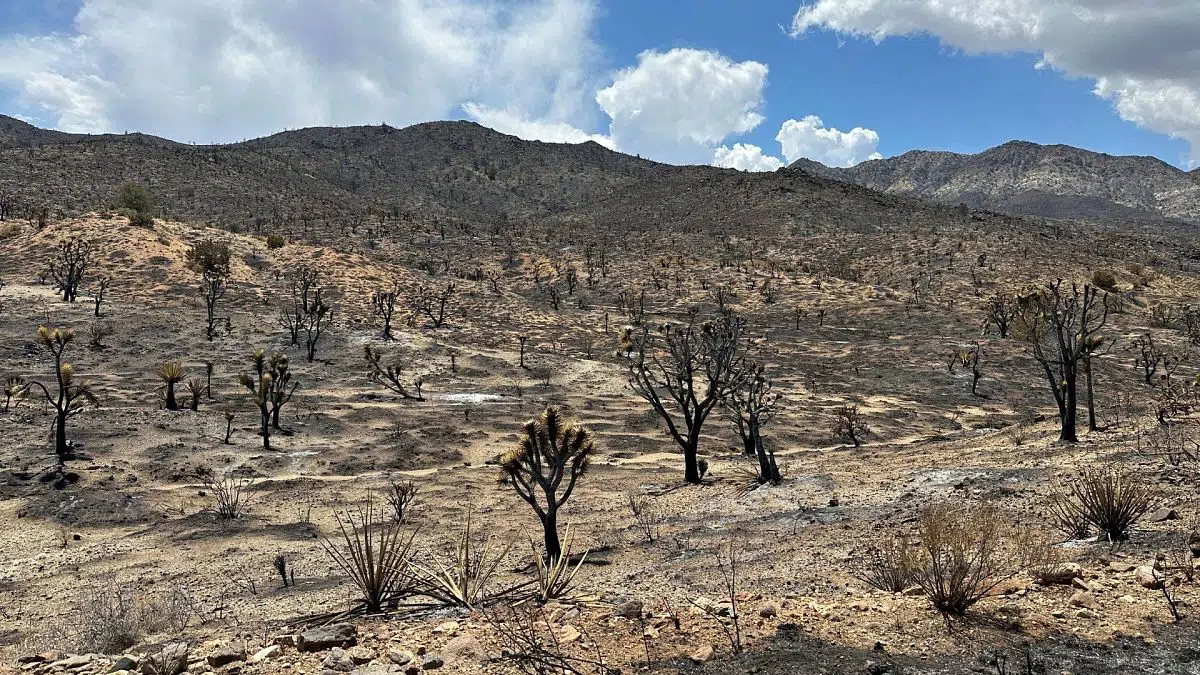
Drought, climate change, and wildlife displacement
The study indicates that drought, aggravated by climate change, drives animals to seek resources in inhabited areas. Calhoun argues that the presence of wildlife in cities is often interpreted as an invasion, although it actually responds to the scarcity of food and water in their natural habitats.
“Climate change will increase interactions between humans and wildlife. As droughts and wildfires intensify, we must plan ways to coexist with wildlife,” explained Calhoun.
Conservation strategies and sustainable management
Experts propose various measures to reduce conflicts:
- Creation of safe zones and refuges for wildlife, which reduce the need to move into urban environments.
- Limiting water extraction from natural landscapes, allowing animals to find resources in their habitat.
- Post-fire planning: after fleeing the fire, animals must find food, water, and shelter in areas shared with humans.
These strategies aim to build more climate-resilient landscapes, capable of supporting both human communities and wildlife.
Community-driven science
Access to the CDFW database allowed for the identification of trends and the proposal of coexistence strategies, constituting an example of community-driven science. Citizen involvement in the protection of the local environment can be decisive for the conservation of species and the reduction of conflicts.
In an increasingly arid state, social perception and community adaptation emerge as key factors in reducing tensions between humans and animals. The research concludes that without more resilient landscapes and sustainable management policies, conflicts will continue to increase in the context of climate change.
The drought in California thus becomes a reminder that coexistence with wildlife requires planning, education, and collective commitment to ensure a balanced future between nature and society.


