



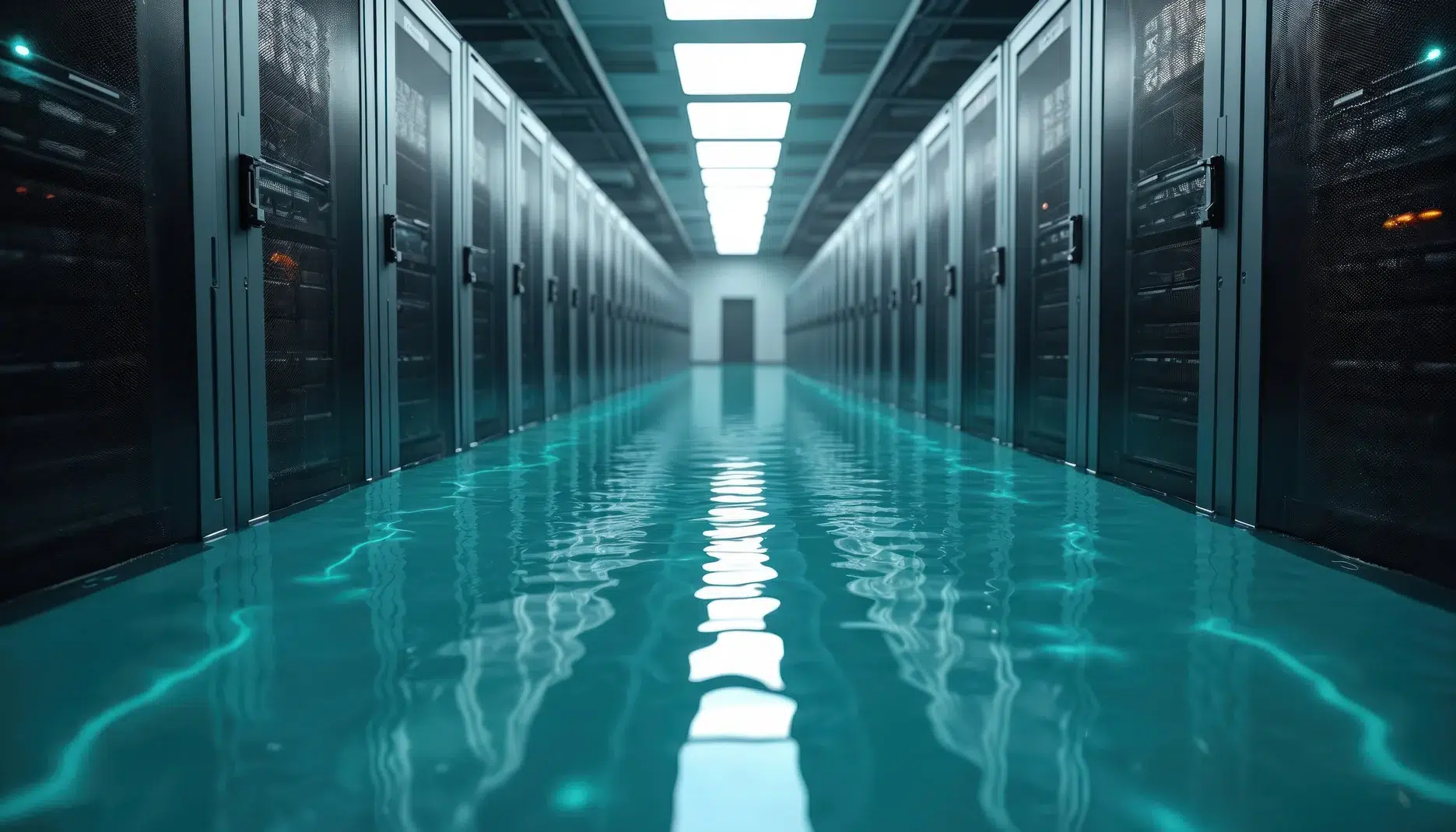
According to a report by the United Nations University Institute for Water, Environment and Health (UNU-INWEH), by 2030, the water consumption associated with the use of artificial intelligence will be equivalent to that of 1.3 billion people in sub-Saharan Africa.
This calculation includes both the water used to cool data center systems and that used in electricity generation.
The magnitude of the impact is such that the data centers powering AI already consume 448 TWh of electricity, comparable to France’s energy expenditure.
Energy and Emissions
The report warns that AI will require nearly triple the energy consumed annually by Pakistan, Bangladesh, and Nigeria combined (650 million inhabitants). As for emissions, they could reach 400 million tons of CO₂ equivalent, similar to the total emissions of the United Kingdom.
Additionally, the necessary infrastructure will occupy 14,500 km², double the metropolitan area of Jakarta or ten times that of Mexico City.
Beyond Carbon: Multiple Footprints
Researchers emphasize that the environmental cost of AI is being underestimated because most analyses focus on carbon emissions. However, each kilowatt-hour consumed also implies:
- Water footprint: cooling and energy generation.
- Land footprint: infrastructures and supply chains.
An example: switching from coal to bioenergy reduces emissions but multiplies the water footprint by 30 and the land impact by 100.
Training vs. Inference
Until recently, it was thought that the greatest energy consumption occurred during model training. The study reveals that the inference process (each time a user interacts with a model) accounts for between 80% and 90% of total consumption.
The figures are revealing:
- A standard conversation with a chatbot uses 200 times more energy than a basic function like classifying spam emails.
- Generating a synthetic image consumes 1,400 times more.
- Creating a short video can require up to 200,000 times more energy.
Inequality in Benefits and Costs
The report also highlights an unequal distribution:
- Only 16% of countries have specialized infrastructure to compute AI.
- The U.S. and China concentrate 90% of the installed capacity.
- Environmental costs (water, emissions, electronic waste) are distributed globally, while benefits are concentrated in a few countries.
Examples:
- In Ireland, data centers already accounted for 21% of national energy consumption in 2023, leading to moratoriums in Dublin.
- In Uruguay, the construction of a large data center coincided with a drought that left Montevideo without drinking water.
Electronic Waste and Transparency
By 2030, AI infrastructure could generate 2.5 million tons of electronic waste annually, mainly obsolete processors, which will end up accumulating in countries with fewer resources.
Moreover, experts point out the lack of transparency in the sector: much of the data comes from older models like GPT-4, limiting the accuracy of estimates.
UN Recommendations
The report proposes measures to mitigate the impact:
- Require standardized environmental footprint reports from operators.
- Promote efficiency by design, avoiding using giant models for simple tasks.
- Increase transparency in resource consumption.
AI is not just algorithms and models: behind it lies a real physical and environmental impact involving the consumption of water, energy, land, and waste.
The challenge is to ensure that this technological revolution develops within planetary boundaries, balancing innovation with sustainability and global justice.


