



A rescue operation carried out by the Quebracho Brigade of the General Directorate for the Prevention of Rural Crimes allowed to save a South American wildcat that had become trapped in the backyard of a home in Santa Elena, Entre Ríos province.
The operation was activated after a phone call from a neighbor who alerted about the presence of a wild animal in a risky situation. Upon arrival, the agents found the feline stuck among the branches of a tree.
With carefully planned and executed maneuvers, the officers managed to free the animal without causing any injuries, ensuring its physical integrity at all times.
Once rescued, the wildcat was contained and taken to a police station, where it remains under protection while its fate is being determined, following protocols for the conservation of native fauna.
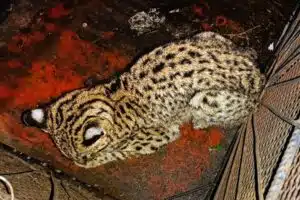
The South American Wildcat, a Stealthy Inhabitant of Our Ecosystems
The South American wildcat (Leopardus geoffroyi) is one of the most common wild feline species in South America, but nonetheless, it is vulnerable. It inhabits forests, grasslands, mountains, and scrublands, playing a key role in ecological balance as a controller of small rodent populations.
Of medium size, it can reach up to 60 cm in length (excluding the tail) and weigh between 3 and 5 kg. Its mottled fur —ranging from gray to yellow-brown— allows it to effectively blend in with the vegetation. Although it has solitary and mostly nocturnal habits, it may venture into urban areas if its habitat is disturbed or fragmented.
Despite not being classified as critically endangered, it faces several threats: habitat loss, poaching, and road accidents. Its capture or possession is prohibited by wildlife protection laws in Argentina.
This rescue not only highlights the importance of having specialized brigades but also the need to coexist with respect for native species. When a feline like this appears in urban areas, it signals imbalances that deserve attention from an environmental perspective.
Source: El Entre Ríos.


