



Kenya has started the relocation of 21 black rhinos to a new reserve, with the aim of strengthening the population of this species in critical danger of extinction.
The operation, considered one of the most ambitious in the country’s history, seeks to establish one of the largest sanctuaries in the world for these animals.
Kenya’s measure to help the black rhino population
The rhinos were relocated from three national parks with high population densities to the private Loisaba conservation center in central Kenya.
This area, where poaching had eradicated the specimens decades ago, now offers a safe environment for their reintroduction and reproduction.
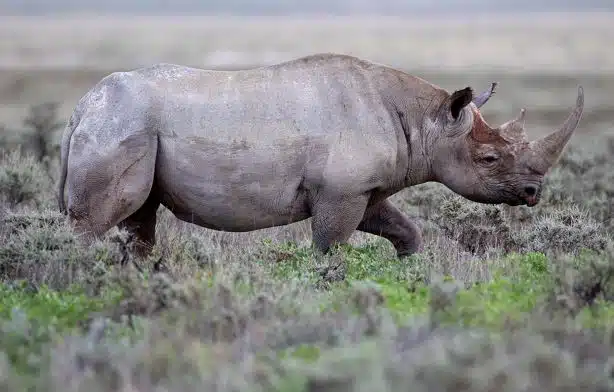 The critical situation of black rhinos. (Photo: Wikipedia).
The relocation process was carried out with the support of specialized teams and the use of helicopters, a technique that has proven to be effective in wildlife conservation. Air transport significantly reduces stress and risks for the animals, allowing for a faster and safer relocation.
This initiative is part of a broader effort to increase the black rhino population in Kenya. The establishment of new sanctuaries and the improvement of habitat conditions are essential to ensure the survival of this emblematic species.
According to Ursina Rusch, population manager of the Black Rhino Range Expansion Project at WWF South Africa, population density is a key factor in the reproduction of these animals.
When a rhino community is too crowded, females tend to space out births more, reducing population growth rates. Therefore, the creation of new populations in protected areas is essential to ensure their sustainable development.
The critical situation of the species
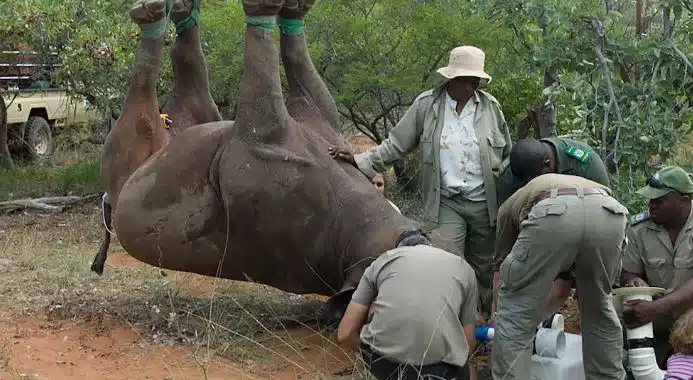 The relocation of 21 specimens. (Photo: Ministry of Environment, Forestry, and Tourism of Namibia).
According to the International Union for Conservation of Nature (IUCN), black rhinos faced a alarming decline in the 1990s.
At that time, their population dropped to less than 2500 individuals due to poaching and habitat loss. However, thanks to conservation initiatives, their numbers have increased to approximately 6500 individuals today.


