



The billionaire entrepreneur **Elon Musk** presented an ambitious project for a solar fusion reactor that could power the entire United States with **[clean energy](https://noticiasambientales.com/energia/polonia-roza-un-hito-historico-en-junio-las-energias-renovables-superaron-al-carbon-por-primera-vez/)**.
This innovative proposal aims to harness the **unlimited potential of solar energy** from space.
Elon Musk’s Clean Energy Bet
During a presentation at the **World Sustainable Energy Conference**, Musk surprised with the announcement of a revolutionary energy initiative.
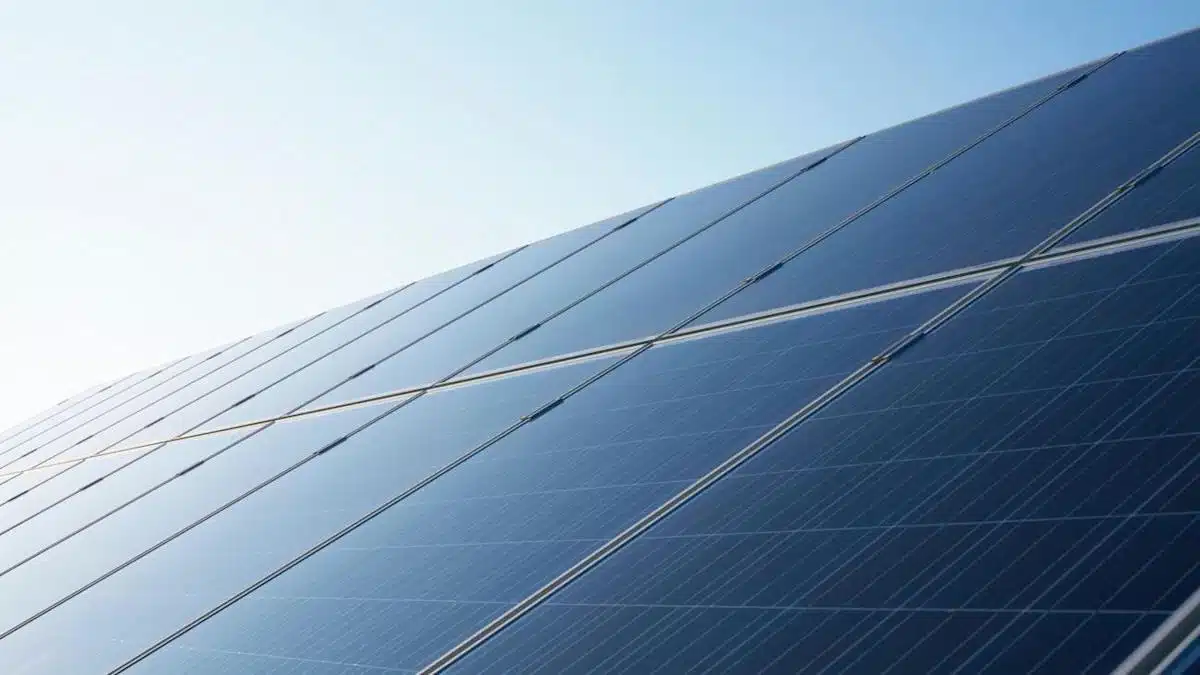 It would operate with solar energy.
He spoke of a space-based solar fusion reactor designed to **capture energy directly from the Sun** and transmit it to Earth.
This system, to be installed in Earth’s orbit, aims to solve one of the biggest challenges of global energy transition: **access to a clean, constant, and abundant source** of electricity.
How Would the Space Solar Reactor Work?
The system proposed by Musk is based on a set of **high-efficiency orbital solar panels** capable of collecting solar radiation without the interruptions caused by atmospheric conditions or the day-night cycle on Earth.
 It would harness solar energy from outer space.
This energy would then be sent to the planet in the form of microwaves, which would be captured by **ground receivers and converted into electricity**.
This kind of technology **is not entirely new**, but until now, space solar energy projects have faced enormous technical and logistical challenges.
However, according to the CEO of **SpaceX and Tesla**, recent advances in miniaturization, ultralight materials, and reusable launches make the system “technically feasible and economically scalable.”
Could the United States Run Solely on Space Solar Energy?
According to Musk’s calculations, with just an area of solar panels in space equivalent to **10 km by 10 km, it would be possible to meet** all the energy demand of the North American country.
While this claim is ambitious, it is supported by previous studies analyzing the potential of **solar collection outside the Earth’s atmosphere**.
Musk emphasized that this development “can eliminate the **dependence on fossil fuels**” and accelerate the fulfillment of international climate commitments.
Risks, Challenges, and Next Phase of the Project
The project is not without controversies. Specialists warn about the risks associated with transmitting energy via microwaves, safety in orbit, and high initial costs.
Still, Musk stated that the first experimental phase will begin in the next 18 months, with the **collaboration of NASA** and other space agencies.
Furthermore, he clarified that the initial prototypes will be designed to power isolated communities and scientific bases before scaling to national levels.



