



The Government of Tucumán explained the reasons behind the veto of the law that sought to create a Provincial Park Ranger Corps. The decision has generated criticism from political and environmental sectors, who consider the measure a setback in the management of protected areas.
According to the Executive, the approved project had serious issues in its financial and organizational structure. While they acknowledged the need for specialized personnel to strengthen conservation policies, they argued that the proposal did not guarantee the necessary funds for its implementation.
One of the main objections was that the financing depended on resources allocated to other programs, such as funds for the preservation of native forests and protected natural areas. The Government warned that using those funds would jeopardize the operation of existing environmental programs.
They also pointed out that the project contradicted financial management regulations by foreseeing the use of budget items without proper planning. For the Executive, creating a corps of this magnitude requires a comprehensive and sustained approach, not a measure that worsens existing difficulties.
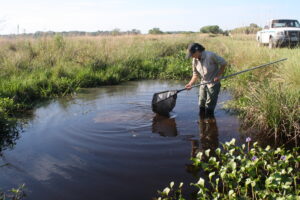 The National Park Ranger Corps dedicates its life to caring for the natural resources of all Argentinians
The strategic role of park rangers
Park rangers play a vital role in protecting ecosystems. They are responsible for surveillance, conservation, and control in natural areas, often working under adverse conditions.
Their task not only involves patrolling or monitoring the territory, but also collaborating in the prevention of environmental crimes, educating the local population, and responding to emergencies. In territories like Tucumán, where natural resources are constantly threatened, their role is key to ensuring sustainability.
Having a trained and well-equipped corps implies strengthening environmental management and ensuring the protection of biodiversity. Therefore, the creation of a provincial corps should be part of a State policy, with its own resources and proper planning.
 National Park Ranger Day
A call for planning and sustainability
From the Executive, they clarified that the veto is not aimed at halting environmental protection, but at avoiding that a rushed measure affects other sensitive areas. They emphasized the need to work on a more robust proposal, considering genuine funding and technical participation from its formulation.
They insisted that incorporating 165 new agents requires interinstitutional coordination, organizational structure, and guaranteed long-term resources. Otherwise, the initiative could become a burden on existing environmental programs.
The debate over the park ranger law has opened a space to rethink Tucumán’s environmental policies. Conservation is not achieved with good intentions alone, but with clear strategies, adequate funding, and a genuine commitment to the care of natural heritage.


