



An international scientific team, with the participation of the Argentine researcher Javier Moreno (CONICET), managed to sequence and analyze 123 bryophyte genomes, the second largest group of terrestrial plants after vascular plants.
Published in Nature Genetics, the study constitutes the most extensive genomic survey of this group and opens new doors to understanding how these plants survived and thrived for more than 500 million years.
Bryophytes: small, simple, and essential
Although they often go unnoticed due to their small size and simple structure, bryophytes are key components in terrestrial ecosystems.
There are more than 20,000 species worldwide, capable of colonizing extreme environments and performing fundamental ecological functions, such as water retention, soil formation, and carbon capture.
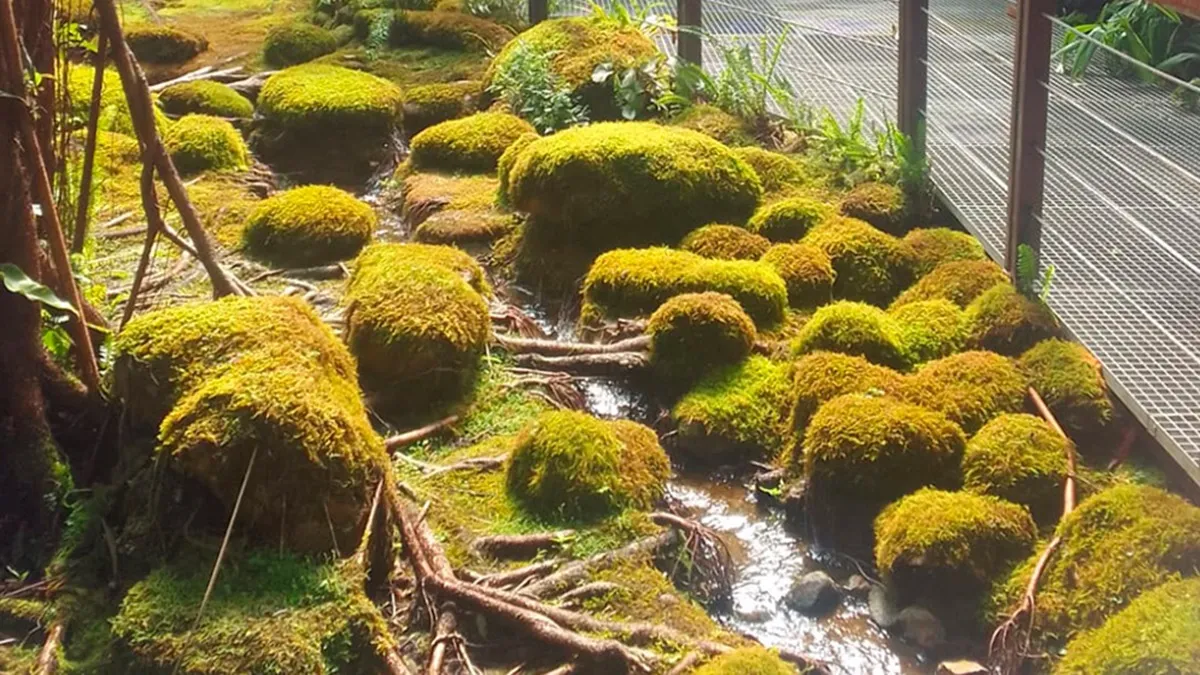
Unexpected genetic diversity
Bryophytes possess more gene families than vascular plants, including unique genes acquired through horizontal transfer.
The study revealed that bryophytes have a highly innovative genetic arsenal, with more diverse gene families than those of vascular plants.
Many of these genes seem to have emerged recently or been acquired from microorganisms, which would have given them adaptive advantages in the face of environmental changes.
“That repertoire allowed them to establish in extreme environments and remain as key players in terrestrial biodiversity,” explained Moreno, a researcher at the Litoral Agrobiotechnology Institute (IAL; CONICET-UNL).
Biotechnological applications and environmental challenges
Bryophyte genomes offer clues to tackle climate stress and improve crops.
The results not only allow reconstructing the evolutionary history of plants but also offer valuable genetic resources to investigate stress tolerance, pathogen defense, and production of useful metabolites.
This knowledge can be applied in agricultural biotechnology, ecological restoration, and climate change adaptation.
Plant evolution: from green algae to angiosperms
Bryophytes were the first terrestrial plants, precursors to ferns, conifers, and flowering plants.
The evolution of terrestrial plants began more than 500 million years ago, when green algae colonized the land.
Bryophytes were the first to adapt, developing structures like the cuticle to prevent dehydration and protected spores for dispersal.
Then came the pteridophytes with vascular tissue, the seed plants, and finally the angiosperms, which today dominate the planet.
Collaborative science to understand life on Earth
More than 30 institutions from Asia, Europe, America, and Oceania participated in the study.
“No country could have gathered the diversity of samples and technical capabilities needed on its own,” highlighted Moreno. “This work demonstrates the power of international collaboration to address fundamental questions about biological systems.”


