



The National Parks Administration (APN) approved the Resolution 300/2025, a new regulatory framework that redefines building parameters within the national parks of southern Argentina. The measure replaces the Resolution 180/2012 —previously only in effect in Lanín and Nahuel Huapi— and extends its scope to all Patagonian protected areas.
The document introduces new criteria for calculating land occupation and buildable areas, incorporating categories of covered and semi-covered spaces that, in practice, allow for a greater volume of construction. The FOS and FOT factors, which determine how much area a project can occupy, have been expanded under the argument of “modernizing” the regulations to adapt them to current tourism.
However, environmental organizations and specialists warn that the measure could open the door to real estate expansion within the parks, in a context of reduced technical staff and limited state control capacity. The risk, they argue, is that under the discourse of sustainability, the limits of environmental protection may be relaxed.
The National Infrastructure Directorate and the Southern Zone Coordination will be responsible for implementing the new regulation. However, without transparency mechanisms or robust oversight, the fear is that these regulations will benefit private developers to the detriment of conservation objectives.

The consequences that flexibility could bring
The approval of Resolution 300/2025 coincides with a period of budget cuts and staff loss within the APN. According to data from the State Workers Association (ATE), there are only 363 active forest fire fighters, when the minimum necessary would be 700. This reduction also affects the technical teams that must supervise works and monitor compliance with environmental regulations.
In this context, the expansion of tourism or real estate projects could generate impacts that are difficult to reverse. Without enough staff to oversee, constructions could advance over fragile ecosystems, affecting the flora, fauna, and watercourses that sustain the natural balance of Patagonia.
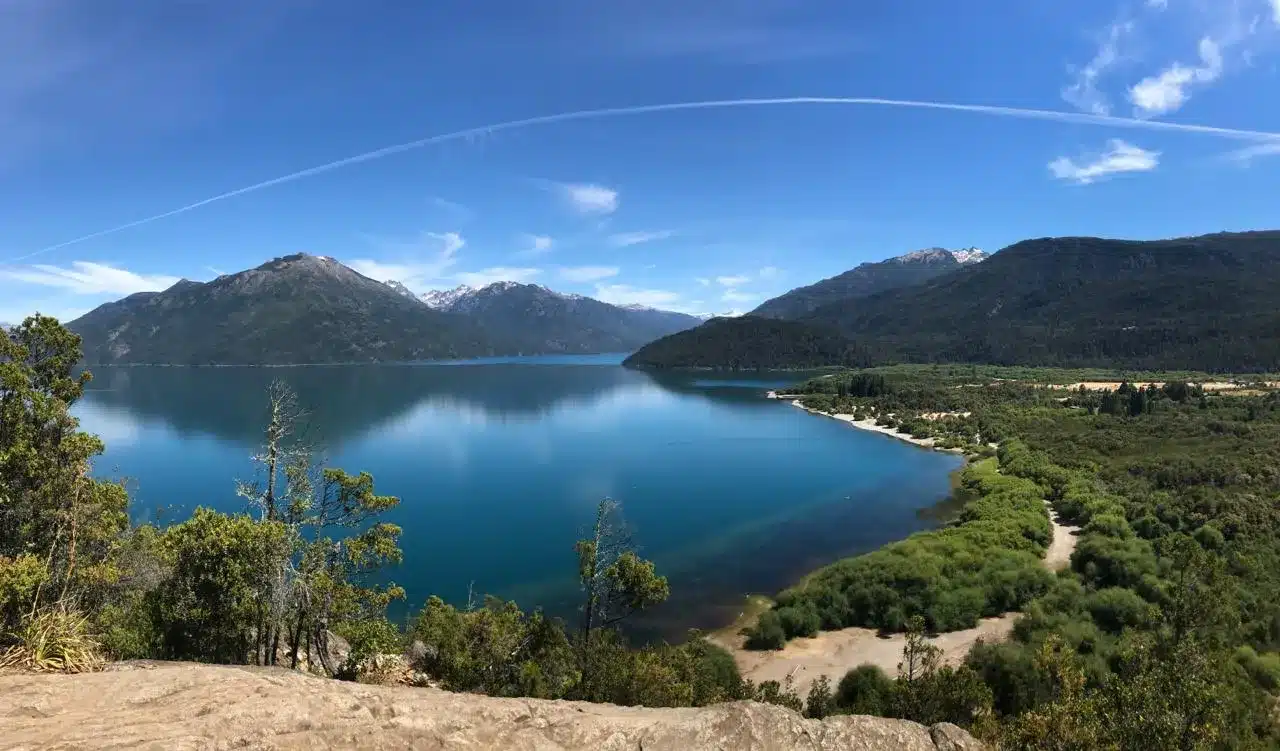
The Patagonian region is home to temperate forests, glacial lakes, and unique steppes, which play a crucial role in climate regulation and biodiversity conservation. Any land modification in these areas directly impacts endemic species, biological corridors, and watersheds that supply human communities.
Additionally, many national parks, such as Lanín, Nahuel Huapi, or Los Alerces, are surrounded by areas of high tourist value and urban pressure. The new regulatory framework, if not applied with strict controls, could encourage construction in sectors that have so far remained free from intervention.
A recurring tension: development versus conservation
Resolution 300/2025 revives an old debate in Argentine environmental management: how to balance the promotion of tourism with the preservation of nature. While the APN argues that it seeks to “update construction criteria,” experts assert that sustainability cannot depend solely on building parameters, but on territorial planning based on ecological limits.
The protected areas exist to guarantee the conservation of the country’s natural and cultural heritage. If this principle is weakened, the risk is that tourism —one of Patagonia’s most important economic drivers— may lose precisely its greatest attraction: the purity of the landscapes and the integrity of its ecosystems.
The implementation of Resolution 300/2025 will be a key test for the National Parks Administration. Its ability to oversee and maintain the balance between development and preservation will determine whether this new stage represents an opportunity to modernize management or a setback that endangers the region’s environmental legacy.


