



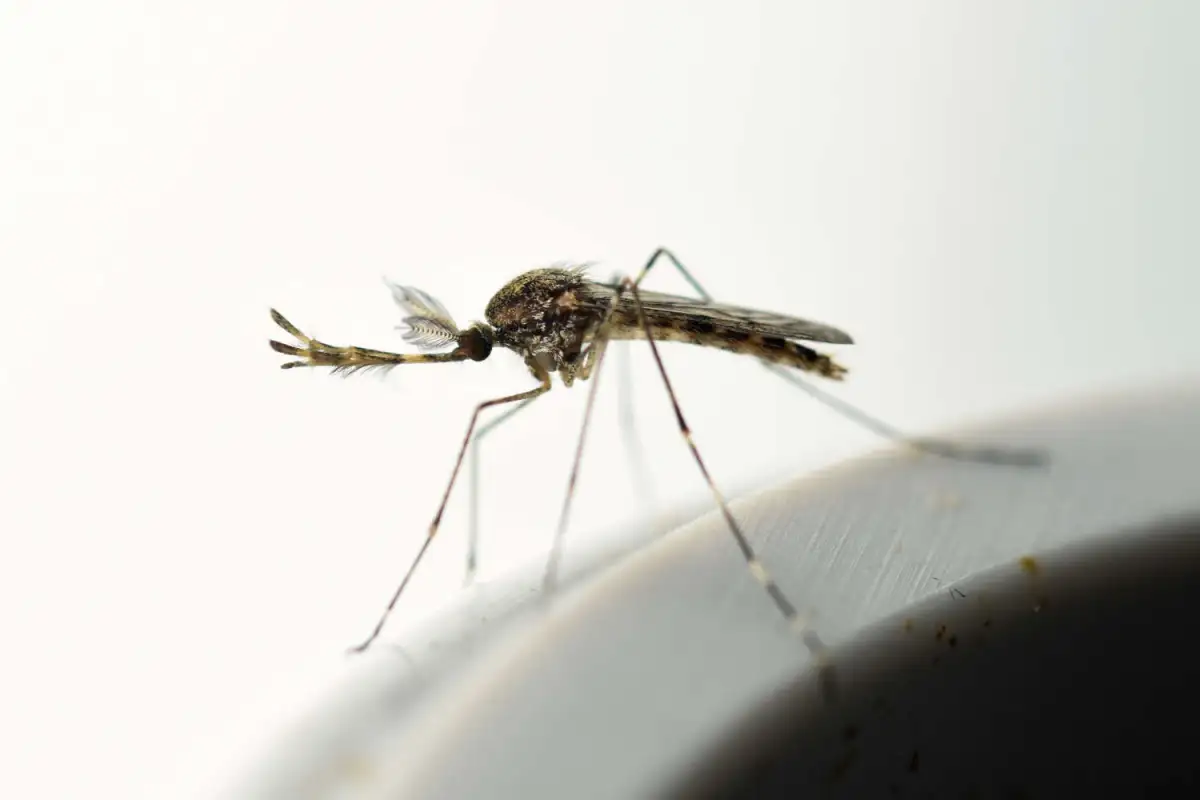
For centuries, Iceland was considered a biological exception: a territory without mosquitoes. But that status changed this October, when the first specimens of Culiseta annulata, a cold-resistant species capable of surviving in conditions that previously seemed impossible, were confirmed.
The discovery occurred in the municipality of Kjós, in the south of the country, where three mosquitoes were identified by experts from the Institute of Natural History. The news surprised the scientific community, which for years had speculated about the possibility that global warming would facilitate the arrival of this and other species to Icelandic territory.
Until now, the country’s extreme climate had been its best natural defense. The low temperatures, along with the constant alternation of freezing and thawing, prevented the development of larvae and the sustained reproduction of mosquitoes. However, milder autumns and less severe winters have opened a new ecological window.
Researchers point out that the arrival of Culiseta annulata could mark a profound change in local ecosystems, where the presence of these insects had never been part of the natural balance.
Ecosystems changing with the climate
The introduction of this species represents more than just a simple scientific curiosity. Mosquitoes can alter food chains by becoming new sources of food for birds and small mammals, but they can also compete with other species for limited resources.
Although Iceland does not face immediate health risks —since this species is not a transmitter of serious human diseases—, its presence can modify subtle ecological dynamics, affecting pollinating insects or native predators that never had to compete with mosquitoes.
Moreover, the increase in their population could accelerate biological processes previously mitigated by the cold, such as organic decomposition in water bodies and its influence on nutrient cycles. The tundra and wetland ecosystems, so characteristic of the country, could experience visible transformations in the coming decades.
The accidental introduction also poses a challenge for environmental authorities. If mosquitoes manage to reproduce in significant numbers, they could spread to other areas of the country, altering the balance in lakes, fjords, and wetlands where native species have not developed defenses or adaptations against this type of insect.

Climate change as a gateway
Specialists agree that this phenomenon is directly linked to global warming. Longer autumns and milder temperatures allow liquid water to remain available for longer, offering ideal conditions for mosquitoes to lay their eggs.
This type of occurrence is already being observed in regions of similar latitude, such as Greenland, where cold-adapted species established themselves after the last glaciation. In Iceland, the trend suggests that other Scandinavian species could follow the same path, expanding their natural range northward.
The case of Culiseta annulata is an early warning of how even the most hostile environments on the planet are beginning to open up to new forms of life. The resilience of these insects is also an indicator of the accelerated changes occurring in the Arctic, where melting and rising temperatures are redrawing ecological boundaries.
The challenge now will be to monitor their expansion and assess how their presence can integrate into, or alter, the fragile natural balance of Iceland. What was once a territory without buzzing or bites becomes, with this discovery, a new scenario for evolution and adaptation in times of climate crisis.


