



Agricultural expansion and the reduction of natural habitats have intensified encounters between elephants and human communities in Africa and Asia. These episodes lead to economic losses and put human and animal lives at risk.
In this scenario, an unexpected strategy emerged: the use of bees as a natural barrier. Local observations showed that elephants avoid areas where there are active beehives.
Subsequent research confirmed that the buzzing of bees provokes an immediate retreat response. The sensitivity of the trunk and eyes explains this defensive behavior.
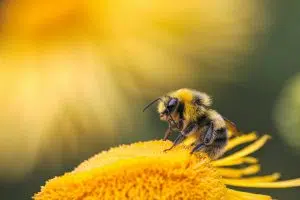
How beehive fences work and why they are effective
Beehive fences consist of placing real beehives and decoys between posts, forming a perimeter around crops. The system combines visual, sound, and olfactory stimuli.
Elephants cannot distinguish which hives are active, so they avoid crossing the area. This uncertainty reinforces the deterrent effect without resorting to violent methods.
Prolonged trials in agricultural areas near national parks showed high levels of effectiveness, especially during harvest seasons, when incursions increase.
Social and environmental impact on rural communities
The implementation of beehive fences offers an affordable alternative for farmers with limited resources. Its maintenance requires simple materials and local knowledge.
In addition to protecting crops, the system generates economic benefits through honey production. This additional income strengthens community acceptance of the strategy.
The reduction in confrontations also decreases the retaliatory hunting of elephants, contributing to the conservation of wild populations in vulnerable regions.
Limitations and challenges in the face of climate change
The success of this strategy depends on the health of bee populations. Prolonged droughts, loss of flora, and pesticide use can reduce hive activity.
In years with extreme weather conditions, declines in the system’s effectiveness have been recorded, highlighting its sensitivity to environmental changes.
For this reason, specialists propose combining beehive fences with other preventive measures, such as wildlife corridors or adapted agricultural practices.

Other functions of bees that make them essential for the planet
Beyond their role in deterring elephants, bees are key components of ecosystem functioning. Their role as pollinators supports the reproduction of thousands of plant species.
A large portion of the crops that feed humanity depend directly or indirectly on pollination. Without bees, the diversity and availability of food would be seriously affected.
Additionally, they contribute to the regeneration of forests and grasslands, strengthen biodiversity, and maintain ecological networks that regulate the climate and the health of the soil.
An ecological lesson with multiple benefits
The use of bees to protect crops demonstrates that nature-based solutions can address complex problems in an integrated manner.
This strategy reduces conflicts, generates income, protects threatened species, and reinforces essential ecosystem services.
In a context of climate crisis and biodiversity loss, initiatives like this highlight the value of conserving bees as indispensable allies of the planet.



