



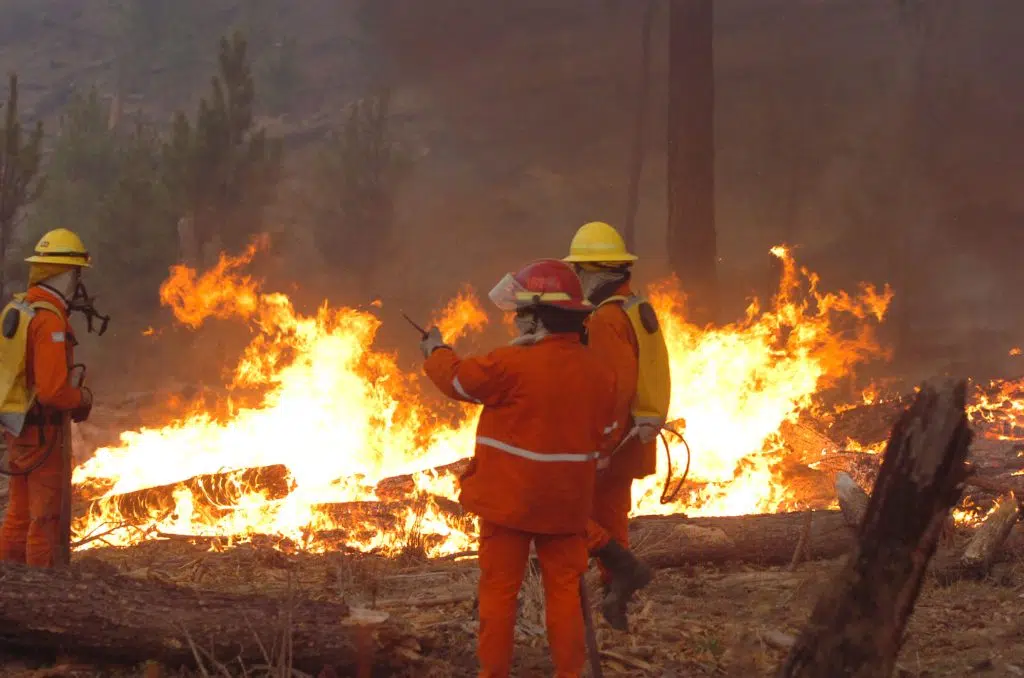
The risk of fires reached its highest level of the season in the Northern Patagonia and Alto Valle of Río Negro.
This was warned by the National Meteorological Service, which issued the extreme alert while the adverse weather conditions complicate the outlook.
The province faces today a critical scenario that forces the provincial government to take drastic measures.
Therefore, recently the authorities prohibited any use of fire outdoors and established a system of severe sanctions to prevent environmental tragedies.

The fire emergency in Patagonia
In this scenario, the governor of Río Negro, Alberto Weretilneck, signed days ago the Decree 1104/25 that declares the Fire Emergency for one year throughout the province.
The measure responds to the combination of high temperatures, strong winds and prolonged drought that dangerously raise the risk index.
“The impact of a forest fire is devastating: it destroys ecosystems, affects production, endangers lives and compromises the future of the province,” said Weretilneck.
The governor also emphasized that the measure responds to environmental prevention principles and population protection.
The decree prohibits for one year lighting any type of open-air fire on public lands.
It also obliges concessionaires of beaches, campsites and rural establishments to intensify prevention and surveillance measures.
The vulnerable areas under threat
The Alto Valle has an effective irrigation system through canals and ditches.
However, there are critical sectors where this protection infrastructure does not reach: around the cliffs, areas near the riverbanks and abandoned farms.
These areas present conditions that facilitate the rapid spread of fire and make it difficult to control.
In particular, the accumulated dry vegetation acts as natural fuel in the presence of any spark or heat source.
Recommendations and sanction regime against fire
The Provincial Service for the Fight against Forest Fires (SPLIF) requested the community to follow strict preventive measures:
- Do not make any use of fire, campfires or burns
- Avoid activities that generate sparks or heat in forest areas
- Keep the surroundings of homes and accesses clean
- Immediately report any smoke column to 103
The decree established a sanction regime with fines ranging from 100 to 100,000 liters of YPF ultra diesel gasoil.
The penalties are graduated according to the risk, the potential damage and the responsibility of each offender.
The authorities ordered to initiate criminal and patrimonial actions against those who cause fires, whether by negligence or intentionality.
The goal is to recover the costs that the State faces to fight and extinguish the fire.
The official text emphasizes that most fires have human origin.
This behavior generates environmental, economic and social damages that take generations to reverse.
The province maintains the daily monitoring of the risk index.
The authorities insist that community prevention is essential to protect the territory and reduce threats in the Northern Patagonia.



