



Colombia will begin in 2026 the design of its first environmental satellite, a tool that promises to transform the way natural resources are managed and climatic and ecological risks are monitored. The project is led by the Regional Autonomous Corporation of Cundinamarca (CAR) in partnership with the Norwegian Space Agency, which will provide knowledge transfer and technical training.
The agreement includes training in satellite design and manufacturing, spatial information processing, and an initial investment of 2 million Norwegian kroner (about 1 billion Colombian pesos).
Strategic Functions of the Satellite
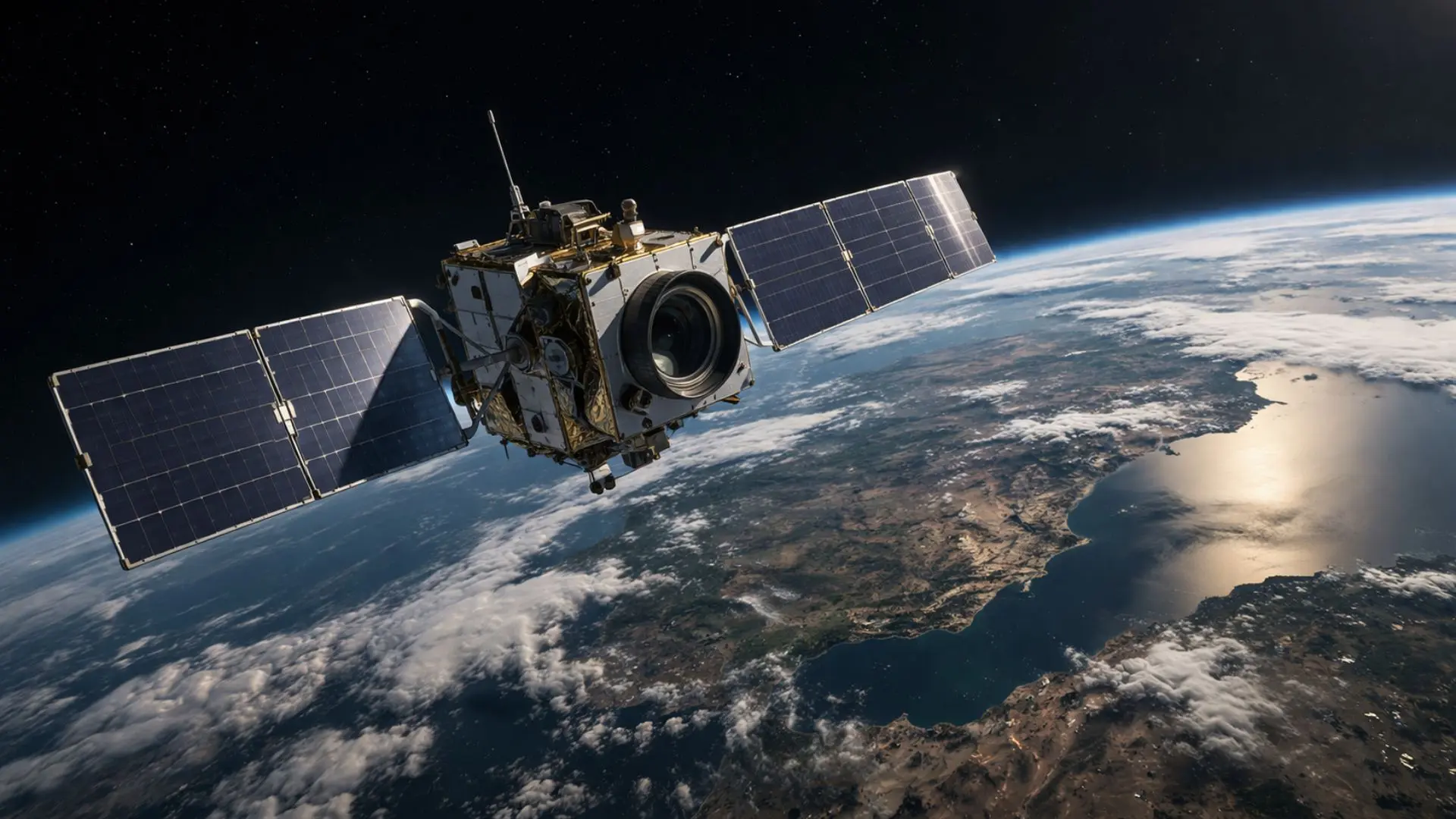
An environmental satellite orbits the Earth to observe variables related to climate, the atmosphere, oceans, and ecosystems. Among its main functions are:
- Measuring air quality and greenhouse gases.
- Analyzing temperature, humidity, clouds, and winds.
- Monitoring vegetation cover, deforestation, and the state of forests.
- Monitoring water resources and evaluating events such as fires, eruptions, or floods.
- Providing continuous monitoring of the territory, 24 hours a day.
Key Benefits for Colombia
The satellite will allow:
- Natural resource management: tracking deforestation, forest health, and water sources.
- Natural disaster prevention: early warnings about fires, hurricanes, floods, and volcanic eruptions.
- Precision agriculture: optimizing the use of water and fertilizers, improving productivity.
- Climate monitoring and air quality: measuring gases such as carbon dioxide and methane.
- Data sovereignty: independence from foreign information for strategic decisions.
Additionally, it will be applied to the study of oceans, coastal erosion, and urban planning, becoming a highly valuable tool for sustainable development.
Official Statements
The director of CAR, Alfred Ballesteros, stated: “Current challenges do not allow for more diagnostics; they require concrete actions, and this satellite is one of them”.
According to the entity, the device will facilitate geographic modeling and advanced data analysis, allowing for more precise action in different environmental scenarios.
Timeline
- 2026: start of satellite design.
- 2028: expected operational launch. Once operational, it will become a key tool for achieving broader and more efficient environmental coverage in the country.
Colombia’s first environmental satellite represents a technological and strategic leap in risk and natural resource management. With it, the country will be able to anticipate disasters, improve agriculture, protect its ecosystems, and strengthen its sovereignty in environmental data, consolidating a sustainable development model with international support.


