



The Pantanal is the largest wetland on the planet, extending through Brazil, Bolivia, and Paraguay. Its dynamics depend on the seasons:
- Dry season (June to October): wildlife concentrates in rivers and lagoons, making it easier to spot jaguars and other animals.
- Wet season (November to March): large areas are submerged, creating spectacular green landscapes, although access is more difficult for visitors.
This natural cycle makes the Pantanal one of the richest and most diverse ecosystems in the world.
The jaguar, emblem of the Pantanal in Brazil
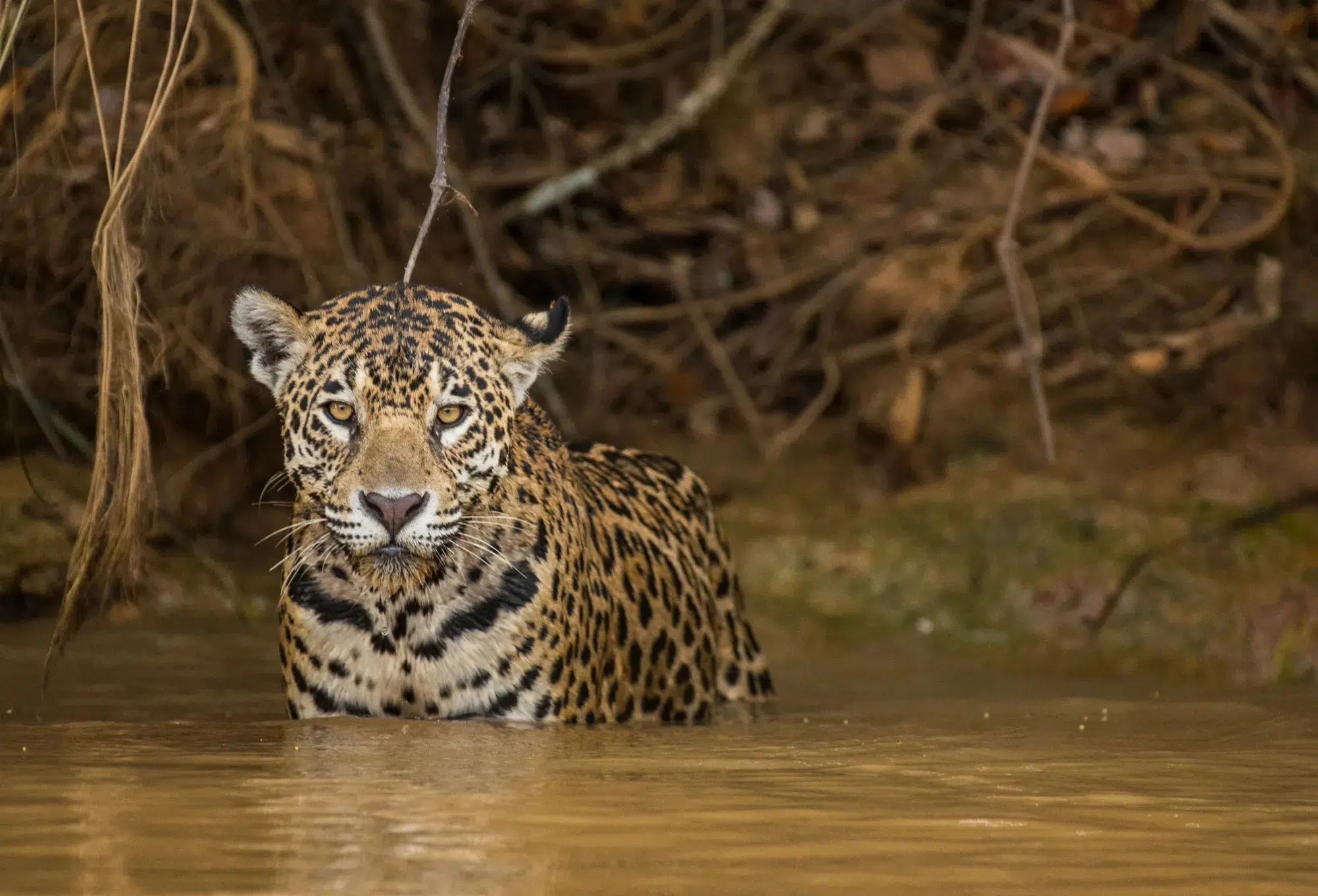
The jaguar (Panthera onca) is the top predator of the region and the undisputed symbol of the Pantanal. Although it is difficult to observe in other areas of the Americas, here the chances of spotting it are very high, especially in Porto Jofre, considered the epicenter of jaguar watching tourism.
River safaris are the most popular experience: small boats navigate the rivers where jaguars hunt capybaras or caimans, rest on the banks, or move stealthily through the vegetation. Watching them in action is one of the most fascinating spectacles of South American nature.
Diverse and abundant wildlife
In addition to jaguars, the Pantanal is home to a wide variety of species:
- Caimans and capybaras, which abound in lagoons and rivers.
- Giant otters, an endangered species that finds refuge in this ecosystem.
- Exotic birds like macaws, toucans, herons, and hundreds of migratory species.
This mosaic of wildlife makes each excursion a unique experience for nature lovers.
Ecological and environmental importance
The jaguar plays a fundamental role as a super predator:
- Ecosystem balance: regulates prey populations, preventing overpopulation.
- Umbrella species: its conservation involves protecting vast areas, benefiting other species.
- Environmental indicator: its presence reflects a healthy and functional ecosystem.
Socioeconomic and cultural importance
- Ecotourism: projects like Onçafari have turned jaguar watching into an economic driver for local communities.
- Indigenous culture: the jaguar is an ancestral symbol of power and protection in Amazonian peoples.
- Conservation and carbon: programs like Conexión Jaguar help preserve its habitat and certify areas for the carbon market.
Threats and challenges
Despite its significance, the jaguar faces risks:
- Deforestation and mining, which fragment its habitat.
- Conflicts with ranchers, due to the predation of domestic animals.
- Climate change, which alters the Pantanal’s flooding cycles.
The conservation of the Pantanal and the jaguar is essential to maintain ecological balance and ensure a sustainable future for the region.
The Brazilian Pantanal is the best place in the world to see jaguars in the wild, but also a key ecosystem for global biodiversity. Its conservation ensures not only the survival of the jaguar but also the protection of hundreds of species and the sustainable development of local communities.



