



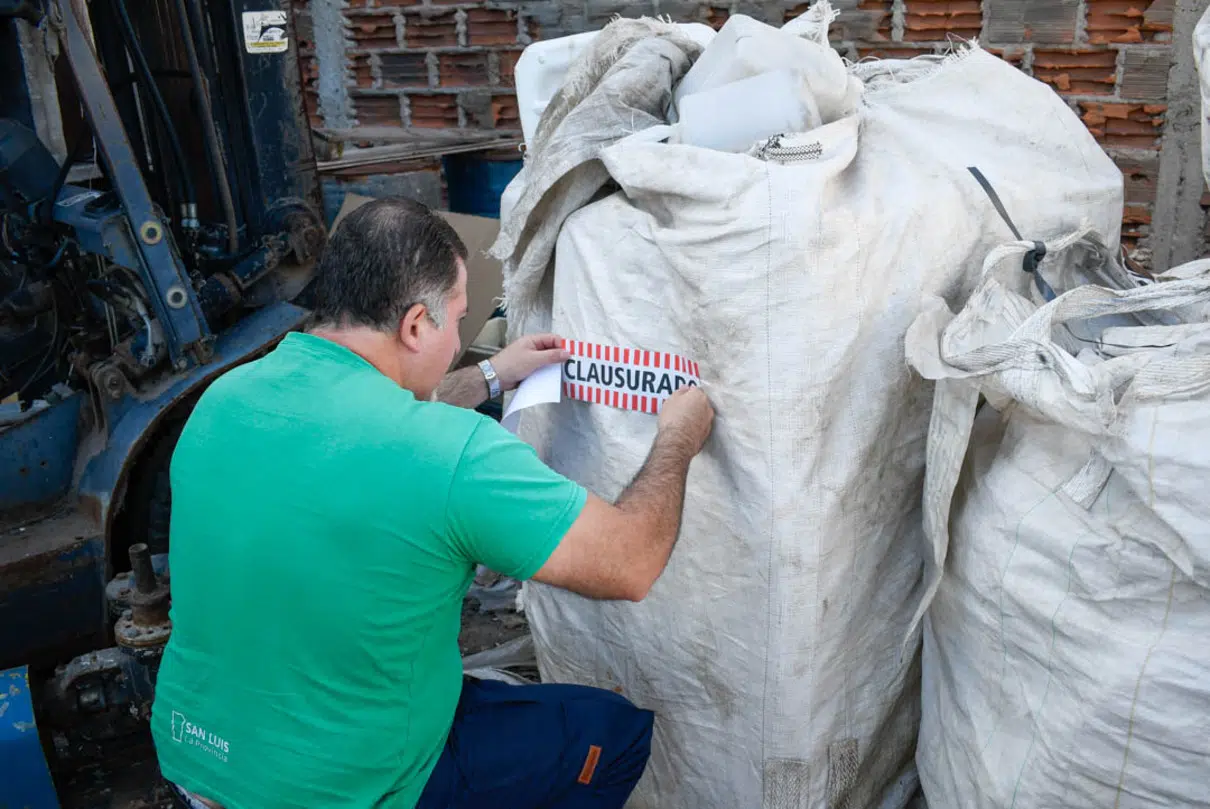
The Secretariat of Environment and Sustainable Development recovered more than 1000 empty phytosanitary containers in the South Industrial Park of San Luis.
The discovery occurred after inspection tasks initiated in March and allowed the elimination of a contamination hotspot of high risk to natural resources and community health.
The containers were stored in big bag-type sacks, with different volumes and toxicological bands. Given the situation, the corresponding protocol was activated and coordinated with the Campo Limpio Association, an authorized operator in the province, to transport them to the Temporary Storage Center (CAT), where they will receive treatment and safe final disposal.
Legal framework and traceability
The procedure is framed within the National Law 27.279 and regulatory decree 134/2018, which establish the obligation to manage empty phytosanitary containers through authorized systems. The regulations guarantee traceability and prevent these hazardous wastes from being indiscriminately dumped.
According to Alex Simioli, head of the Environmental Monitoring, Control, and Inspection Area: “These types of interventions reflect sustained control and monitoring work that allows not only the detection of irregularities but also ensures that hazardous waste receives appropriate treatment. They are key actions to promote a circular economy and ensure responsible management”.
Risks of phytosanitary containers
Containers that have held agrochemicals are considered hazardous waste. Improper handling can cause:
- Soil and water contamination by chemical residues.
- Human and animal poisoning when reusing containers to store water or food.
- Agricultural risks due to indiscriminate dumping in rural areas.
Good management practices
Proper handling of these containers includes:
- Triple rinsing or pressure washing immediately after use.
- Definitive perforation to prevent reuse.
- Delivery to authorized points such as the CAT managed by Campo Limpio.
These practices reduce toxicity, allow the recycling of plastic into safe products, and prevent containers from being dangerously reused.
Strategic importance
Responsible management of phytosanitary containers contributes to:
- Human safety and health, reducing risks of poisoning.
- Environmental protection, preventing air, water, and soil contamination.
- Agricultural sustainability, by recovering materials for new uses.
- Prevention of social risks, ensuring that containers do not circulate outside authorized systems.
The recovery of more than 1000 containers in San Luis represents a concrete advancement in Argentine environmental policy, reinforcing compliance with regulations and the protection of community health.
Such actions are essential to consolidate a circular economy in the agricultural sector and ensure that hazardous waste receives appropriate treatment, avoiding irreversible environmental impacts.


