



More and more people are organizing their routines, outings, and even moving decisions based on the needs of their pets. What used to be a detail—like having a balcony or a nearby park—has now become a central factor: finding pet-friendly neighborhoods.
This change reflects a closer bond with companion animals and a new way of inhabiting the City of Buenos Aires, where walks, green spaces, and acceptance in businesses are part of everyday life.
Data showing the transformation
The 2022 Census and the Annual Household Survey (EAH) revealed that in CABA there are more dogs and cats than children under 14 years old: almost 862,000 pets compared to about 460,000 children.
This data reflects the growing “humanization of pets” and their role as central companions in urban life.
Highlighted neighborhoods
Some Buenos Aires neighborhoods have consolidated as pet-friendly hubs, with infrastructure and dynamics that facilitate living with animals:
- Palermo: the largest and most diverse neighborhood, with green circuits like the Bosques de Palermo, the Botanical Garden, and Italy, Armenia, and Germany squares. Notable dog parks include those at Parque Las Heras, Plaza Inmigrantes de Armenia, and Plaza Intendente Seeber.
- Recoleta: with tree-lined streets and nearby squares, offering spaces like Parque Thays, Plaza Rodríguez Peña, and Plaza Monseñor Miguel de Andrea.
- Belgrano: wide sidewalks and squares like Barrancas de Belgrano, Plaza Alberti, and Plaza Castelli with dog parks.
- Saavedra: connected parks and lower traffic density, with spaces like Parque Saavedra, Parque Sarmiento, and Plaza Alberdi.
- Caballito: with an intermediate scale and emblematic parks like Parque Centenario, Parque Rivadavia, and Plaza Irlanda.
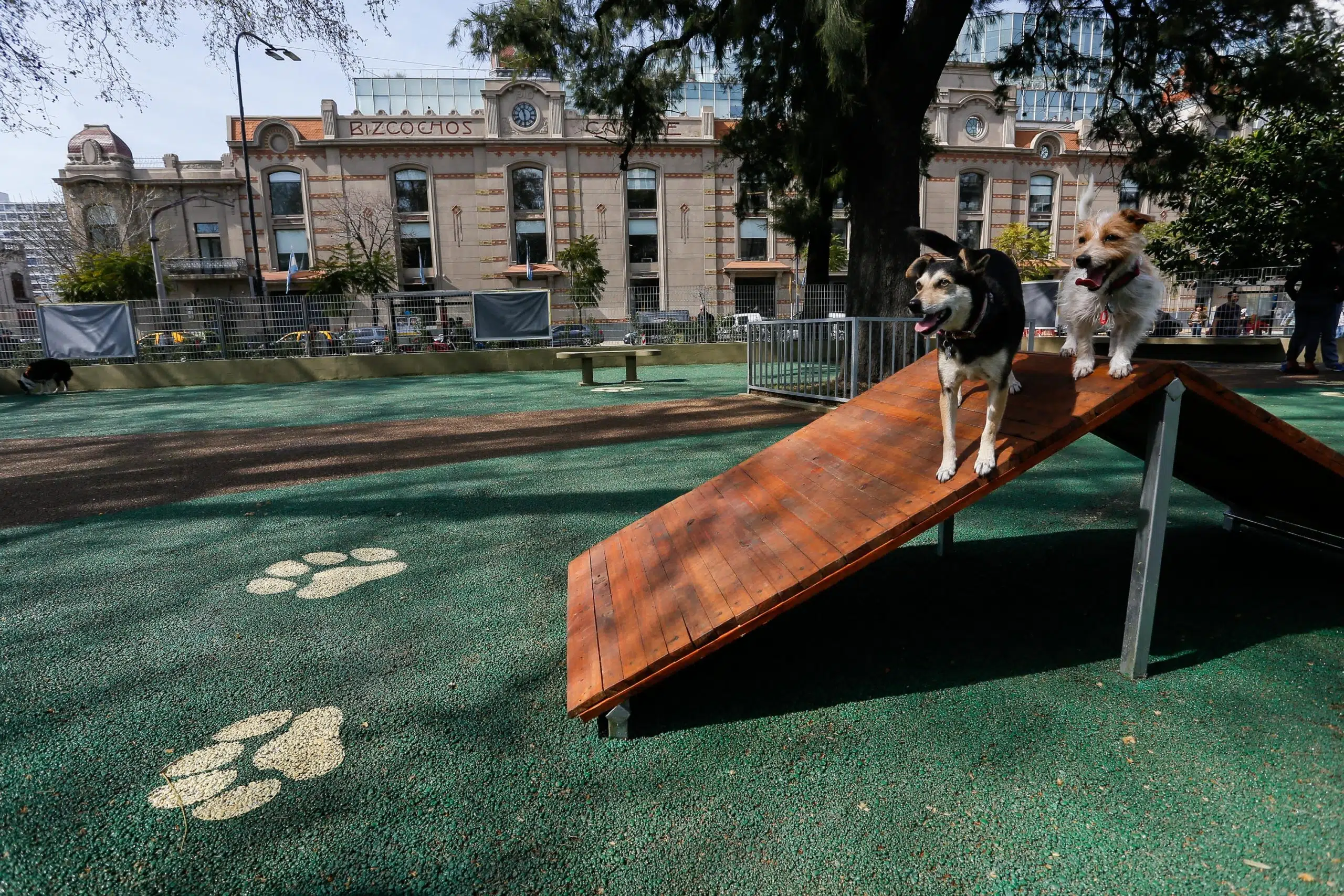
Green spaces and dog parks
Dog parks have become a key resource for dogs to run and socialize off-leash. However, specialists warn that they require active supervision to ensure the safety of all animals and avoid conflicts.
The distribution of these spaces in different neighborhoods allows walking routines to better integrate into urban life.
Social and real estate impact
The increased sensitivity towards animals is also reflected in the real estate market, where more and more buildings and developments incorporate flexible rules and services adapted to life with pets. Pet-friendly neighborhoods are consolidating as attractive environments for families looking to integrate living with animals into their urban lifestyle.
The expansion of pet-friendly neighborhoods in CABA shows how pets have ceased to be a detail to become protagonists of urban life. With squares, dog parks, businesses, and adapted buildings, these neighborhoods offer a friendlier and safer environment for those who consider their animals an essential part of the family.


