



In the heart of the Atacama Desert in Chile, some of the darkest skies on the planet survive. This exceptional environment not only allows for world-class astronomical observations but also preserves environmental conditions that are increasingly scarce in a world dominated by artificial lighting.
Thanks to the low population density and the historical absence of large urban developments, places like Paranal have become true refuges for observing the universe. Some of the most advanced ground-based telescopes operate there, taking advantage of a clean atmosphere and almost absolute darkness.
However, this balance is beginning to be threatened. The growth of cities, industrial complexes, mining operations, and new energy infrastructures is causing a progressive increase in artificial brightness over one of the last great dark skies on Earth.
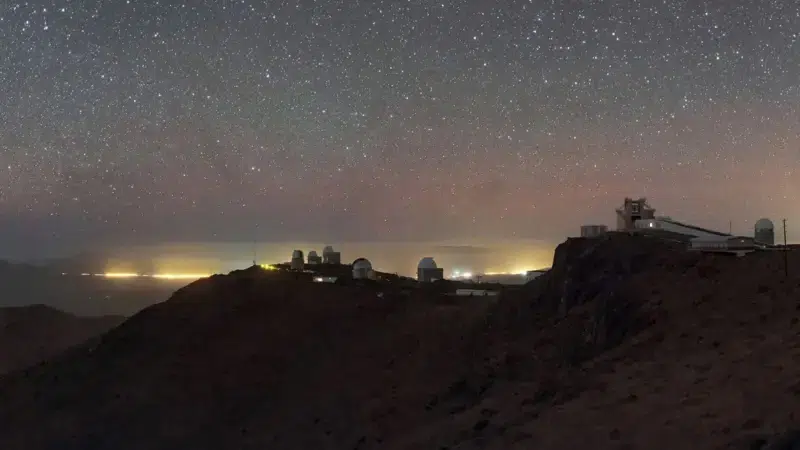
The advance of artificial light over Atacama
For decades, the vastness of the desert acted as a natural barrier against light pollution. However, the economic development of the region began to change that scenario.
The expansion of Antofagasta and the increase in productive activities in northern Chile have led to a sustained increase in sources of nighttime lighting. At the same time, the growing presence of satellites also adds new challenges for astronomical observation.
Additionally, experts warn that future industrial projects could significantly increase the glow of the night sky. Although some initiatives have been suspended, there remains concern about new proposals that may arise in the coming years.
For this reason, scientists and organizations linked to astronomy are pushing for an update of environmental regulations to ensure stricter protection of these nocturnal ecosystems.
Light pollution, a global environmental threat
The problem goes far beyond astronomy. Currently, about 80% of the world’s population lives under skies affected by light pollution, a phenomenon that grows year after year.
Various studies show that the excess of artificial lighting disrupts the biological cycles of numerous species. Migratory birds, pollinating insects, bats, and other animals alter their natural behaviors due to the confusion generated by night lights.
Similarly, many plants see their growth and reproduction cycles altered. As a result, changes occur in entire ecological chains, affecting the functioning of entire ecosystems.
On the other hand, recent studies also link the loss of starry skies with cultural and psychological impacts, as it reduces the historical connection between people and the natural environment.
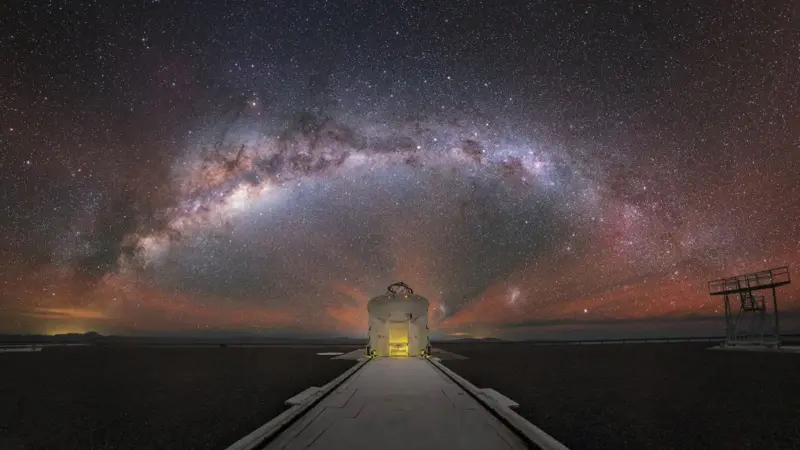
Why is it essential to protect dark skies?
Dark skies are an environmental resource as valuable as forests, wetlands, or oceans. Their conservation allows for the preservation of essential ecological processes and maintains suitable conditions for nocturnal biodiversity.
Moreover, these spaces promote scientific development and enable discoveries that expand knowledge about the universe. Facilities like the Paranal Observatory and the future Extremely Large Telescope directly depend on these exceptional conditions.
Finally, the protection of natural darkness contributes to a more efficient use of energy and promotes development models compatible with environmental conservation. In an increasingly illuminated planet, preserving places like the Atacama Desert represents a unique opportunity to protect both nature and the scientific heritage of humanity.
An environmental heritage that demands new measures
The experience of Atacama reflects a global challenge. What was once an abundant resource has now become a scarce asset that requires specific protection policies.
While scientists, authorities, and environmental organizations seek to strengthen control mechanisms, the preservation of these nocturnal landscapes emerges as a growing priority in the face of urbanization and industrial activity.
The conservation of natural darkness not only ensures better conditions for astronomical research. It also protects sensitive ecosystems, favors biodiversity, and helps maintain one of the oldest connections between humanity and the starry sky.



