



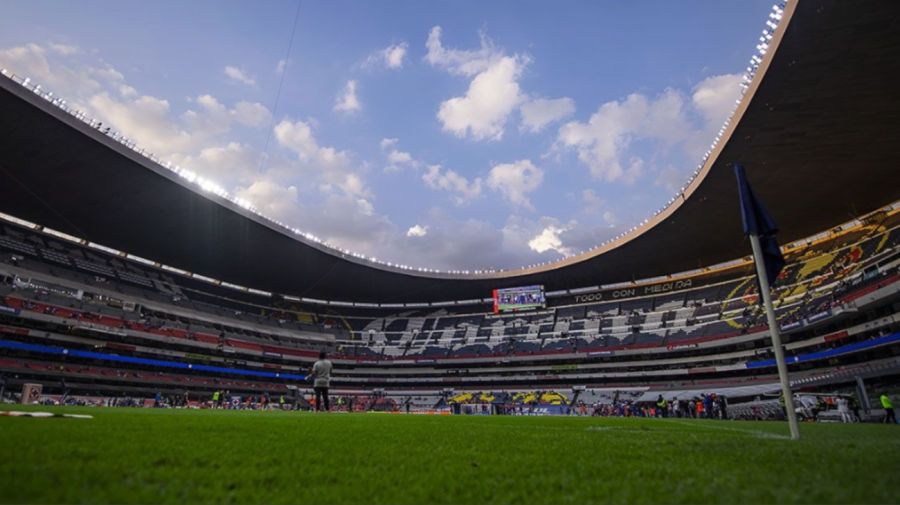
The Azteca Stadium, an iconic sports venue in Mexico City, is facing serious structural problems due to continuous ground subsidence. This situation has caught the attention of NASA, which is tracking the phenomenon with its NISAR satellite, specialized in terrestrial monitoring from space.
The Challenge of Azteca Stadium’s Subsidence
The subsidence phenomenon in the area has reached an alarming rate of 10 centimeters per year, causing stands detachments and generating concern among the organizers of the upcoming World Cup, which will also be held in the United States and Canada.
Satellite data has confirmed that the imposing structure of the stadium is constantly shifting downward due to the compaction of the clay soil on which it was built in 1966.
The soil of Mexico City is primarily composed of clay, a land highly susceptible to compression when water is extracted from it. This extraction has accelerated the city’s subsidence.
According to Martín Govorcin, a scientist at the NASA Laboratory, groundwater extraction has created an unsustainable void for the weight of the constructions on the surface.
“The water extracted from the aquifer compacts under the weight of the city,” explained Govorcin, referring to the deformations detected by the satellite’s radar waves.
FIFA has scheduled five international matches at Azteca Stadium for the World Cup, including the opening match between Mexico and South Africa. Despite public complaints, the maximum capacity of 87,500 spectators has not been reduced.
Recent rains have exacerbated the problems, causing flooding on access roads such as Periférico Sur and Calzada de Tlalpan, complicating the logistics of accessing the stadium.
So far, the Mexican Football Federation has not commented on a possible relocation of the opening match to other venues like Guadalajara or Monterrey, although improvements have been made in the VIP areas and pedestrian entrances.
The Azteca Stadium, famous for being the stage of Pelé’s victories in 1970 and Maradona’s in 1986, now faces one of its greatest engineering challenges as it prepares for its third World Cup.

