



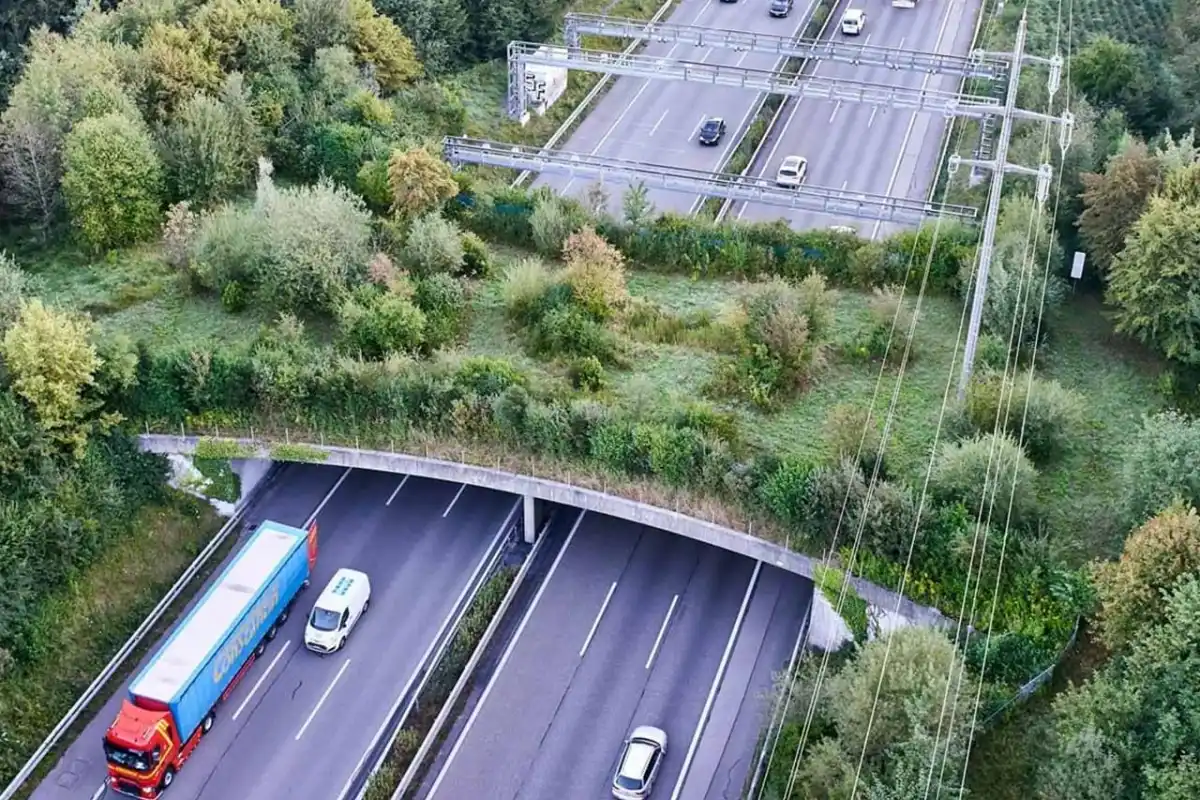
Roads and highways are essential for mobility and commerce, but they also generate a negative effect: the fragmentation of natural habitats. To address this problem, more and more countries are incorporating wildlife crossings or ecoducts, structures designed for animals to safely cross roads and highways.
These corridors not only preserve biodiversity but also reduce road accidents, becoming a key tool for future infrastructure.
Types of wildlife crossings
Depending on the species and terrain, wildlife crossings take different forms:
- Green bridges or ecoducts: they cross over roads.
- Underground tunnels: designed for medium and large mammals.
- Corridors for amphibians and reptiles: structures adapted for small species.
- Aerial crossings: designed for arboreal animals.
Their effectiveness depends on integration with the environment: native vegetation, acoustic barriers, and fences that guide animals to safe crossings.
Proven impact
International evidence shows that wildlife crossings reduce vehicle-animal collisions by 80% to 95% when complemented with side fencing. In addition to reducing wildlife mortality, these infrastructures:
- Maintain genetic diversity by preventing population isolation.
- Facilitate natural movements in search of food, shelter, or reproduction.
- Improve road safety and reduce economic costs associated with accidents.
International examples
- Netherlands: a world reference in ecological infrastructure. The Natuurbrug Zanderij Crailoo bridge is one of the longest on the planet and is used by thousands of animals each year.
- Canada: Banff National Park has multiple wildlife crossings over and under the Trans-Canada Highway, with records of hundreds of thousands of successful crossings by bears, elk, and wolves.
- Estonia: research shows that the use of ecoducts increases over time as species incorporate them into their movement patterns.
Road safety and economy
Wildlife crossings not only benefit ecosystems but also have a direct impact on the operation of transportation systems:
- Reduce risks for drivers and transporters.
- Avoid operational interruptions in logistic corridors.
- Generate economic savings due to less material damage, medical care, and wildlife loss.
Studies conclude that the accumulated benefits during the lifespan of these structures can far exceed their construction costs in areas with a high incidence of accidents.
A global trend towards sustainability
Modern road planning is no longer limited to human mobility: it integrates safety, conservation, and sustainability objectives. Wildlife crossings are part of this new vision, where infrastructure is conceived as a system that must coexist with nature.
In a context where sustainability is increasingly important in infrastructure projects, wildlife crossings emerge as a solution capable of simultaneously addressing environmental, social, and operational challenges.
What began as a conservation tool is transforming into a common component of modern roads, demonstrating that the development of mobility and the protection of biodiversity are not necessarily opposing goals.
Wildlife crossings are much more than green bridges: they represent a paradigm shift in road infrastructure. By reducing accidents, preserving ecosystems, and improving the genetic connectivity of species, they are consolidated as allies of road safety and urban sustainability.


