



An operation conducted by the National Undersecretariat for the Environment has reignited the debate on the impact of sport hunting on biodiversity. The intervention took place in the town of Costa Uruguay Sur, in the department of Gualeguaychú, province of Entre Ríos, where authorities detected alleged irregularities linked to an establishment dedicated to hunting activities.
The inspection was led by the Environmental Control Brigade (BCA) following a complaint filed by the organization Freeland. The investigation focused on possible violations of the national wildlife protection regulations and resulted in the seizure of a notable antler belonging to a 72-point red deer.
Additionally, the procedure opened new lines of investigation related to the origin of animals kept in captivity and the potential irregular movement of species intended for sport hunting.

An exceptional specimen under the scrutiny of authorities
During the proceedings, inspectors found that a foreign hunter had allegedly paid around 40,000 dollars to hunt the red deer specimen, a figure that could represent one of the highest recorded values for this practice in South America.
However, when the mandatory documentation for the operation of the establishment was requested, the person in charge of the premises was reportedly unable to present the corresponding authorization or the official records where the data of hunters and obtained pieces must be recorded.
For this reason, the Environmental Control Brigade announced the initiation of administrative proceedings that could lead to economic sanctions, without prejudice to the ongoing judicial investigations.
Discovery of exotic species and numerous hunting trophies
Throughout the raid, agents also verified the presence of various species within a fenced area of approximately 130 hectares.
Among the animals observed were specimens of Indian antelope, axis deer, wild boar, four-horned ram, domestic ram, and a female red deer. The coexistence of these species raised questions about their origin and the conditions in which they were kept.
Additionally, around 50 hunting trophies composed of skulls, horns, and antlers belonging to different species were found. This discovery increased suspicions about possible maneuvers related to the irregular transfer of animals, the trade of trophies, and other activities that could violate current legislation.
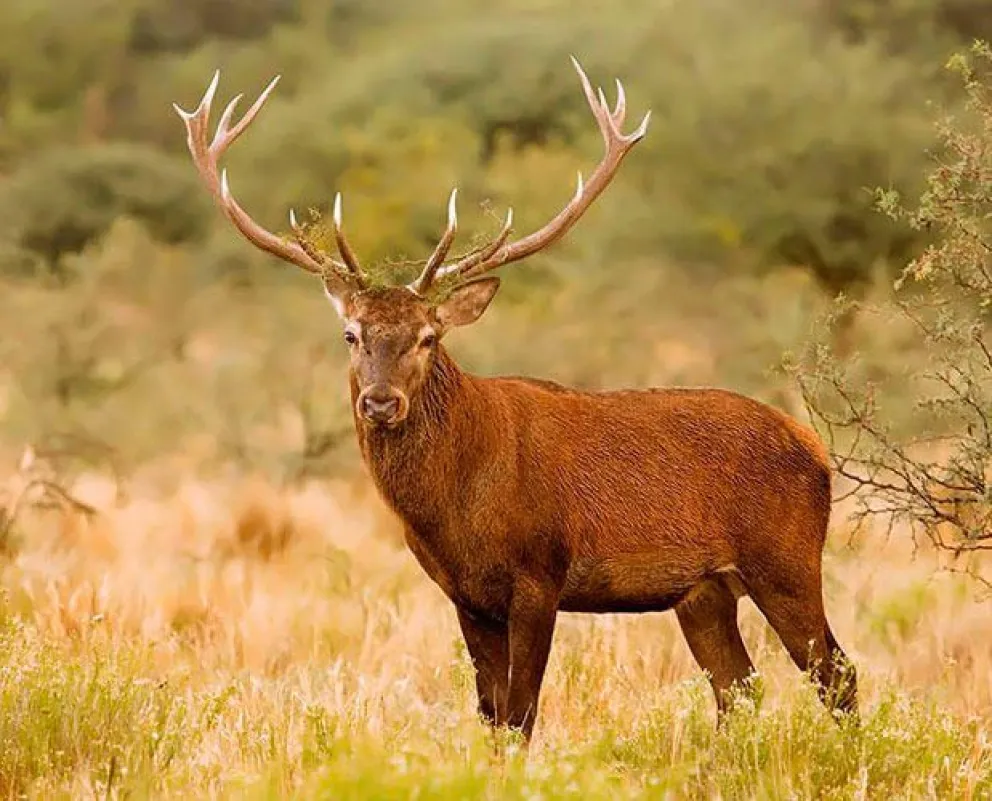
The red deer: an introduced species that transformed ecosystems
The red deer (Cervus elaphus) is a species native to Europe, North Africa, and wide regions of Asia. It was introduced in Argentina at the beginning of the 20th century for hunting purposes and subsequently expanded to different natural environments.
It can currently be found in areas of Patagonia, mountainous regions, and various private establishments in the country. Its great adaptability allowed it to establish stable populations outside its original distribution.
However, specialists warn that its presence can generate significant ecological impacts. By competing for food with native species, modifying vegetation, and altering natural dynamics, the red deer is considered an exotic species that requires monitoring and proper management to avoid negative effects on ecosystems.
Conservation and control to protect biodiversity
The case recorded in Costa Uruguay Sur once again highlights the importance of strengthening controls over activities involving wildlife and exotic species.
At the same time, it underscores the need to ensure compliance with environmental regulations aimed at preserving ecological balance and preventing practices that could affect biodiversity.
As the investigation progresses in the department of Gualeguaychú, authorities seek to determine the extent of possible violations and clarify the origin of the animals and trophies found in the establishment, in a case that reopens the debate on the future of conservation and the responsible management of wildlife in Argentina.



