



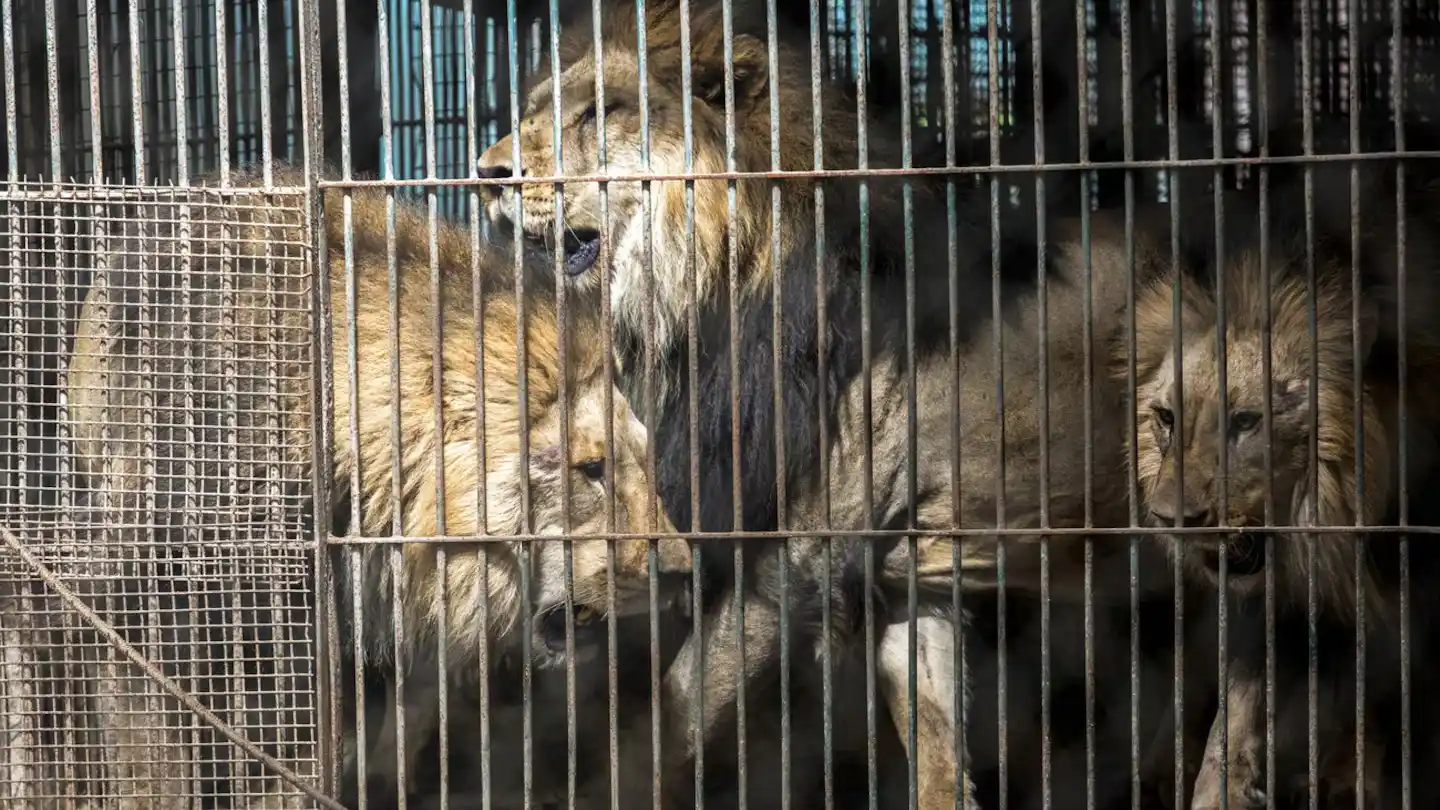
Thirty large felines that still remain on the closed premises of the former Luján Zoo will be relocated in August 2026 to specialized sanctuaries in the United States and South Africa.
The logistics will be organized into two contingents of 15 specimens each, in what is considered the largest-scale operation since the relocation process began.
The initiative is led by the NGO Four Paws International, based in Switzerland, which coordinates with the national government the departure of the animals to destinations where they can live in conditions of well-being and safety.
Background of the closure
The zoo, located at km 58 of the Western Access, was closed in February 2020 due to serious allegations of animal abuse.
For years, it was characterized by allowing direct contact between the public and wild animals, a practice questioned by specialists and animal protection organizations.
Since then, the premises have remained closed and are undergoing a conversion process. The more than 60 animals that remained there are subject to international operations for their transfer to sanctuaries.
Previous transfers
In February 2026, the first movements were carried out:
- The brown bears “Gordo” and “Florencia” were sent to the Belitsa Sanctuary in Bulgaria.
- The Bengal tigress “Flora” was transferred to the Felida Big Cat Sanctuary in the Netherlands, although unfortunately, she passed away weeks later due to severe peritonitis.
These cases were prioritized due to the severity of their clinical conditions, following veterinary evaluations conducted in November 2025.
Conditions of the transfer
The destinations of the 30 felines depend on the reception capacity of the sanctuaries and the health protocols of each country. Once the operation is completed, another 30 animals will still remain on the premises awaiting relocation.
The project stipulates that the animals cannot be commercialized or used for tourist or recreational activities. The goal is to ensure their recovery and well-being in spaces designed for their care.
Importance of the rescue plan
The transfer of the felines represents a key step in the international relocation of wildlife and in the eradication of animal exploitation practices. The sanctuaries offer:
- Large and natural spaces for wildlife.
- Specialized veterinary care.
- Conditions of safety and well-being that cannot be guaranteed in urban captivity.
The August operation will be a milestone in the process of rescuing the animals from the former Luján Zoo. The joint action of international organizations and the Argentine State seeks to repair years of mistreatment and offer the felines a dignified life in specialized sanctuaries.


