



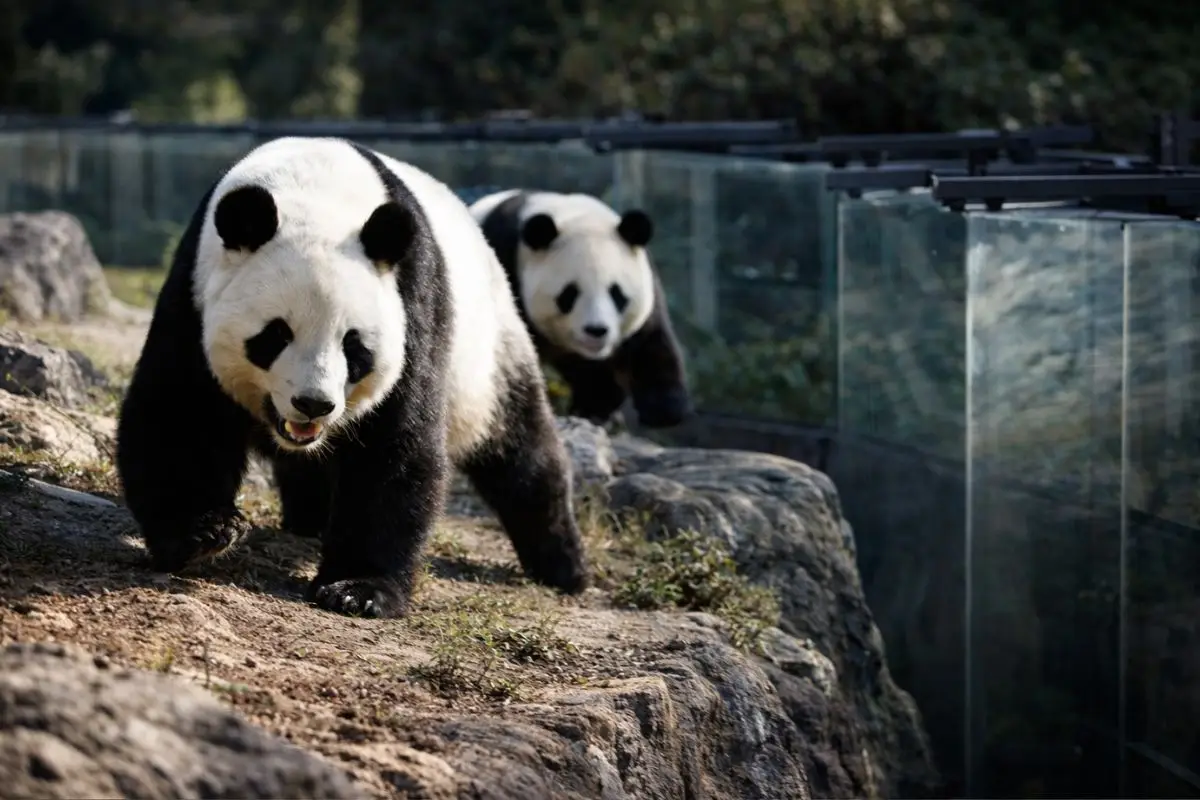
The departure of the twins Xiao Xiao and Lei Lei from Tokyo’s Ueno Zoo to China marked a historic milestone: Japan was left without pandas for the first time in over 50 years.
The images of crowds bidding farewell with tears in their eyes reflect that, beyond politics, these animals have been part of the Japanese cultural heart and a symbol of tenderness shared by generations.
Panda Diplomacy
The news falls within the framework of the so-called “panda diplomacy”. A strategy that China has used for decades to strengthen ties with other countries.
- In the 20th century, pandas were sent as gifts of friendship.
- Since 1984, the policy shifted to long-term loans, with specific conditions for conservation and reproduction.
- Mexico is an emblematic case: in 1975 it received Pe Pe and Ying Ying as a gift from Mao Zedong. From that line was born Xin Xin, the only panda in the world that does not belong to China, who turned 35 in 2025.
The Tokyo Twins
Xiao Xiao and Lei Lei were born in 2021 at Ueno Zoo, but under panda diplomacy rules, their ownership always belonged to China. After a final meeting with their admirers, they were sent to Sichuan, where they will remain in quarantine at the Giant Panda Conservation and Research Center.
Their departure leaves a void in Japan, especially in Ueno, which for decades was a meeting point for families and tourists. Japanese authorities remain hopeful for future cooperation agreements that will allow the return of these animals.
Political Context and Bilateral Tensions
The return of the pandas occurs at a delicate moment for relations between Japan and China.
- Recent statements by the Japanese prime minister about a possible conflict in Taiwan provoked a response from Beijing.
- China reduced flights, discouraged tourism to Japan, and suspended key imports such as seafood and rare earths.
Although the withdrawal of pandas is usually routine, the coincidence with this political climate generated speculations about a diplomatic background. For many, the departure of Xiao Xiao and Lei Lei symbolizes not only an adjustment in conservation policy but also a reflection of the growing tension between both governments.
Cultural and Global Impact
The absence of pandas in Japan resonates beyond the political:
- On the cultural level, pandas have been part of Ueno’s identity and the daily life of millions of visitors.
- On the international level, the news raises questions about the future of panda diplomacy and how global tensions could affect other countries with loaned specimens.
In Mexico, for example, Xin Xin remains a symbol of friendship and cooperation, but the Japanese situation raises doubts about the continuity of these agreements in a scenario of increasing geopolitical rivalry.
Panda diplomacy has been a bridge between cultures and governments for decades. Today, with Japan without pandas for the first time in generations, it is clear that these animals are much more than icons of tenderness: they are living pieces of international politics, capable of reflecting both cooperation and tensions between nations.



