



An interdisciplinary team from the Ministry of Energy and Environment of Mendoza discovered a new Andean condor nest in the Tupungato Provincial Park. The discovery occurred during the 20th Simultaneous Census of the Andean Condor and represents a key advancement for the conservation of this species.
During the observations, technicians detected a adult female spending a long time on a rocky area. Days later, the presence of the male along with an egg was confirmed, which was later incubated by the female.
This finding confirms that there is an active breeding population in the province. The news is encouraging, as the condor only reproduces in healthy environments with minimal human intervention.
The record is a clear indication of the good environmental state of high mountain ecosystems and reinforces the importance of joint work between public institutions and environmental organizations.

The conservation status of the Andean condor
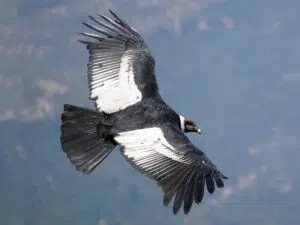
The Andean condor (Vultur gryphus) is one of the largest birds in the world and a symbol of the South American Andes. In Argentina, it is considered near threatened due to habitat loss, lead poisoning, and illegal hunting.
To reverse this situation, the country develops rescue, rehabilitation, and reintroduction programs for specimens. These actions are led by the Fundación Bioandina Argentina along with provincial and national organizations. Thanks to these efforts, condors rescued and raised in captivity have been released in different regions of the country. This has allowed for the recovery of populations where the species had disappeared.
Censuses and satellite monitoring allow us to know their distribution, detect threats, and locate new nesting areas. Each new nest discovered, like the one in Tupungato, represents a sign of ecological balance.
Additionally, environmental education campaigns are promoted in Andean and rural communities. These actions aim to reduce risky practices, such as the use of toxic baits, and promote coexistence with wildlife.
A symbol of the Argentine skies
The Andean condor is a sacred bird for indigenous cultures and one of the most powerful symbols of Argentine identity. It represents freedom, strength, and the spiritual connection between the sky and the earth. With a wingspan of over three meters, it is the largest flying bird on the planet. It plays an essential role in ecosystems by feeding on carrion, helping to keep natural environments clean.
Its presence indicates a healthy and balanced environment, as it only inhabits regions with low pollution and an abundance of natural food. Where there are condors, nature still maintains its harmony. The conservation of the Andean condor not only protects a majestic species but also the entire ecological and cultural framework surrounding it.
The discovery in Tupungato reinforces hope for the future of the species. The existence of an active breeding pair demonstrates that conservation efforts are yielding results.
Caring for the Andean condor is preserving the history, biodiversity, and essence of the Andes. Its flight over the mountains reminds us that protecting nature is also protecting our own identity.



