



Wildlife in Santa Fe is facing a crisis marked by illegal trafficking and mascotism. Thousands of animals are taken from their natural habitat, suffer injuries, or are sold as merchandise. This process disrupts their life cycles and has a strong impact on the ecosystems of the region.
So far this year, over 400 specimens have regained their freedom after undergoing veterinary checks and rehabilitation processes. Most of them were birds, which are the most affected group by captures and commercialization. However, this number is just a fraction of the total animals entering rescue centers.
The La Esmeralda Wildlife Rescue and Interpretation Center in the city of Santa Fe received over 700 specimens including birds, reptiles, and mammals. Some manage to be released, but many are doomed to live under human care due to injuries or behaviors acquired in captivity.
The animals come in through various means: confiscations in operations, roadkill on highways, injuries from hunting, or voluntary surrenders by people unaware of the illegality of owning a wild animal. This last practice is common with species like capybaras, which were mistakenly popularized as pets.
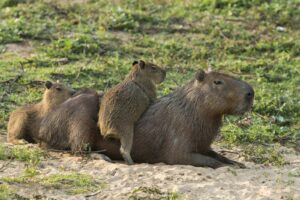 The capybara is one of the species victim of wildlife trafficking.
Consequences of trafficking and mascotism
The illegal trafficking of wildlife is one of the main threats to biodiversity in Santa Fe and across the country. Birds like the red-crested cardinal or the talking parrot are among the most trafficked. Confiscations of turtles and small mammals are also common, disrupting their natural behavior significantly.
Mascotism not only affects the captured individual, which suffers from stress, malnutrition, and loss of vital abilities, but also the ecosystems. Each animal plays a specific role in its habitat. When one disappears, the balance is disturbed: seed dispersal decreases, food chains are interrupted, and forests and wetlands weaken.
In many cases, captive-bred specimens fail to readapt. Birds accustomed to cages must relearn to fly, gain muscle, and regain basic instincts. If they cannot meet these conditions, they are destined to life in shelters, far from the environments where they would perform key ecological functions.
 Talking parrots captured, with feather loss. Credit: Carina Righi – WCS Argentina.
How to prevent trafficking and protect wildlife
The first step is to not buy or own wild animals as pets. Each purchased specimen fuels the illegal market and encourages new captures. Additionally, the law prohibits their commercialization and establishes penalties for those involved in this cycle.
If you come across an injured animal or in an irregular situation, it is essential to report it to the environmental authorities, instead of trying to care for it at home. Rescue centers have trained professionals for their recovery.
Education and community awareness are essential tools to reverse this issue. Teaching new generations the value of species like the talking parrot—capable of regenerating forests by dispersing seeds—is a way to build respect for biodiversity. Only by leaving animals in the wild can they fulfill their ecological role and ensure the health of ecosystems.



