



The staff of the Environmental Police of Córdoba carried out a wildlife rescue at an educational farm in Villa María.
They had 19 animals without authorization, including wild boars, talking parrots, and aquatic turtles.
Wildlife rescue at an educational farm in Córdoba: which animals were located
The division, part of the Ministry of Environment and Circular Economy, raided the place in a rural area of Villa María, and found wildlife exhibited among the animals at the multipark.
Since the establishment did not have authorization from the environmental department to care for wild animals, they rescued the specimens and transferred them to the wildlife rescue and rehabilitation center located in Casa Grande, Tatú Carreta.
 They rescued talking parrots, among other animals. (Photo: Environmental Police Córdoba).[/caption>
“We received a complaint alerting that in this educational farm they had seen wild animals, so we requested a search warrant from the Justice and we went to verify the situation,” said Adrián Rinaudo, secretary of the Environmental Police. “Indeed, they had 19 wild individuals without authorization,” he added.
Upon arrival, the inspectors confirmed, as they specified, that in the educational establishment and multipark there were several animals. One capybara, four aquatic turtles, eight land turtles, two peccaries, three talking parrots, and a wild boar alongside the farm specimens.
“The specialists will examine each individual, determine the rehabilitation treatment they require, and assess the possibility of reintroducing them into nature,” added the official.
Where to report similar situations
In this case, the authorities reminded that possession, commercialization, and transportation of wild animals is completely prohibited.
Therefore, they request that if you detect a situation that could harm the environment, you can make a report through the following channels:
- By phone at 0351-4420924
- By WhatsApp at 3513108709
- Or through Ciudadano Digital
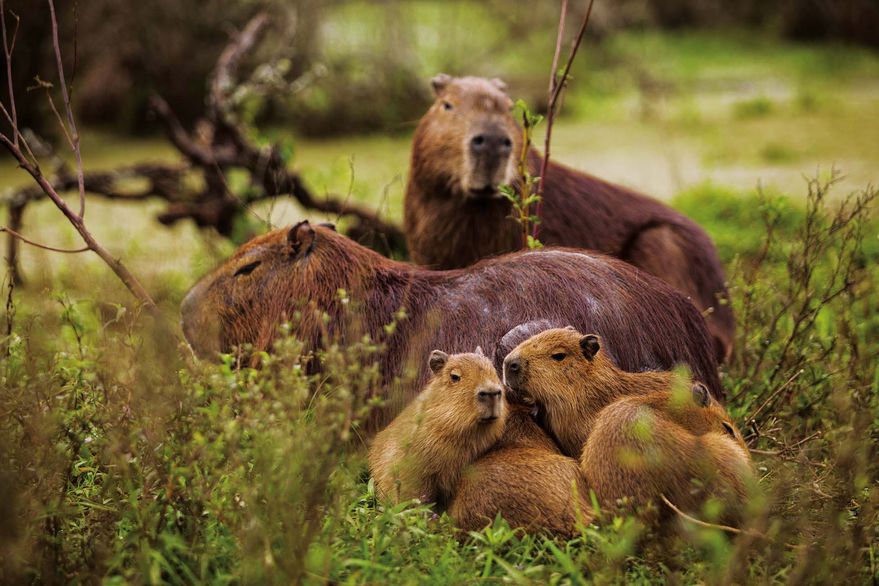 They also found capybaras.
Illegal possession of wildlife in Argentina: the problem in numbers
Illegal possession and trafficking of wildlife in Argentina is a serious problem with a significant impact on biodiversity. It is the third most lucrative crime worldwide, after drug and arms trafficking.
In numbers, more than 100 species of birds, 20 of reptiles, and 15 of mammals native to the country are victims of illegal trafficking. About 20 of them are in some threat category.
Regarding trafficking, birds are the most affected, especially species like the yellow cardinal, cardinal, toucan, talking parrot, and goldfinch. In terms of reptiles, land and freshwater turtles, and the lampalagua boa are the most common. Among mammals, monkeys and felines are highly demanded.



