



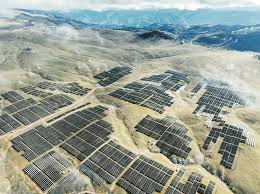
The sun, a source of life for millennia, has become a great ally in the global energy transition. Faced with the urgency of climate change, an increasing number of countries are opting for this clean energy as a way to reduce polluting emissions and ensure a sustainable future. Currently, China is in the spotlight with the construction of the world’s largest solar plant, located over 4,000 meters high on the Tibetan Plateau.
The project, which will cover an area similar to the city of Chicago, aims to strengthen the country’s leadership in renewables. With millions of panels in operation and others under construction, it is expected that the plant will provide electricity to more than five million households, demonstrating the potential of harnessing arid and remote environments to produce clean energy on a large scale.
The Tibetan Plateau offers unique conditions for this type of infrastructure. Its clear skies and high solar radiation allow for constant and efficient production. Added to this is the availability of low-cost land, making the region a strategic point for the development of large-scale projects.
In 2024, China installed over 277 gigawatts of solar energy, reaching a total capacity of 800 GW. With the new Tibetan plant, the country reinforces its position as a world leader in renewables, although there are still technical challenges related to energy transportation to major urban centers and the efficient management of the power grid.
China, the new leader in the energy transition?
The challenge now is to ensure that these types of projects are integrated in a balanced way with the communities and ecosystems around them. Proper waste management of solar panels at the end of their lifespan, the protection of biodiversity in installation areas, and equity in energy access are key issues to consolidate their sustainability.
Meanwhile, China is advancing in its ambitious transition plan, replicating previous experiences in deserts and consolidating what is already known as “solar cities”. From Xinjiang to Tibet, gigantic photovoltaic parks demonstrate that even the most remote places can become engines of clean energy for millions of people.
The construction of the world’s largest solar plant not only represents a technological achievement but also a sign of the direction the world needs to follow. Faced with the climate crisis, harnessing the sun emerges as one of the most powerful solutions, capable of illuminating homes, protecting ecosystems, and opening the door to a fairer and more sustainable future.

The ecological and social benefits of solar plants
Large-scale solar plants, like the one being built in Tibet, offer advantages that go beyond electricity generation. The first and most obvious is the reduction of carbon dioxide emissions and other pollutant gases responsible for global warming. Each megawatt produced by the sun avoids the burning of fossil fuels, providing immediate relief to the atmosphere.
At the local level, these infrastructures help transform arid landscapes into areas with greater ecological resilience. The installation of solar panels in deserts and plateaus can reduce soil erosion, halt sandstorms, and promote vegetation recovery. Thus, in addition to producing energy, they contribute to restoring the natural balance in fragile areas.
On a social level, the expansion of solar energy generates green jobs at multiple stages: from panel manufacturing and assembly to plant operation and maintenance. These jobs are more stable and sustainable over time compared to highly polluting industries. Additionally, they provide development opportunities for rural communities, who see in renewable energy a path to progress without sacrificing their environment.



