



In a context of constant increases in energy costs, an innovation could radically change households’ relationship with electricity. It is a new generation of domestic wind turbines that promises free and clean energy for two decades.
This development directly targets those seeking sustainable and economical alternatives to cover their daily electricity consumption. Unlike traditional large wind installations, these turbines were designed to adapt to urban or rural environments, with a compact size and surprising efficiency.
The transition to renewable sources is no longer a distant future. New technologies allow people to generate electricity from their own homes without relying exclusively on conventional grids.
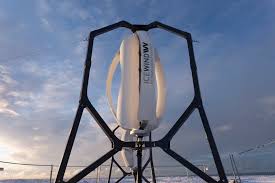
Durable, Silent, and Efficient Turbines
The design of these vertical-axis turbines is one of their main differentiators. By capturing wind from any direction, they avoid orientation problems and improve performance in areas with variable currents. Moreover, their operation is so quiet that it barely exceeds 30 decibels.
One of their main strengths is durability. Manufactured to withstand storms, snow, dust, and even ice, they can operate without the need for maintenance for 20 years. This not only reduces operating costs but also makes them a reliable alternative even in extreme weather conditions.
Their low maintenance requirement and robust design allow them to be installed in residential as well as commercial areas. That’s why they are starting to gain ground against other clean technologies like solar panels, which require more specific location and inclination conditions.
A Viable Option for Future Homes
The Icelandic firm IceWind is driving this innovation with a model already commercialized in the United States. With just two or three units, an average household could meet its daily electricity demand without resorting to the public grid.
Beyond the economic savings, these turbines that provide light for decades represent a concrete solution to reduce environmental impact and promote energy self-sufficiency. In times of climate change and energy crisis, their arrival marks a crucial step towards a more responsible and sustainable consumption.
The dream of generating energy at home, without emissions or bills, is closer than ever. This compact wind technology is emerging as one of the major bets to transform how electricity is obtained and used.

Economic Boost with Clean Energy
Beyond its positive impact on the environment, renewable energies generate multiple economic benefits. One of the main ones is job creation: from the manufacturing and installation of solar panels or wind turbines, to the maintenance and operation of systems, the sector drives new job opportunities locally and globally.
Moreover, these energy sources reduce dependence on imported fossil fuels, allowing countries to improve their trade balance and stabilize their economies. By generating energy from locally available natural resources like the sun or wind, regional economies are strengthened, and energy security is increased.
Over time, the costs of renewable energy production tend to decrease thanks to technological advancements and production scale. This translates into more stable and predictable rates for consumers, benefiting both households and businesses. Thus, the energy transition is not only an environmental necessity but also an intelligent economic strategy.



