



Within the framework of an event held at the Francisco P. Moreno auditorium of the Old Cataratas Hotel, the Iguazú National Park Restoration Plan (PNI) was presented.
A proposal by the National Parks Administration (APN) that aims to strengthen the conservation of the Paranaense Jungle through concrete actions of environmental rehabilitation.
Territorial diagnosis and multiscale approach
During the presentation, biologist Sergio Casertano from the Environmental Education Department detailed the work methodology, which includes:
- Identification of degraded areas
- Removal of invasive species
- Reforestation with native species
- Monitoring and tracking of recovery processes
This multifocal and multiscale approach aims to restore the ecological balance of the park and strengthen its resilience to climate change.
Restoring in network: public-private partnership for conservation
Concessionaire companies and environmental organizations join in regenerating the native forest.
One of the highlights was the partnership with private actors operating within the park. The experience of Iguazú Jungle was especially valued, as they restored the site of their former central office by:
- Soil decompaction
- Planting native species
- Subsequent environmental monitoring
This case was recognized as an example of good practices in ecological restoration and presented as a replicable model. Additionally, Iguazú Jungle recently participated in a reforestation event in the public use sector, alongside Iguazú Argentina (IASA) and the Wildlife Foundation, reaffirming their commitment to the conservation of the Paranaense Jungle.
Collective commitment and symbolic action
The event concluded with the planting of a tree as a gesture of shared restoration.
Representatives from the Iguazú National Park, Iguazú Argentina, Meliá Hotel, Jungle, and the Wildlife Foundation participated in the event, which ended with a symbolic planting of a native tree as a demonstration of institutional and corporate commitment to environmental management and biodiversity protection.
Iguazú National Park: natural sanctuary, tourist attraction, and living laboratory
A key protected area for species conservation, regional development, and environmental education.
The Iguazú National Park is much more than a tourist destination: it represents a refuge for endangered species, a natural monument of universal value, and a driver of sustainable development for the region.
Biodiversity conservation
- Habitat of endangered species: jaguar, ocelot, yacutinga, macuco
- Biological richness: birds, mammals, fish, ferns, orchids, palms
Natural and cultural heritage
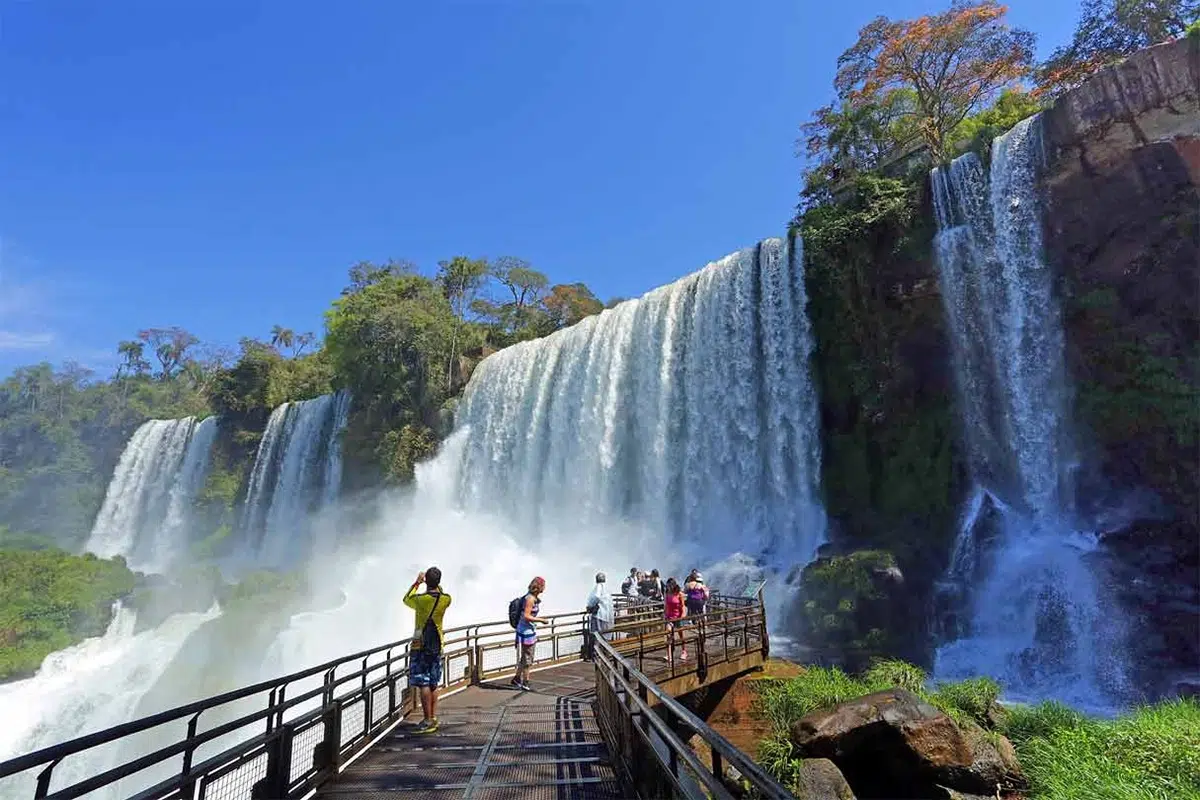
- Iguazú Falls: over 270 waterfalls in the middle of the jungle
- UNESCO: declared a World Natural Heritage Site in 1984
- Natural Wonder of the World: globally recognized in 2011
Tourism and sustainable development
- International destination: one of the most visited in Argentina
- Regional boost: economic growth in Puerto Iguazú
- Education and research: key site for scientific studies and environmental education
Restoring to preserve: a commitment to the future of the Paranaense Jungle
The PNI Restoration Plan marks a new chapter in the park’s environmental management.
With an integrative and participatory approach, the plan seeks to restore degraded ecosystems, strengthen strategic alliances, and promote sustainable practices to ensure the preservation of this natural heritage for future generations.


