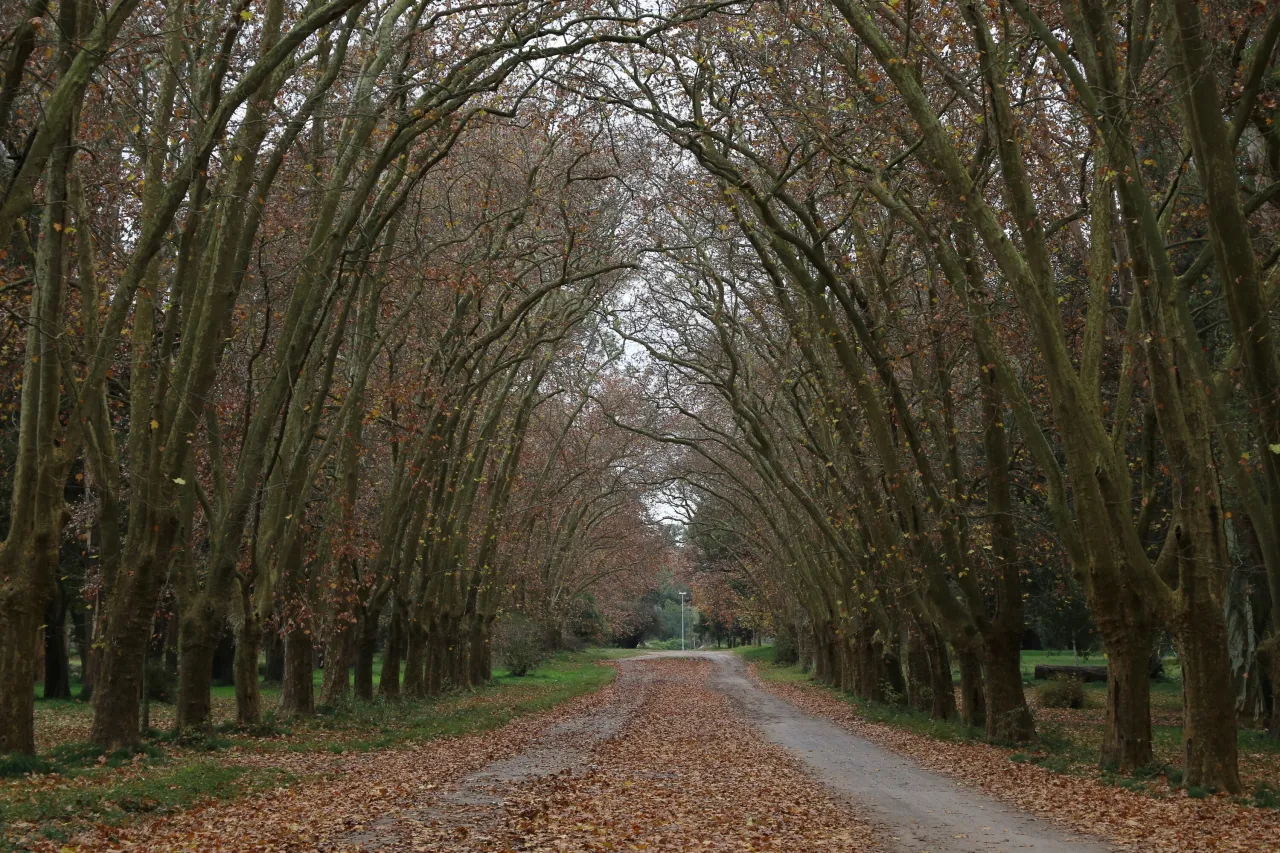
La Reserva de Biosfera Pereyra Iraola enfrenta nuevos reclamos por obras y preservación de su ecosistema protegido. Foto: BAFilma.
The Pereyra Iraola Biosphere Reserve has once again become the center of environmental debate following the emergence of new concerns related to the conservation of its ecosystems. Environmental organizations have warned about the lack of protection measures, maintenance issues, and the advancement of infrastructure works within this natural space recognized by UNESCO.
In particular, the concern is focused on the construction of the access that will connect the Buenos Aires–La Plata Highway with the Camino Parque Centenario, an intervention that, according to environmental sectors, could alter the ecological balance of a protected area of high biological value.
Meanwhile, the conflict remains open and adds judicial filings seeking to review the environmental impact of the works and reinforce conservation actions within the reserve.
Members of the Pereyra Iraola Biosphere Reserve Assembly argue that the problem goes beyond the construction of the new road access. They also warn about the need to implement greater protection measures for the fauna inhabiting the area and improve the maintenance of different sectors.
Among the main demands is the implementation of actions to reduce animal collisions on the Centenario and General Belgrano roads, where traffic poses a constant risk to numerous wildlife species.
Additionally, environmentalists criticize that the commencement of works occurred without a recent instance of public participation and believe that alternative routes outside the reserve’s boundaries should have been considered to minimize potential environmental impacts.
One of the aspects that most concerns organizations is the possible fragmentation of natural environments caused by new road infrastructures.
The opening of roads can alter fauna movements, disrupt biological corridors, and promote landscape degradation processes through soil movements, noise, and increased vehicular traffic.
For this reason, various sectors request that any intervention be accompanied by updated environmental studies and specific mitigation measures that allow for the compatibility of works development with the conservation of protected ecosystems.
The Pereyra Iraola Biosphere Reserve is one of the most significant natural spaces in the Metropolitan Area of Buenos Aires due to the diversity of environments it hosts.
The area protects forests, grasslands, wetlands, and numerous watercourses that serve as a refuge for birds, mammals, reptiles, amphibians, and insects, in addition to contributing to local climate regulation and the conservation of water resources.
Moreover, its designation as a Biosphere Reserve by UNESCO recognizes the balance between environmental conservation, scientific research, education, and productive activities compatible with nature care, making it a model of sustainable management for future generations.
The controversy currently remains in the judicial sphere while various requests are made to review the planned interventions within the protected area.
Environmental organizations argue that any territorial modification must consider the preventive principle, prioritizing the protection of ecosystems against potential irreversible damage.
Meanwhile, the works continue under the jurisdiction of AUBASA, while the debate once again highlights the challenge of balancing infrastructure needs with the preservation of one of the most important ecological corridors in the province of Buenos Aires.
Activists from Greenpeace Mexico carried out an intervention at the Terminal 2 of the Mexico…
The Secretariat of Environment of Entre Ríos imposed a fine of $496,140 on the owners…
The intense polar wave affecting a large part of the country left an unusual scene…
The recent seismic doublet that occurred in Venezuela reactivated the debate on seismic risk in…
The Monitoring of the Andean Amazon Project (MAAP) revealed that in 2025, 736,484 hectares were…
The intensification of wildfires in the United States is reversing decades of progress in reducing…