



A research team from the **Nanyang Technological University (NTU) in Singapore**, in collaboration with the **Seoul National University in South Korea**, has created a **revolutionary sunscreen** made from **camellia pollen**.
A solution that combines **dermatological efficacy** with **environmental respect**, especially towards **marine ecosystems**.
## Plant technology without harsh chemicals
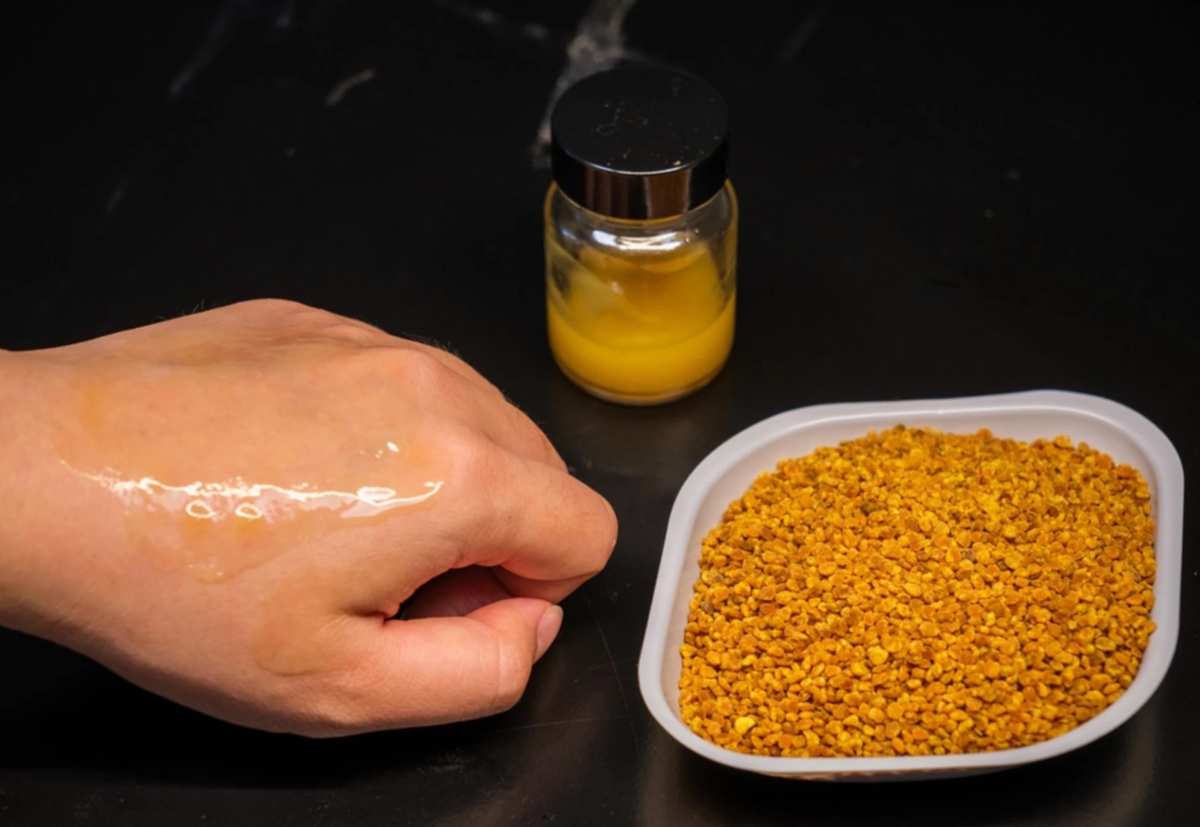
Camellia pollen is transformed into a transparent microgel with high resistance and **UV protection**.
The process begins with the use of **camellia pollen**, a **natural, non-allergenic, abundant, and low-cost source**. Through an exclusive method, without harsh chemicals or high temperatures, researchers **remove the internal content** of the grain, preserving its external structure composed of **sporopollenin**, a **highly resistant biopolymer**.
This material turns into a **transparent microgel**, with a thickness similar to a human hair. When applied to the skin, it acts as an **effective barrier against UV rays**, with protection equivalent to an **SPF 30**, blocking **up to 97% of ultraviolet radiation**.
## Thermal benefit and comfort in warm climates
In addition to protecting against sunlight, the microgel **reduces skin temperature by 5°C** for at least **20 minutes**, thanks to its **low energy absorption** in the visible and near-infrared spectrum.
This effect represents an **additional benefit** in warm regions or during prolonged outdoor activities.
## Respect for marine life: no impact on corals
A safe alternative to bleaching caused by **conventional sunscreens**.
One of the most relevant findings of the study is that, unlike commercial sunscreens, this microgel **does not have adverse effects on corals**, even after **60 days of continuous exposure**. In contrast, corals exposed to conventional products showed **severe bleaching in less than a week**.
This breakthrough makes pollen sunscreen an **ideal option for coastal areas, natural parks, and tourist destinations** committed to **reef protection**.
## Biodegradable cosmetics and circular economy
Although still in the experimental phase, the development paves the way for a **new generation of biodegradable cosmetics**, with applications in **moisturizers, face masks, and baby products**.
The use of pollen as a raw material **reuses agricultural by-products**, integrating into a **circular economy** that transforms waste into resources.
“This type of innovation connects plant biotechnology with climate action,” highlight the researchers.
## Global opportunities and responsible cosmetic transition
Bans in tourist destinations create space for **sustainable alternatives**.
Countries like **Hawaii, Palau, and Aruba** have already banned sunscreens with harmful chemicals for corals, which could facilitate the **adoption of technologies like Solar Pollen Gel**.
If production can be scaled, it could become a **standard for responsible travelers and conscious consumers**.



