



A new and revolutionary construction method has arrived with the aim of saving time, reducing costs, and minimizing environmental impact. It promises to build walls without cement and with “blocks” that fit together like Legos.
This is Linko, which uses bricks that are joined with staples made of recycled plastic.
What is Linko, the system that promises to build walls without cement
An idea that appears revolutionary proposes a true innovation in terms of sustainable construction.
Linko allows for building walls without using a drop of cement, with blocks that fit together as if they were part of a game.
The result is a resistant, reusable, and ready wall in much less time.
As described, having the pieces and a person who can follow basic instructions will be sufficient.
Another positive point is that by not using permanent joints, walls can be disassembled and reconfigured according to needs. Additionally, insulating materials can be injected between the bricks to improve the thermal and acoustic performance of the construction.
The alternative of recycled cement
The cement industry, essential for construction and responsible for around 8% of global CO₂ emissions, faces a critical challenge in its transition to more sustainable practices.
Engineers from the University of São Paulo and Princeton have developed an innovative technology to recycle cement waste, offering a low-carbon alternative with performance comparable to traditional Portland cement.
This product, under study, uses CR as the dominant component (>75% by weight), combined with small amounts of finely ground Portland cement (<20%) or limestone.
The recycled binder showed properties of early and late strength comparable to ordinary Portland cement (OPC).
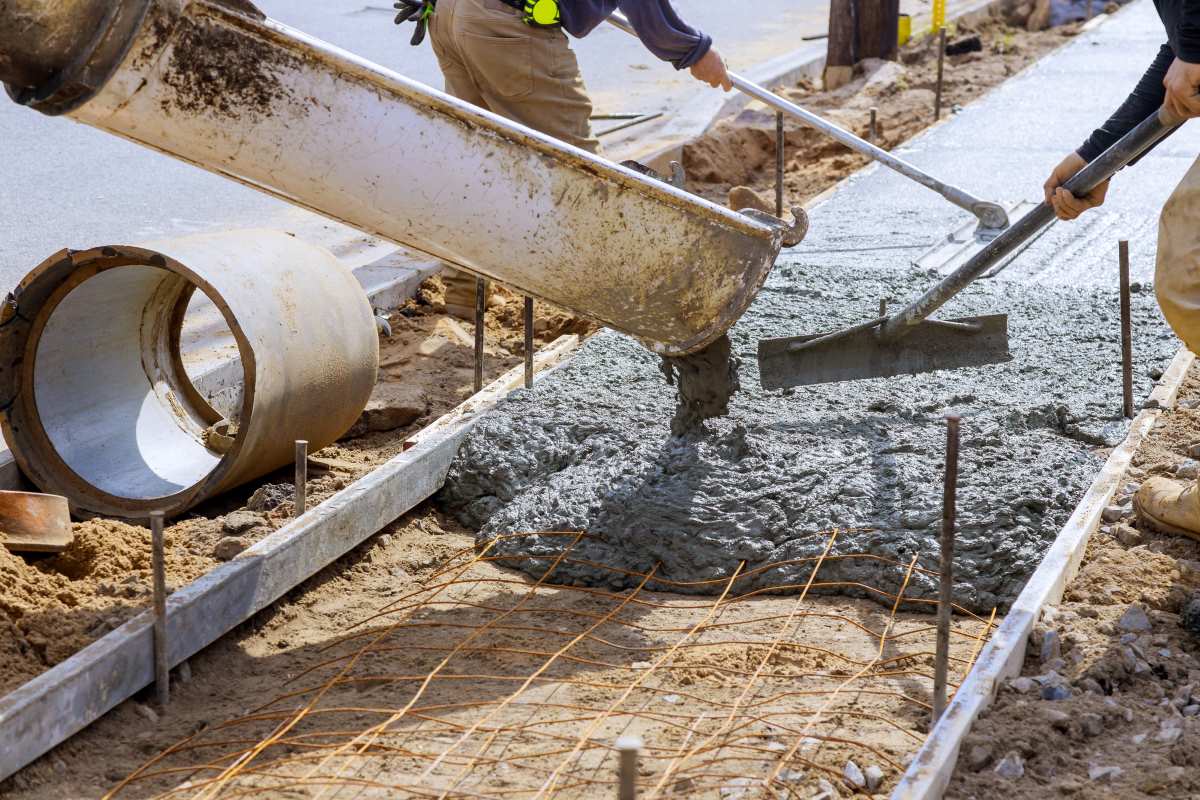 Innovative cement.
Furthermore, it emits between 198 and 320 kg of CO₂ per ton, significantly less than conventional Portland cements. Mixtures with up to 80% recycled cement match the strength of Portland cement while reducing the carbon footprint.



