



Researchers documented for the first time 118 fish species in the Conambo River, located in the Ecuadorian Amazon, one of the least explored areas of the region.
This finding constitutes the first comprehensive inventory of the ichthyofauna of this basin, expanding the scientific knowledge of the place.
Furthermore, the recorded species are grouped into seven orders and 31 families. Thus, the biological richness of the ecosystem is confirmed.
On the other hand, the study suggests that there are still unidentified species. Consequently, the diversity could be greater.
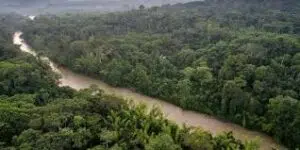
An almost intact ecosystem functioning as a natural laboratory
The Conambo River stands out for its almost pristine state, as its difficult access limited human intervention. This is why it is preserved as an ideal environment for research and allows the study of ecological processes in balance.
Furthermore, typical orders of the Amazon such as Characiformes and Siluriformes predominate, helping to reinforce its biological identity.
On the other hand, families like Characidae, Loricariidae, and Cichlidae show high diversity, while sustaining complex trophic chains.
This ecological balance is key to the resilience of the ecosystem, making its conservation a priority.
Science and ancestral knowledge in a collaborative research
The study was driven by the National Institute of Biodiversity along with various institutions, as well as scientific and environmental organizations that participated in the research.
Consequently, academic and territorial knowledge was integrated, enriching the quality of the research. Additionally, the Shiwiar and Zápara indigenous communities contributed traditional knowledge, providing key information.
In turn, they provided data on techniques such as the use of barbasco, which were understood as local practices. This articulation reinforces the value of ancestral knowledge and promotes more inclusive research models.

Growing threats to Amazonian aquatic ecosystems
Despite its richness, the Amazon faces multiple pressures, such as extractive activities advancing over these territories.
Agriculture, mining, and oil are also activities that generate environmental impacts, altering natural habitats.
Additionally, the construction of dams modifies the watercourses, affecting the dynamics of species. On the other hand, overfishing also negatively impacts, reducing key populations.
Finally, these threats compromise biodiversity. Therefore, it is urgent to strengthen conservation policies.
Biodiversity of the Ecuadorian Amazon: a treasure at risk
The Ecuadorian Amazon is one of the most biodiverse territories on the planet. Additionally, it is home to thousands of unique species.
Consequently, in the Amazon basin, more than 2,400 fish species are recorded. Therefore, it represents a global reservoir. Furthermore, more than 1,000 species are endemic. Thus, its conservation is even more critical.
On the other hand, the diversity responds to the environmental heterogeneity. Consequently, multiple habitats coexist.
Finally, protecting this region is key for the global ecological balance. Therefore, its preservation is an environmental priority.


