



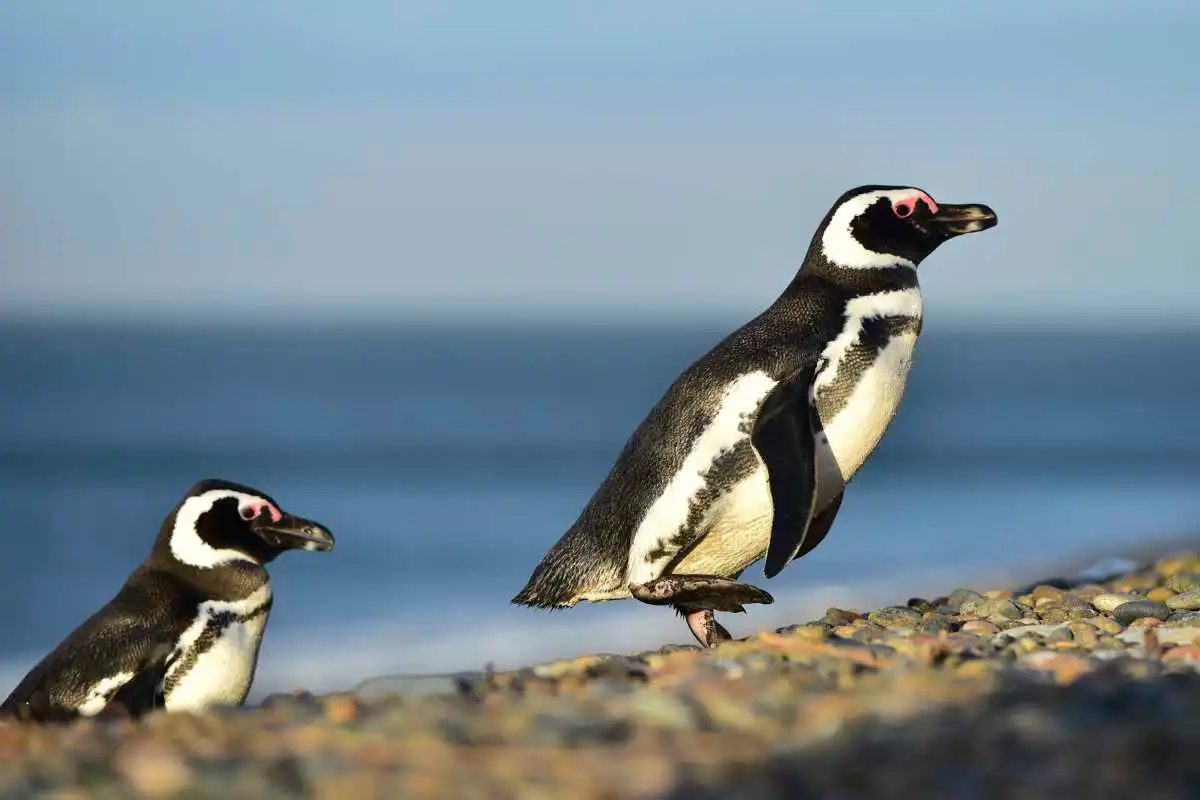
A comprehensive scientific survey conducted along the Argentine Atlantic coast confirmed that the population of the Magellanic penguin maintains a generally stable trend with moderate growth over the past decades.
The work was developed by specialists from the Patagonian National Center and other scientific institutions, who analyzed breeding colonies from Río Negro to Tierra del Fuego, also including the Falkland Islands.
Additionally, the research gathered information obtained from 65 colonies distributed in different points along the Patagonian coast. The study allowed for the construction of one of the most comprehensive overviews of the population status of this emblematic marine species.
The researchers collected scientific data, technical reports, and monitoring records from governmental agencies and environmental organizations. They also added field observations conducted between 2022 and 2025.

New colonies and changes in the species’ distribution
The results revealed that the Magellanic penguin has an estimated population of 1.34 million active pairs throughout the studied region. Additionally, the analysis showed an average growth of about 2% annually.
However, scientists warned that the situation varies by colony. While some traditional areas like Punta Tombo show population declines, other more recent areas record sustained increases and territorial expansion.
One of the most notable cases is the Islote Lobos National Park in Río Negro, where a significant growth has been detected since the colony was established. Currently, this site represents the northernmost breeding point in the country for the species.
On the other hand, researchers observed a metapopulation dynamic, meaning a constant movement of individuals between different colonies along the Atlantic coast. This behavior demonstrates that populations do not remain isolated or static.
The ecological benefits of the presence of these animals on the Argentine coast
The presence of the Magellanic penguin plays a fundamental role within the marine and coastal ecosystems of Argentina. These birds function as sentinel species, capable of reflecting environmental changes related to the ocean and food availability.
Furthermore, monitoring their populations allows for the detection of alterations in sea conditions, climatic variations, and possible impacts derived from human activities such as intensive fishing or marine pollution.
Moreover, penguin colonies contribute to the coastal ecological balance by transferring nutrients between the marine and terrestrial environments. Their movements and feeding habits also form part of complex oceanic trophic chains.
Additionally, the conservation of these species promotes the development of sustainable tourism in Patagonian regions such as Chubut, Santa Cruz, and Tierra del Fuego. Responsible marine wildlife watching generates economic income and strengthens the protection of sensitive natural habitats.
Marine conservation and national-scale monitoring
The specialists highlighted that observing only a few colonies can lead to incomplete interpretations of the real state of the species. For this reason, the comprehensive survey of the entire Argentine coast is key to planning more effective conservation strategies.
Additionally, the study identified which colonies need more monitoring and which sectors should be considered priorities for future environmental actions.
In parallel, scientists emphasized that the population behavior of the Magellanic penguin is a valuable tool for understanding broader transformations in the South Atlantic marine ecosystem.
While monitoring work continues in Río Negro, Chubut, Santa Cruz, Tierra del Fuego, and the Falkland Islands, the research provides new evidence on the importance of protecting coastal environments and Argentine marine biodiversity.


