



A recent international study published in the journal Nature warns about a significant loss of plant biodiversity in ecosystems impacted by human activities.
Researchers from CONICET participated in this research that covered more than 5500 sites in 119 regions worldwide, including areas in Argentina such as Córdoba and Santa Cruz.
Shocking decline in plant biodiversity: what is “dark diversity”
The study introduces the concept of “dark diversity.” It refers to those plant species that could inhabit an ecosystem given the environmental conditions, but are not present due to other factors such as habitat degradation, the presence of invasive species, or human pressure.
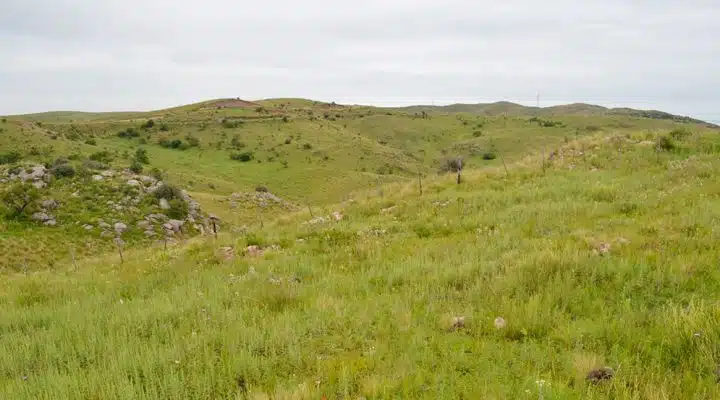 What the international study says. (Photo: CONICET-courtesy of Lucas Enrico).
The results show that in areas with low human impact, ecosystems contain more than a third of potential plant species.
In contrast, in areas highly disturbed by human activities such as urbanization or intensive agriculture, the presence of these species is drastically reduced.
Global impact and evidence in Argentina
The research, conducted by over 200 scientists from the international network DarkDivNet, confirms that the loss of plant biodiversity is a global trend.
In Argentina, the sites analyzed in the Chaco Serrano (Córdoba) and in the province of Santa Cruz showed a marked absence of expected plant species under natural conditions.
The central contribution of CONICET
Three researchers from CONICET participated in the study: Melisa Giorgis and Lucas Enrico from the Multidisciplinary Institute of Plant Biology (IMBIV, CONICET-UNC), and Pablo Peri from the Research and Transfer Center of Santa Cruz (CIT Santa Cruz, CONICET-UTN-UNPA).
Their contribution allowed for valuable data from Argentine ecosystems to be included in this global analysis.
The study makes an urgent call to strengthen conservation policies, emphasizing the importance of protecting not only the currently present species, but also those that could be absent due to human action.
“This result shows that anthropogenic disturbances have a greater impact than previously thought, even affecting natural reserves. Pollution, deforestation, garbage dumping, trampling, and fires can exclude plants from their natural habitats and prevent recolonization,” says Enrico.
In this sense, the research also highlights that the negative influence of human activity was less pronounced when at least a third of the surrounding region remained pristine.
Restoring degraded habitats and limiting new anthropogenic disturbances are key strategies to recover plant biodiversity.



