



The dinosaur egg site of Loarre is established as a world reference after the discovery of titanosaur remains from the Upper Cretaceous.
A multidisciplinary team of researchers has achieved a milestone for Spanish paleontology after locating more than thirty dinosaur eggs in Huesca, specifically in the Loarre area.
The fossil remains, which are estimated to be 72 million years old, belong to titanosaurs, gigantic long-necked sauropods that inhabited the Iberian Peninsula during the Upper Cretaceous.
This discovery stands out not only for the number of specimens found but also for the extraordinary state of conservation of the pieces.
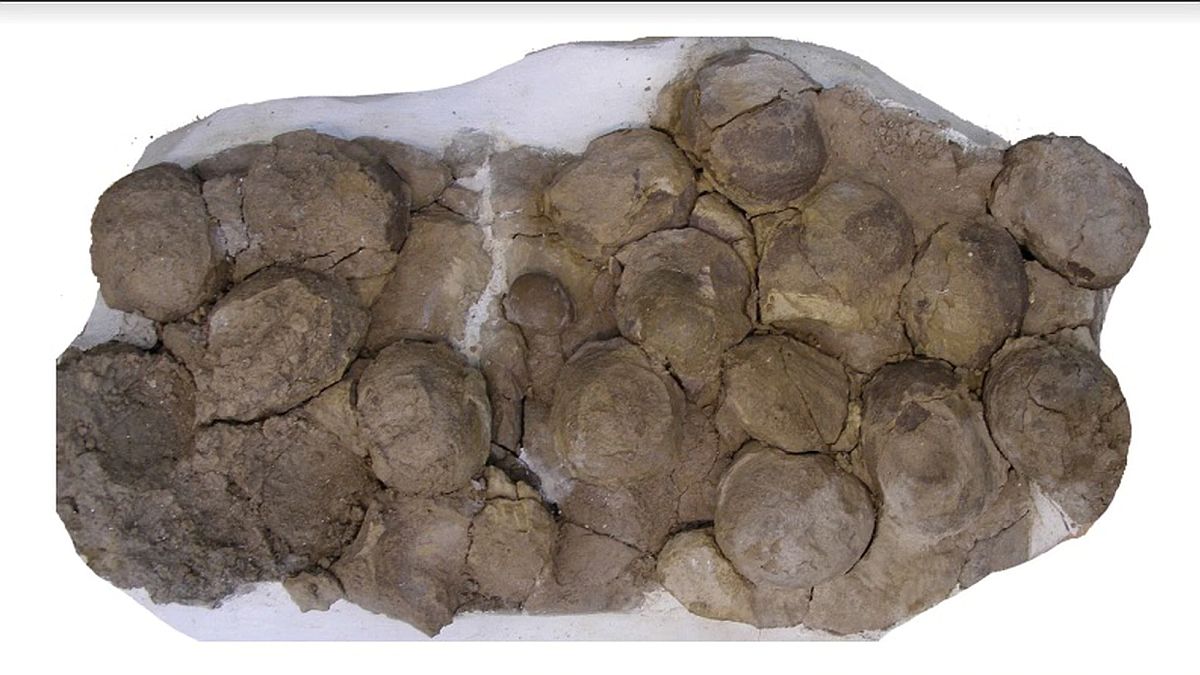
The team of experts, led by the Aragosaurus-IUCA group from the University of Zaragoza in collaboration with international institutions, has indicated that the Loarre site could be one of the most significant nesting points in the world.
Dinosaur eggs in Huesca
They offer a unique window to understand the reproductive habits and ecological environment of these animals shortly before their mass extinction.
The excavation work, which has been carried out in various phases, has allowed the consolidation of a large number of rock blocks containing the nests.
These titanosaurs, which could reach lengths of up to 20 meters, used this region of the current province of Huesca as a recurring place to deposit their clutches.
The significance of the findings has aroused the interest of the international scientific community, positioning Aragon as a key territory for the study of prehistoric life in Europe.
The extraction process has required high precision techniques to preserve the integrity of the shells and the structure of the nests.
After the rescue of the fossils, the pieces have been transferred to specialized centers for cleaning and detailed analysis.
This discovery of dinosaur eggs in Huesca reaffirms the paleontological potential of the area, which continues to reveal secrets about the biodiversity that dominated the Earth millions of years ago.


