



Seabirds —about 350 species adapted to oceanic life— are among the most threatened on the planet. Among them, penguins stand out for their charisma and because they clearly reflect the pressures marine ecosystems face in times of change.
On July 3rd, the World Seabird Day was celebrated, a date that invites reflection on the importance of these oceanic species and to remember the extinction of the great auk in 1844, a warning symbol of the human impact on biodiversity.
Penguins as Ocean Thermometers
About two-thirds of penguin species are on the IUCN Red List, affected by:
- Climate change.
- Overfishing and food scarcity.
- Marine and coastal pollution.
- Introduced predators such as cats and rats in nesting areas.
Their situation reflects the critical state of the oceans and the need to strengthen environmental protection.
The Work of the Global Penguin Society
The Global Penguin Society works on the conservation of the 19 species of southern penguins through:
- Scientific research.
- Creation and strengthening of protected areas.
- Habitat restoration.
- Environmental education programs.
- Advocacy in public policies.
Thanks to these actions, millions of hectares of marine areas have been protected in Argentina, Chile, New Zealand, South Africa, and Antarctica.
Seven Surprising Facts About Penguins
- Millennial antiquity: the oldest fossil record is 55 million years old.
- Extensive reproductive cycles: the king penguin can take up to 15 months to complete its cycle.
- Prodigious divers: the emperor descends up to 500 meters and can stay underwater for 23 minutes.
- Ultraviolet vision: they distinguish colors invisible to humans, improving prey detection.
- Natural engineering plumage: their waterproof feathers and air layer keep them dry and warm.
- Unique communication: each pair and chick recognize each other by exclusive vocalizations.
- Among the most threatened birds: two-thirds of the species are on the IUCN Red List.
The Paradigmatic Case of Punta Tombo
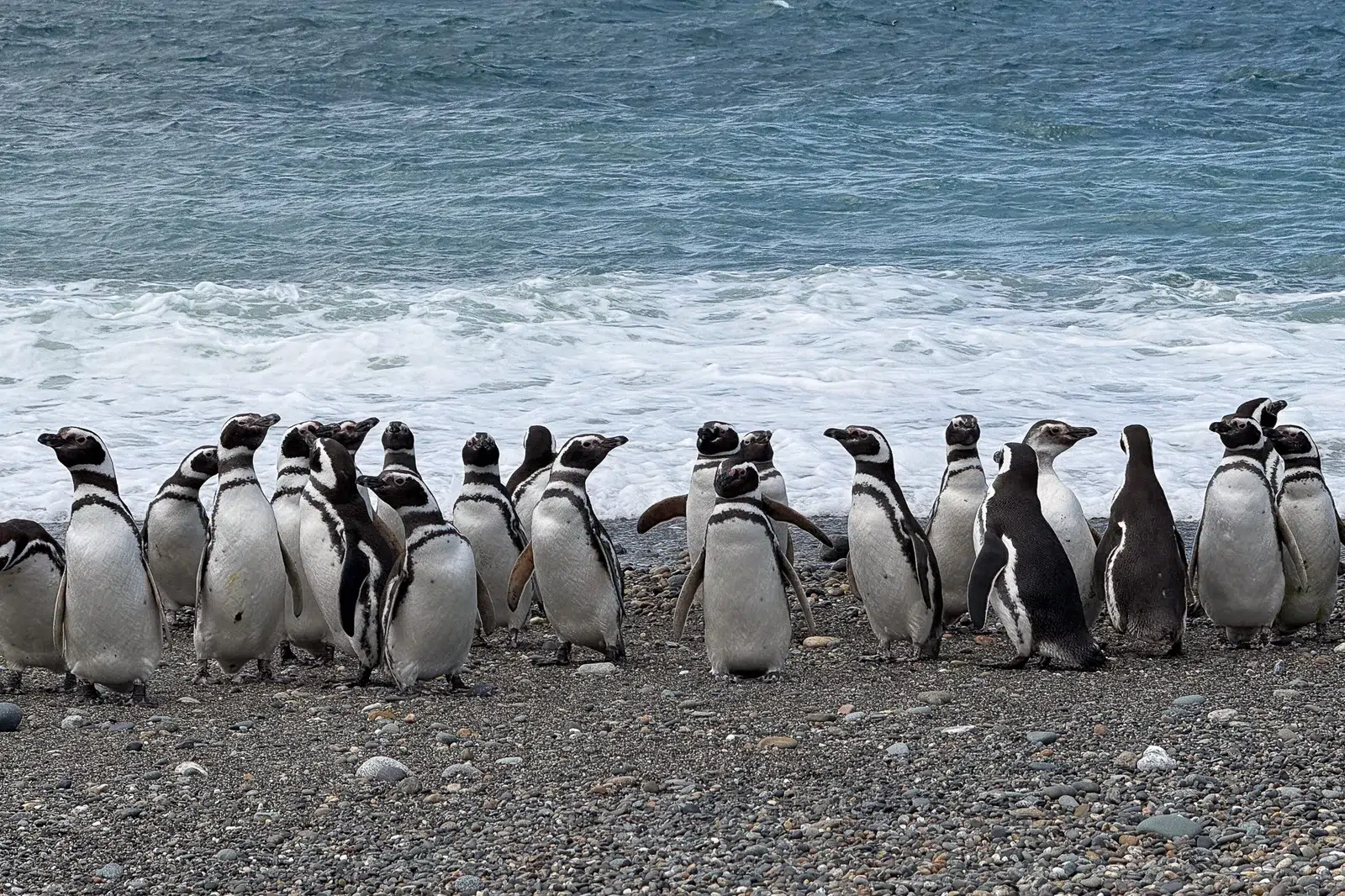
The reserve of Punta Tombo, in Chubut, is home to the largest continental colony of Magellanic penguins on the planet, with about 500,000 individuals.
- It represents a biodiversity sanctuary and a conservation model.
- It was the scene of a historic trial for the destruction of 175 nests in 2021, which set a judicial precedent in environmental protection.
- The penguins travel more than 11,000 km each migratory season, reaching Uruguay and Brazil.
Thanks to satellite transmitters, scientists reconstruct their journeys and obtain key information to ensure their protection.
Penguins are much more than charismatic birds: they are indicators of the state of the oceans and protagonists in the fight for marine conservation.
Their millennial history, extraordinary abilities, and the risks they face remind us that protecting them is protecting the planet’s health.



