



Wood density, understood as the amount of mass in a specific volume, is a decisive factor for both the forestry industry and for ecosystems. This property defines the quality of the material for various uses and, at the same time, influences the ability of forests to withstand adverse conditions and store carbon.
Until recently, the global variation of this characteristic was little known. To fill this gap, an international group of researchers analyzed 1.1 million forest inventory plots distributed worldwide, with information on over 10,700 tree species. From Argentina, the INTA contributed data on the Andean-Patagonian forests, essential for understanding the diversity of the southern hemisphere.
The results, published in the journal Nature Ecology & Evolution, provide a better understanding of how wood density influences species survival and ecosystem functioning. This advancement opens up new possibilities to combine scientific knowledge with conservation policies and sustainable forest resource management.
The significance of this discovery not only lies in its ecological dimension but also has a direct impact on the economy, as density determines the strength, durability, and ease of processing of wood, defining whether it can be used for furniture, paper, crafts, or high-demand structures like railway sleepers.

Why Study Wood Density?
Studying wood density has multiple applications that go beyond industry. Firstly, it allows us to understand which species can offer more resistant or lighter materials according to the need. This is vital for planning forest use and avoiding the overexploitation of species with very specific uses.
Secondly, density is closely linked to ecological factors. Trees with denser woods are usually more resistant to droughts, pests, or fires, increasing their chances of survival in scenarios of climate change. On the other hand, species with less dense woods play a key role in rapid biomass growth and in the regeneration of degraded forests.
Finally, this property is directly connected to the forests’ ability to capture and store carbon, an essential process in mitigating climate change. High-density trees accumulate more carbon in their biomass, helping to reduce levels of carbon dioxide in the atmosphere and offering a natural tool against global warming.
Implications for Industry and Conservation
In the industry, information on density translates into more efficient decisions. Hardwoods, such as quebracho or carob, are used for heavy and long-lasting structures, while softwoods, such as poplar or pine, are ideal for paper or lightweight furniture. This classification allows diversifying the use of resources without compromising endangered species.
In terms of conservation, the collected global data help understand how different ecosystems respond to environmental variations. This facilitates designing strategies to protect vulnerable species and enhance those with greater adaptation capacity. It also supports reforestation programs that consider not only the number of trees planted but also their ecological quality and carbon storage capacity.
The research demonstrates that wood density cannot be analyzed solely from a utilitarian perspective. It is an attribute that connects the industry with environmental sustainability, integrating the economic value of the resource with its essential role in the planet’s ecological balance.
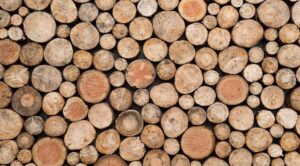 Wood trafficking between Peru and Bolivia.
A Bridge Between Science and Sustainability
The knowledge generated from this study reinforces the importance of managing forests with a comprehensive approach. Wood density becomes a key indicator to decide which species to promote in reforestation projects, which areas to protect urgently, and how to adapt forest production to the demands of a sustainable future.
As pressure on natural resources increases, having accurate scientific information becomes essential. These types of studies, combining data from different continents, help build a global vision of the role of forests and their contribution to human well-being and the fight against climate change.
Thus, wood density shifts from being a technical parameter to a strategic factor. Its study allows the integration of economic, environmental, and social interests, ensuring that the forests of the planet continue to be a source of life, development, and balance for present and future generations.



