



The expansion of raccoons in urban environments is modifying their biology. According to a recent analysis, the specimens that coexist with humans have shorter snouts than those in rural areas, a trait often associated with species in early stages of domestication.
The constant presence of garbage and available food accelerates adaptation. Raccoons take advantage of human waste to feed, reducing the need for aggressive behaviors. Therefore, daily coexistence with people would be favoring more tolerant individuals.
This finding raises questions about a phenomenon that might be beginning. The comparison of thousands of photographic records shows clear patterns. The reduction of the snout, although subtle, marks a consistent difference between populations.
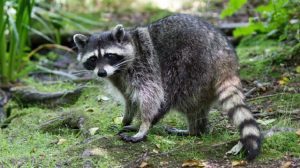
The first signs of the “domestication syndrome”
The shortening of the snout is one of the typical traits observed in domesticated animals, and drooping ears, white spots, or greater docility can also be observed.
These changes are explained by modifications in embryonic cells linked to facial development and coat color. Moreover, in urban environments, calmer raccoons have more opportunities, as proximity to people requires less aggressiveness and facilitates constant access to food.
This could be generating natural selection in favor of docility. Indeed, several studies based on thousands of images reinforce this hypothesis. Comparative analyses show that urban raccoons have snouts 3.6% shorter. Although the difference is small, its consistency suggests an incipient evolutionary process.
Raccoons and natural habitat: a species made for wildlife
The raccoon is native to the temperate forests of North America, whose natural habitat is found in riparian zones, areas with dense trees, and spaces where it can forage for food. It is there where its nocturnal foraging behavior and variable social life develop.
In nature, these animals feed on fruits, insects, small vertebrates, and seasonal resources. But they also depend on hollow trees, bodies of water, and large territories to survive. In fact, their adaptability makes them successful in multiple environments.
However, their wild behaviors are not designed for domestic coexistence. Raccoons retain marked instincts, strength, and territorial habits. Their presence in cities is an adaptation forced by the availability of garbage, not a natural change.

The consequences of domestication for the species
Early domestication of raccoons can alter genetic diversity. Selection for docility can reduce the variability of key traits for survival in the wild. This could weaken resistance to environmental threats.
Additionally, physical changes also imply risks. Traits associated with the “domestication syndrome” can affect the ability to hunt and defend themselves. The progressive loss of natural skills compromises the ecological balance.
In this sense, close coexistence with humans increases conflicts. Raccoons can acquire diseases, depend on garbage, and lose essential behaviors. Over time, the species could become trapped between two worlds without fully adapting to either.
An ecological phenomenon advancing without certainties
The urban adaptation of raccoons is an ongoing process. It is not clear if they will evolve into a semi-domesticated species or if these traits will stabilize. What is known is that city life is leaving visible marks.
Upcoming studies will seek to compare skulls from different decades. They will also analyze behavioral differences between rural and urban populations. This monitoring will allow the reconstruction of the evolutionary history in real time.
The transformation of raccoons shows how cities alter fauna. The constant availability of waste creates new ecological niches. And in that urban landscape, some animals begin to change alongside us.


