



Plastic pollution has established itself as a global environmental and health crisis. Each year, nearly 400 million tons of waste end up in soils, rivers, and oceans.
In this context, science seeks solutions that go beyond traditional recycling. The key is no longer just to reduce, but to transform.
From Santa Fe, a CONICET research proposes a paradigm shift with environmental and productive impact.
Applied science to close the plastic cycle
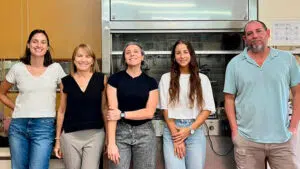
At the Institute of Technological Development for the Chemical Industry, Elangeni Gilbert leads a project that converts plastic waste into new reusable molecules. The process occurs in short times and with low energy consumption.
Unlike conventional recycling, the technique recovers the chemical components of plastic. It then revalues them through compounds derived from biomass. Thus, the waste ceases to be a discard and becomes raw material for biodegradable plastics.
From discard to the plastics of the future
The developed method is based on chemical upcycling. This involves generating materials of greater value than the original.
In particular, the team works on bisphenol A polycarbonate, a widely used plastic that releases microplastics and harmful substances when degraded.
Using an accessible organic catalyst, the process allows recovery of these compounds without releasing toxins into the environment.
Simple technology, profound impact
One of the central advances is that the method operates at low temperature and pressure. Moreover, it does not require expensive catalysts or complex conditions.
This reduces costs and facilitates its application in real contexts. It also avoids the release of carbon dioxide during recycling.
At the same time, the technique allows treating plastic mixtures without separating them beforehand, one of the major obstacles of the current system.
Selective recycling and circular economy
Selective sequential recycling allows acting on one plastic at a time. For this, variables such as temperature or type of reagent are adjusted.
Thus, the same waste mixture can become a source of different useful molecules. The waste becomes a strategic resource. This approach opens the door to a more efficient and less polluting circular economy.
An initiative against waste
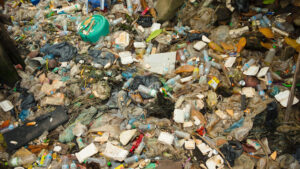
The initiative reduces the accumulation of plastics in landfills and ecosystems. It also prevents the dispersion of hazardous substances.
Additionally, it promotes local employment and new productive opportunities. Its low initial cost favors adoption by cooperatives and SMEs.
Finally, it allows designing materials for chemical, agricultural, pharmaceutical, and cosmetic industries, aligning innovation and sustainability.
A replicable model to tackle pollution
The project demonstrates that applied science can offer concrete solutions. It is not just about managing waste, but about redefining its value.
By transforming an environmental problem into a productive opportunity, super-recycling presents a possible path in the face of the global plastic crisis. At this intersection of knowledge, environment, and development, an alternative for the future is drawn.



