



Brazil reached a new milestone in the 2025-2026 season by obtaining 50 beaches and 10 marinas with the international Blue Flag certification, according to data from Embratur.
This recognition positions the country as a leader in South America in the number of coastal sustainability certifications, consolidating its position as a global benchmark in environmental and tourism management.
What does the Blue Flag mean?
The program, driven by the Foundation for Environmental Education (FEE) and operated in Brazil by the Instituto Ambientes em Rede, requires compliance with 34 strict criteria in four main categories:
- Water quality: constant monitoring to ensure it is suitable for bathing.
- Environmental management: waste treatment, ecosystem protection, and cleanliness.
- Environmental education: informative activities for visitors and communities.
- Safety and services: presence of lifeguards, first aid, and accessibility.
The Blue Flag is considered one of the main international standards of environmental quality for coastal tourist destinations.
Highlighted states and destinations
The certifications are distributed across several states with strong tourist activity:
- Santa Catarina: absolute leader, with beaches like Mariscal, Quatro Ilhas, and Conceição in Bombinhas; Praia do Estaleiro and Estaleirinho in Balneário Camboriú; and Lagoa do Peri in Florianópolis.
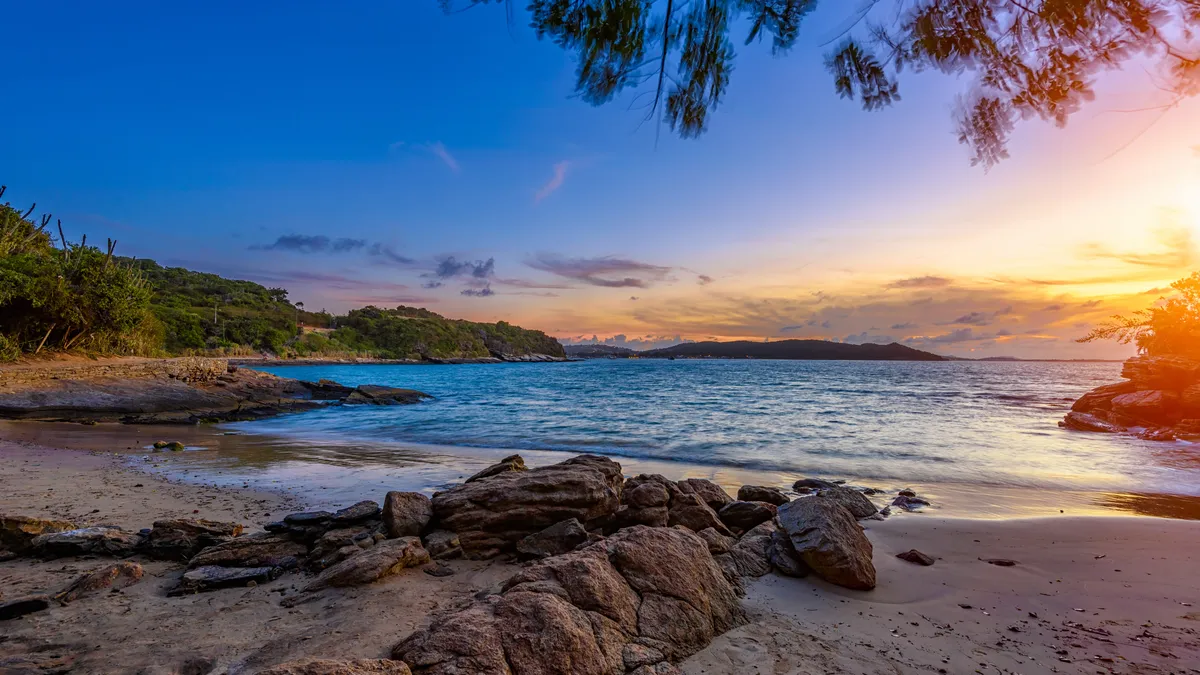
- Rio de Janeiro: includes iconic beaches like Prainha and Reserva in the capital, as well as Praia do Forno in Búzios.
- Bahia: recognized with destinations like Praia do Forte and Guarajuba.
- Alagoas: northeastern beaches that stand out for their environmental excellence.
- São Paulo: also adds certifications in its coastal areas.
International promotion
In addition to environmental recognition, Embratur and the NGO Instituto Ambientes signed a 24-month agreement to strengthen the international promotion of certified destinations. The agreement includes market intelligence actions, tourism promotion, and support for the commercialization of sustainable products.
According to Marcelo Freixo, president of Embratur, the Blue Flag seal acts as a “seal of excellence” that allows Brazilian destinations to differentiate themselves in the international tourism market.
Impact on tourism and sustainability
The certification not only guarantees clean and safe beaches but also boosts ecotourism and environmental awareness. For visitors, the presence of the blue flag ensures a responsible and quality environment. For local communities, it represents opportunities for sustainable economic development and the preservation of their natural heritage.
How to verify certified beaches
Tourists can check the updated list of Blue Flag beaches and marinas on the official Blue Flag Brazil website or through the bathing maps of the Instituto de Meio Ambiente de Santa Catarina (IMA).
With 60 certifications in total, Brazil reinforces its regional and global leadership in sustainable tourism. The Blue Flag is not only a symbol of environmental quality but also a tool to promote responsible destinations, strengthen the local economy, and ensure that future generations enjoy clean and safe beaches.


