



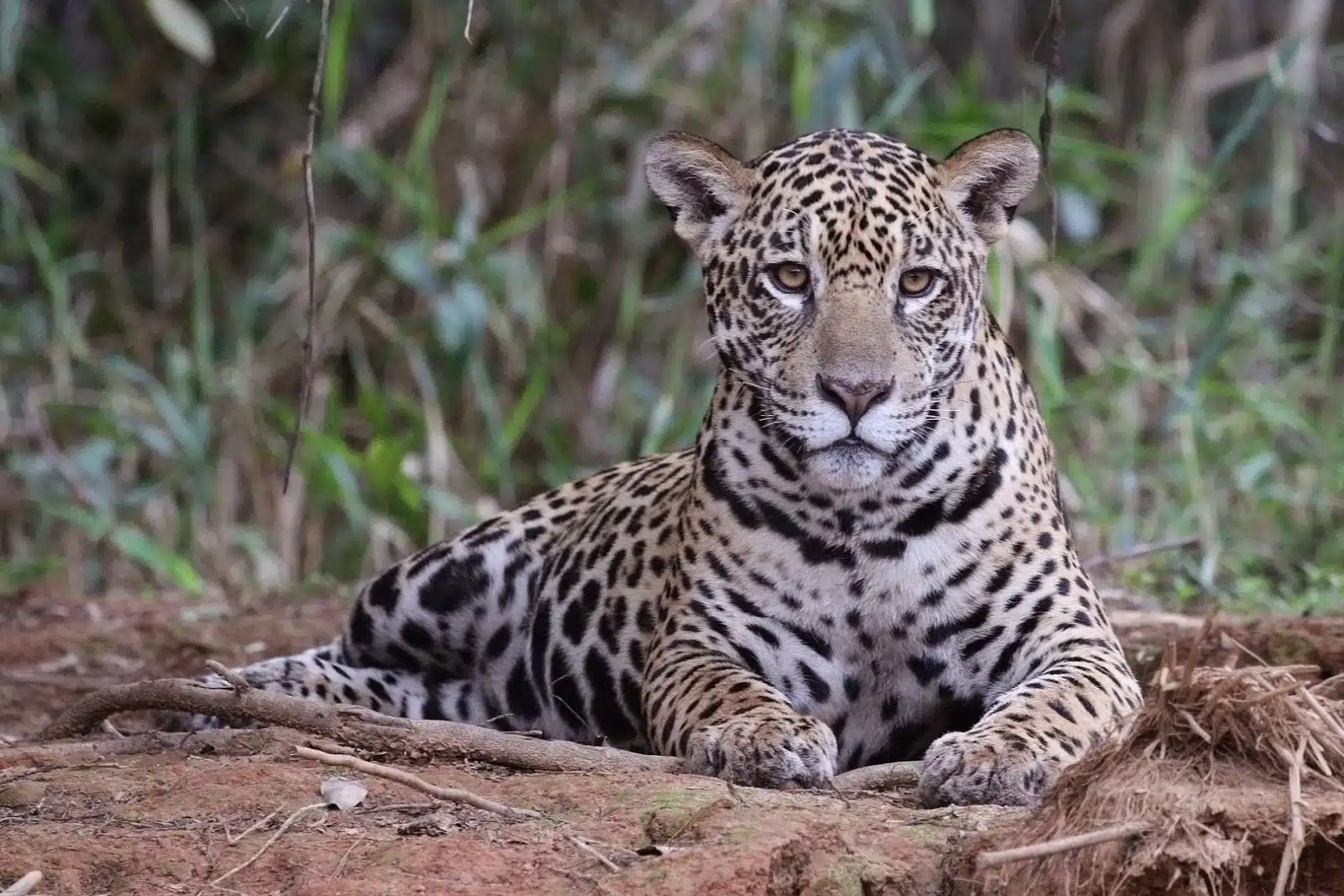
The province of Misiones is working hard on its jaguar protection policies, an emblematic species in critical danger of extinction.
In the rural areas of the northern province, where this large feline still survives in the wild, intensive work is being done to reduce conflicts between wildlife and local communities.
Recently, a meeting was held in Wanda aiming at the protection of the jaguar.
It was attended by the Deputy Secretary of Ecology, Facundo Ringa; the General Administrative Director of the Ministry of Agriculture and Production, Emilce Errubidarte; park rangers, Environmental Police, officials from the Municipality and the Wildlife Foundation; and producers.
Coexistence with large felines: challenges and solutions
 Actions to protect the jaguar.
The Ministry of Ecology and Renewable Natural Resources of Misiones, together with environmental organizations and local residents, promote awareness campaigns, training, and concrete actions to ensure coexistence between rural producers and the species.
One of the biggest challenges is preventing poaching or retaliatory attacks after livestock losses.
Therefore, the implementation of sustainable production practices is promoted, such as the use of night pens, warning systems, and other management strategies. The aim is to minimize the risk of encounters with jaguars.
On the other hand, authorities conduct patrols in areas where the feline presence is detected, installing trap cameras for monitoring, and providing technical support to producers. The idea is to adapt their activities without affecting the ecosystem.
On this occasion, provincial officials listened to the producers’ concerns, who expressed their worries about livestock attacks and their proximity in populated areas.
They listed prevention measures and discussed the implementation of insurance to compensate them for possible losses caused by predators.
The jaguar: a symbol of critically endangered biodiversity
The jaguar is the largest feline in America and a key link in the ecological chain. Its presence indicates the good health of the rainforest ecosystem, such as the one offered by the Paranaense Jungle.
 Hunting adds to the fragmentation and loss of habitat for this species. It is estimated that there are fewer than 20 in the Argentine Gran Chaco.
However, it is estimated that in the entire region of the Gran Chaco and the Misiones Jungle, there are fewer than 250 specimens.
Thanks to the conservation programs developed in the Green Corridor and the Iguazu National Park, sightings of females with cubs in the wild have been achieved. This gives hope for their recovery, although strong social and political commitment is still required.



