



The city of Cañuelas is once again promoting a green plan based on waste separation with a new differentiated collection system. After several attempts limited to certain neighborhoods, the proposal now expands to Cañuelas, Uribelarrea, and Máximo Paz. The goal is to reduce the amount of waste and promote recycling from households.
The new scheme foresees that recyclable dry waste will be collected on Mondays and Fridays. Residents must place them in green or transparent bags, clean and dry. This category includes papers, cardboard, cans, plastics, and glass.
On the other hand, wet waste such as food scraps or diapers will continue to be collected on regular days and in black bags. The municipality emphasizes the importance of not mixing materials to facilitate their classification and processing.
The program is coordinated by the Environmental Department and other municipal areas, which have also announced the installation of green containers in squares and key points for the voluntary deposit of recyclables.
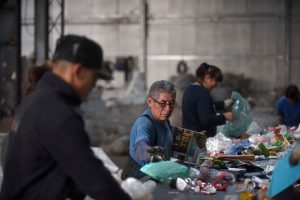 A green plan that aims to turn Cañuelas into a model of sustainable city through waste separation. PHOTO: PABLO AHARONIAN.
A System with Social and Environmental Impact
The relaunch of this initiative also responds to a recent tragedy. Patricia González, an informal recycler, lost her life under a mountain of waste while working among the bags. Her death caused shock and exposed the precarious conditions faced by those who live off what others discard.
Through separation at the source, the aim is not only to reduce the amount of waste sent to final disposal, but also to improve the safety and dignity of the work of recyclers and cooperatives. By sorting from home, it avoids people having to rummage through garbage to find useful materials.
The implementation of the plan is supported by municipal ordinance 3411, enacted in 2020. Although it had already been put into practice in some neighborhoods and in Uribelarrea, the results were uneven and did not succeed in becoming a sustained policy. This time, the municipality aims to bring about a real change, with more infrastructure and communication.
The green plan that seeks to make Cañuelas a model of sustainable city
The initiative is also a step towards a more sustainable city model. Each correctly separated bag represents less pollution, more resource recovery, and less pressure on landfills. Additionally, it is an educational tool that promotes the environmental commitment of the entire community.
The challenge now is to get residents actively involved. Separating waste at home may seem like a small gesture, but its effects multiply over time and territory. Cañuelas has the opportunity to become an example of urban and environmental transformation, where each individual decision contributes to collective well-being.
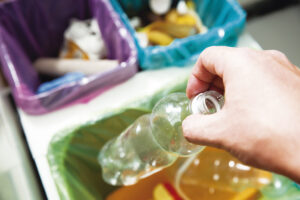 The new plan to strengthen environmental care.
How to Start Separating Waste at Home
A simple way to start is to have two different bins or bags: one for wet waste (such as food scraps, tea leaves, peels, and diapers) and another for recyclable dry waste (such as papers, cardboard, plastics, cans, and glass). It is important that recyclables are clean and dry to avoid bad odors and facilitate their reuse.
Another recommendation is to rinsing containers before disposing of them and crushing them to take up less space. Avoid mixing waste: a bottle with beverage residues or a dirty wrapper can ruin materials that were recyclable. Proper separation helps the entire system function better.
Finally, find out about the days of differentiated collection in the neighborhood or look for green points where recyclables can be taken. Involving the whole family, even the youngest members, is key to creating a habit. Separating waste does not take much time and has a positive impact on the environment.


