



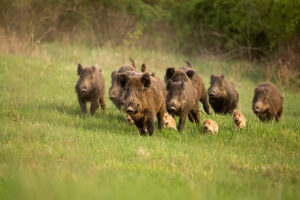
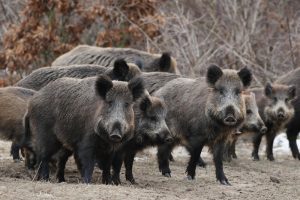
The increasing presence of wild boars in residential areas is causing concern in Bariloche, where recently 26 specimens were sighted in Llao Llao. The entry of these animals into urban spaces represents an environmental and health risk. Therefore, a joint operation between the municipality and the Subsecretariat of Wildlife has been activated to contain the situation.
The procedure allowed the capture of eight animals using trap cages, a strategy adapted to the peri-urban environment where traditional hunting is not feasible. The objective was to act without endangering neighbors or causing major imbalances.
The specimens were transferred to a designated hunting area, as releasing them elsewhere would only relocate the problem. This method is part of a population control project that could be implemented in other regions facing similar situations.
In addition to the operation, work is being done with scientific institutions such as INTA and UNRN to improve intervention methods. The key is to control without affecting the ecological balance and without promoting indiscriminate hunting practices.
Structural Challenges and Health Risks
Once captured, another challenge arises: what to do with the animals. Currently, there are no authorized slaughterhouses for wild game meat in the province, which prevents its formal commercialization.
This represents a loss of a valuable food resource. Wild boar meat is a high-quality protein, but it can only be destined for self-consumption under specific conditions. Without the proper infrastructure, the necessary safety cannot be guaranteed.
Faced with this, the province is considering installing mobile units or fixed plants in strategic points such as Bariloche and Valle Medio. Additionally, the plan includes incorporating a digester for waste, which would also serve for other confiscated animals.
The risks associated with the lack of control include diseases such as trichinosis, which can be transmitted to humans through improperly processed meat. This becomes worse when wild boars access dumps, where they also interact with rodents.
The Wild Boar: An Exotic Species with Increasing Impact
The wild boar (Sus scrofa) is an introduced species in Argentina over a century ago for hunting purposes. Its adaptability, high reproductive rate, and lack of natural predators have led to its uncontrolled expansion.
Although not endangered, its presence is invasive in various ecosystems in the country. In natural environments, it competes with native species for food and territory, and alters the soil with its digging behavior.
In rural and urban areas, it can destroy crops, create paths in vegetation, and cause road accidents. Additionally, its contact with human environments facilitates the transmission of zoonotic diseases.
The conservation status of the wild boar globally is not concerning, but in local contexts like Patagonia, it poses a serious ecological problem. Its control requires a comprehensive approach and coordinated actions among different government areas.
The Future of Wildlife Management
The case of wild boars in Bariloche highlights the need to strengthen infrastructure and regulatory frameworks for wildlife management. Capturing is not enough; it is essential to establish circuits that ensure the safe and legal treatment of the animal.
Current efforts aim to enhance provincial capacities with the support of local cooperatives and scientific organizations. The challenge is to combine population control with sanitary, ecological, and social criteria.
Efficient management of the wild boar will help reduce its impact on the environment, avoid risks to human health, and responsibly exploit the resources it generates. Acting promptly is key to prevent this species from further advancing into protected and urban areas.



