



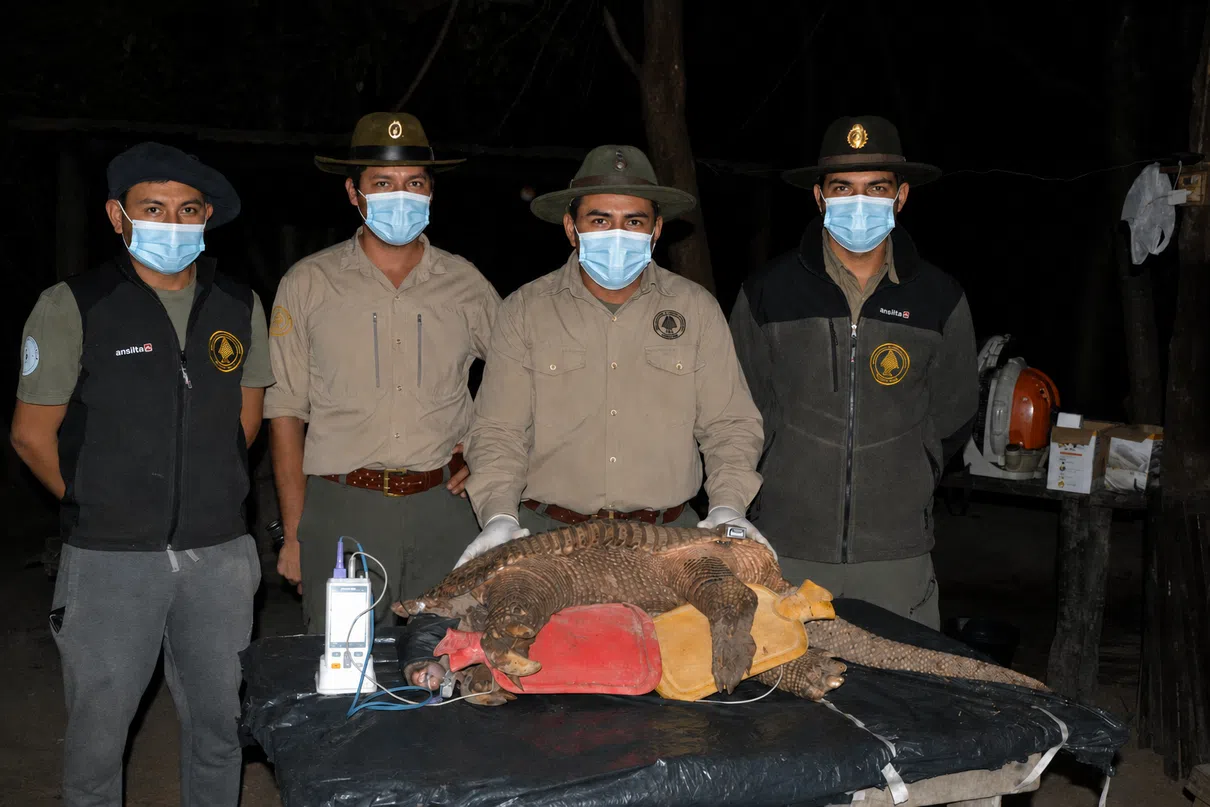
In the El Impenetrable National Park, in the province of Chaco, a giant armadillo (Priodontes maximus), the largest armadillo in the world, was captured and fitted with a satellite tracking device.
This is the second individual monitored with GPS technology in the protected area, following the first intervention carried out in 2023. The species is categorized as Endangered in Argentina, making each conservation action a fundamental step for its survival.
Giant Armadillo Project
The initiative is part of the Giant Armadillo Project, developed by the Atlantic Forest Research Center (CeIBA). It is the first long-term ecological study on this species in the country, with key objectives:
- Generate information on its ecology and movement patterns.
- Evaluate habitat use and conservation requirements.
- Identify priority corridors in the Chaco region.
- Strengthen management strategies promoted by the National Parks Administration (APN).
Applied Technology
Satellite tracking will allow:
- Understanding movements under different environmental conditions.
- Evaluating the effect of protection and disturbances on its movements.
- Identifying critical areas for conservation.
- Designing biological corridors that connect isolated populations.
After placing the device and conducting a health evaluation, the specimen was released at the same capture site, minimizing alterations in its natural behavior.
Interdisciplinary Team
The operation involved the participation of researchers, veterinarians, and park rangers:
- Yamil Di Blanco, project coordinator (IBS-CONICET).
- Malén Aluhé Rubini Pisano, biologist.
- Veterinarians Juan Pablo Arrabal and Sebastián Costa, with the collaboration of Macarena Addis.
- Field technician Agustín Solari.
- Park rangers Javier Orlando Leal, Rafael Rojas, Ariel Beckles, and Nelson Salvi.
This joint work reflects the importance of cooperation between scientific institutions and state agencies to advance the conservation of threatened species.
Ecological Importance of the Giant Armadillo
The giant armadillo is considered an ecosystem engineer:
- Its excavations modify the soil and create shelters for other species.
- Contributes to soil aeration and nutrient recycling.
- Promotes biodiversity by creating microhabitats in the Gran Chaco.
Its ecological role makes it a key species for the balance of natural environments. The loss of this armadillo would have negative consequences on the dynamics of Chaco ecosystems.
Conservation Challenges
The survival of the giant armadillo faces multiple threats:
- Deforestation and habitat loss.
- Poaching for consumption or illegal trade.
- Fragmentation of ecosystems due to agricultural and livestock activities.
- Lack of funding for long-term conservation programs.
Satellite monitoring is a key tool for designing effective policies to reduce these risks.
The capture and monitoring of the second giant armadillo in El Impenetrable represents an unprecedented scientific and conservation advancement.
Thanks to interdisciplinary work, knowledge about an emblematic species is strengthened, whose survival depends on the protection of the natural environments of the Argentine Gran Chaco.



