



More than a thousand kilometers off the Brazilian coast, the Trindade Island emerges as a wild corner in the middle of the Atlantic, in Brazil. Accessing it requires a four-day sea journey, but its landscape compensates for any effort: rocky hills, solitary beaches, and meadows slowly turning green.
This isolated territory, now occupied by scientists and Navy personnel, was for centuries the victim of a silent invasion. Goats introduced by European sailors in the 18th century ravaged the native vegetation, turning entire forests into bare rocks.
The lack of natural predators allowed their unrestrained reproduction. By the 1990s, the ecological damage was evident. The island, once home to unique endemic species, was barely a mosaic of dry grass and erosion.
But everything changed with a radical decision: to eliminate the invasive species. After a tough process that took more than a decade, Trindade began to heal on its own, without the need for human reforestation.
A symbol of resilience in the middle of the ocean
With the definitive eradication of goats in 2004, the vegetation began to recover at a surprising rate. In just 30 years, the forest area increased by over 1,400%, covering what would be equivalent to 65 soccer fields.
One of the most amazing spaces is the renewed giant fern forest, considered living fossils. This transformation, documented by satellite images and field studies, turned Trindade into a unique ecological laboratory.
Without direct intervention, nature took control. The island now offers an invaluable opportunity to study processes of environmental restoration, ecological resilience, and the impact that humans can have, both in damage and in solutions.
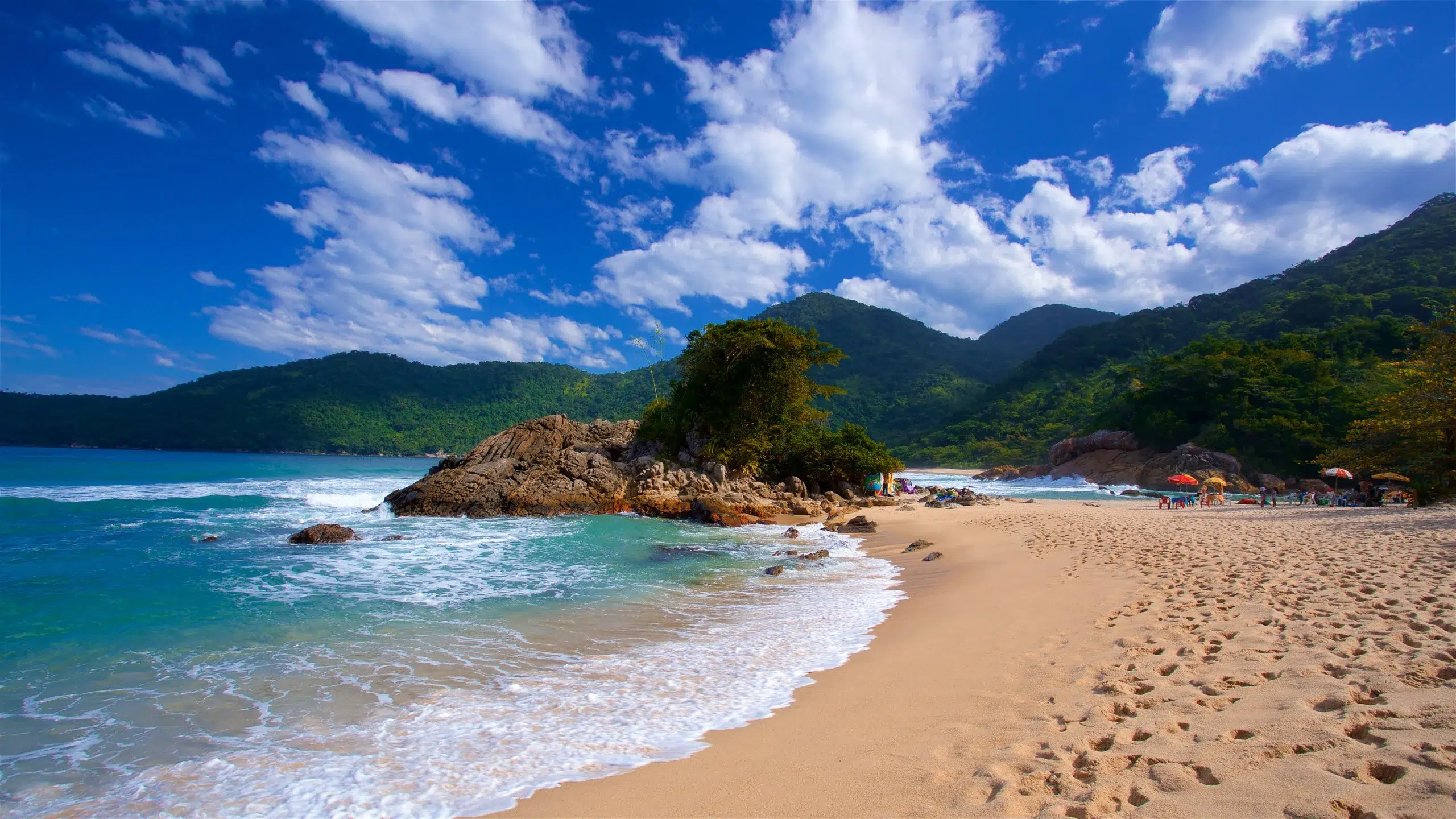 Trindade Island, Brazil. Photo: Expedia.
Trindade: a fragile and vital ecosystem
In addition to its biological value, Trindade is the only island in the South Atlantic with surface freshwater, a scarce resource that explains its historical importance as a crossing point. Its isolation makes it especially vulnerable to any external alteration.
The oceanic climate, strong winds, and rains constantly shape its environment. There are no snakes, nor large mammals; just a few spiders and an endemic community of land crabs, which now help maintain the natural balance.
Protecting it is key to preserving one of the last remnants of wildlife in the Atlantic Ocean. Trindade also serves as a reminder that even the most devastated territories can recover if given a real opportunity.



