



The **Delta Aquariids** have already begun to illuminate the sky of the **Southern Hemisphere**, offering a captivating [astronomical show](https://noticiasambientales.com/ciencia/eclipse-solar-anular-argentina-se-prepara-para-contemplar-el-espectacular-anillo-de-fuego/). This year, **Argentina** stands out as one of the ideal destinations to enjoy the event, with the **peak activity expected between the night of Tuesday, July 30, and the early morning of Wednesday, July 31**.
During this observation window, you can see **up to 25 shooting stars per hour**, provided that the sky is clear and you choose places far from [light pollution](https://noticiasambientales.com/animales/las-luces-de-las-ciudades-producen-que-las-aves-tengan-ojos-mas-pequenos/).
## Optimal Conditions and Activity Period
The phenomenon will last until **August 23**, but its most intense moment will be on the mentioned dates. This year, the conditions will be especially favorable: the **waxing phase of the Moon** will allow for a darker sky during the early morning, enhancing the visibility of the meteors.
According to the **National Astronomical Observatory**, the ideal time will be between **1:00 and 5:00 in the morning**, when the radiant —apparent point of origin of the meteors— reaches its highest point.
## Where Do the Delta Aquariids Come From?
The **Delta Aquariids** owe their name to the point in the sky from which they seem to come: the **constellation of Aquarius**, specifically at the star **delta Aquarii**, also known as **Skat**. These meteors are believed to originate from **comet 96P/Machholz**, which orbits the Sun every five years.
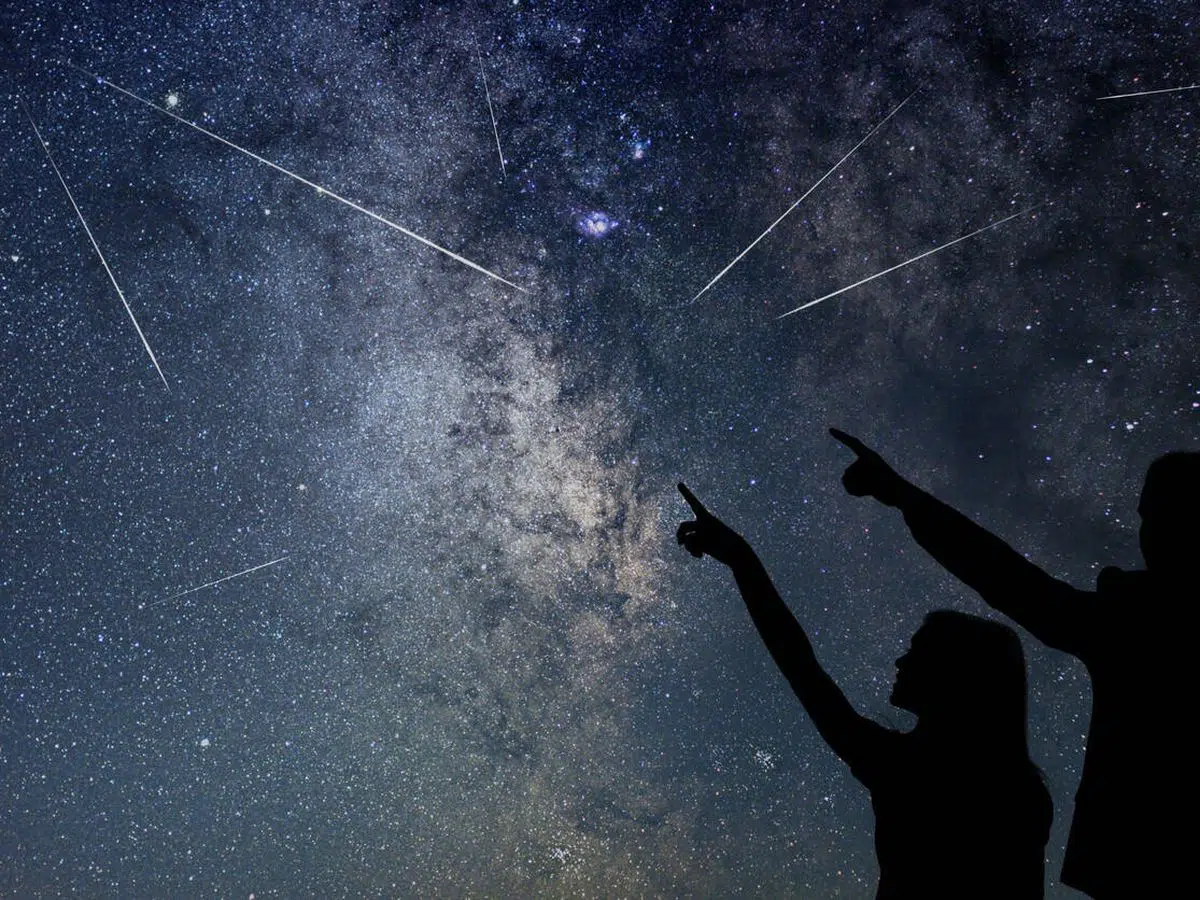
These meteor showers occur when **meteoroids** —small particles detached from comets or asteroids— **enter Earth’s atmosphere**. Friction with the air generates intense light that appears as a **shooting star**. The peculiarity of these showers is that the meteors follow parallel paths, making it seem from Earth that they radiate from a single point.
The meteors travel at speeds of up to **15,000 kilometers per hour**, and their luminous trails can last several seconds in the night sky.
## How to Prepare to Observe the Delta Aquariids
– **Ideal Location:** Look for open spaces away from cities and artificial lights.
– **No Optical Instruments:** Avoid using binoculars or telescopes. Observation with the naked eye allows for a broader visual field.
– **Eye Adaptation:** Wait at least **20 minutes** in darkness for your eyes to adjust.
– **Clear Weather:** Choose nights without clouds between **July 30 and August 1**.
– **Comfort:** Bring **beach chairs or mats** to lie down and watch comfortably.
– **Visual Strategy:** Position yourself in the direction opposite the **Moon** to minimize its interference.
## Science, Beauty, and Connection with the Universe
Meteor showers, particularly the Delta Aquariids, not only offer an opportunity to observe the sky but also to reflect on our **smallness in the face of the cosmos**. These events awaken **curiosity, amazement, and a deep connection with nature**, bringing together science, art, and mystery.
For those willing to wake up early, choose a suitable location, and let themselves be captivated by the show, the reward will be an unforgettable **natural spectacle**. The key is to **dress warmly**, prepare a **hot beverage**, and let the sky do its thing.


