



The new room “Joselito and the Sea Turtles” is now part of the tour at the Museum of Regional Fauna of the Hydrobiological Station of Puerto Quequén (EHPQ), which is under the Argentine Museum of Natural Sciences “Bernardino Rivadavia” (MACN-CONICET).
It is an innovative museographic proposal that invites you to explore the marine biodiversity of the Argentine Atlantic coast from a local, sensitive, and educational perspective.
The project was made possible thanks to the majority funding from the Williams Foundation, within the framework of its “Ensayar Museos 2024” call, which selected this initiative among more than 600 proposals from across the country for its interdisciplinary and territorial approach.
Science, storytelling, and design: three rooms for an immersive experience
The tour combines scientific content, coastal legends, and conservation actions.
The exhibition is organized into three thematic spaces:
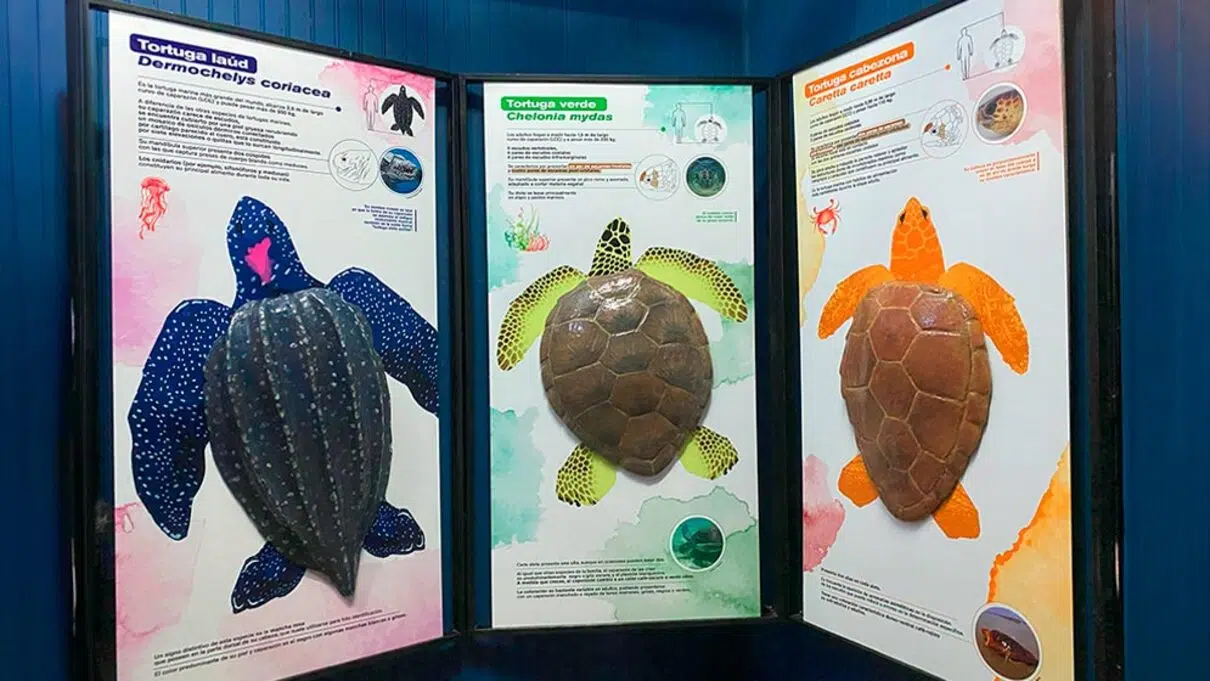
- “The journey of the sea turtles”: introduces visitors to the life of these migratory species, addressing their feeding, reproduction, and oceanic movements through visual resources and informative panels.
- “Meeting Joselito”: the narrative heart of the tour, recreates the universe of the local character “Joselito,” a figure from oral tradition that represents the human connection with the sea. The scenographic setting and sensory elements offer an emotional experience that combines science and culture.
- “Science in action”: presents current research on sea turtles in Argentina, with emphasis on the work of CONICET and EHPQ, including projections, physical samples, and information on threats, conservation, and scientific monitoring.
Interdisciplinarity and technology in the service of dissemination
The design of the room involved professionals from various areas, in a collaboration between EHPQ, MACN, the Fairs and Exhibitions team of CONICET, and the design area of the Directorate of Institutional Relations (DRI).
This collaboration allowed the development of a proposal that invites learning through emotion, identity, and scientific evidence, incorporating interactive technologies and contemporary museographic resources.
Sea turtles: key species for ecosystem health
The marine biologist and scientific director of the project, Laura Prosdocimi, highlighted that six of the seven sea turtle species in the world are threatened with extinction, including three that reach Argentine waters: green, loggerhead, and leatherback. These species are highly migratory and act as bioindicators of marine health, sensitive to pollution, bycatch, and climate change.
The room includes information on morphology, distribution, satellite migrations, stranding rates, diet studies, and conservation actions promoted by initiatives such as ECOFAM 2.0 and the Tutka Project, which integrate citizen science and environmental monitoring.
Joselito: coastal legend and bridge between art and conservation
The director of EHPQ, Gustavo Chiaramonte, explained that the character “Joselito” allows for the integration of artistic disciplines into the scientific narrative, creating an emotional connection with the territory.
During the inauguration, the Municipal School of Arts of Necochea held the activity “My Friend Joselito,” where over 100 children painted the sea monster, strengthening the sense of belonging and community ownership of the space.
A replicable model of public-private cooperation
The initiative was made possible thanks to the joint work between CONICET, Williams Foundation, and MACN, and is projected as a replicable experience in other local contexts. In addition to its educational value, the space reinforces the commitment to public communication of science, environmental education, and scientific-cultural tourism.
The proposal includes activities for all educational levels, promotes critical thinking, and addresses topics such as public health, marine conservation, and civic responsibility.
Community, education, and science in dialogue
The opening was attended by representatives from the municipality, provincial authorities, members of the educational and academic community —including the National University of the Center, the National University of Mar del Plata, the Maimónides University, and the Azara Foundation—, as well as media outlets and the Malvinas Ex-Combatants Center of Necochea and Quequén.
Neighbors, children, and young people actively participated in the tour, guided by the EHPQ team along with Laura Prosdocimi, Gustavo Chiaramonte, and the director of MACN, Luis Cappozzo.


