



A historical reduction in forest fires was recorded in Brazil during July 2025. According to official data, there was a 56.8% decrease in hotspots and a 61% decrease in burned areas, compared to the same month of the previous year.
The figures come from the BDQueimadas system of the National Institute for Space Research (INPE) and the Laboratory of Environmental Satellite Applications (LASA) at the Federal University of Rio de Janeiro (UFRJ).
The results were presented by the Ministry of Environment and Climate Change (MMA) on August 6.
Thus, in total, July ended with 9713 fire outbreaks, compared to 22,487 in 2024. The affected area decreased from 1.8 million hectares to 726,000 hectares. This highlights the impact of fire prevention and combat policies.
Forest Fires in Brazil: Five of Six Biomes with Less Fire
In July, five of the six Brazilian biomes recorded fewer hotspots and burned areas. This trend is explained by more favorable climatic conditions and, mainly, the forest fire prevention measures implemented by the federal government and the states.
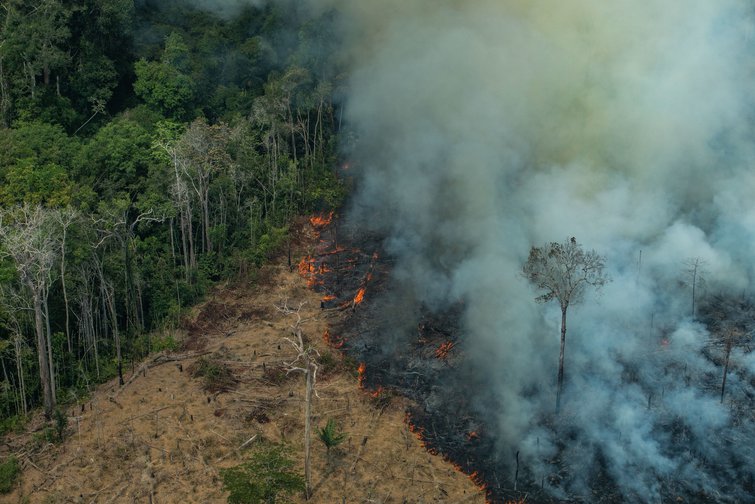
In the first half of 2025, Brazil saw a 46.36% reduction in fire outbreaks and a 65.8% reduction in burned area. This is compared to the same period in 2024.
1. Pantanal: Record Reduction in Fires
The Pantanal showed the greatest improvement. In this case, with a drop of 96.8% in hotspots (from 1,218 in 2024 to only 39 in 2025) and 99.2% in burned area (from over 170,000 to 1,400 hectares).
2. Amazonia: 89.9% Decrease in Burned Areas
The Amazon also saw significant decreases. An 80.9% decrease in hotspots in the first half of the year (from over 11,400 to 2,183) and 89.9% less affected area (from 782,000 to 79,000 hectares).
3. Atlantic Forest: Less Fire and Less Affected Area
In the Atlantic Forest, hotspots decreased by 19.3% (from 1,739 to 1,404). While the burned area decreased by 76.4%, going from 28,500 to 6,700 hectares.
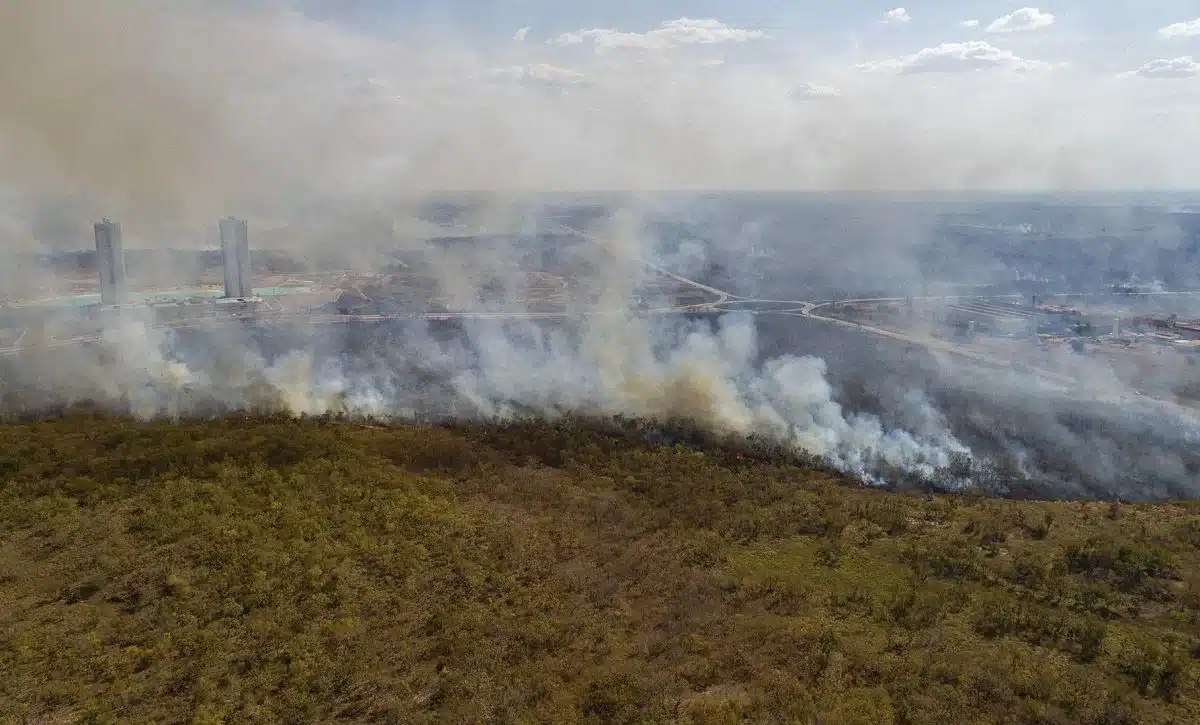 The consequences of fire.
4. Cerrado: Progress in Fire Control
The Cerrado reduced its hotspots by 28.9% (from 7,463 to 5,303) and the burned hectares by 28.1% (from 868,600 to 624,100).
5. Pampa: Slight Reduction
In the Pampa region, hotspots decreased by 15.9% and the burned area by 12.8%, reaching 69 hotspots and 476 hectares in July 2025.
6. Caatinga: Only Biome with an Increase in Fires
The Caatinga was the exception, with an increase in hotspots from 542 to 715 and an increase in burned areas from 1,262 to 14,700 hectares.
Strategies for Fire Prevention and Combat in Forests
Law 14,944/2024, which created the National Policy for Integrated Fire Management, promoted key actions such as prescribed burns and firebreaks. All aimed at controlling the advance of flames.
Thus, between January and July 2025, the Chico Mendes Institute (ICMBio) and IBAMA carried out controlled burns in 237,746 hectares distributed in


