



In Entre Ríos, they will begin to implement an innovative technique to clean up two streams in Gualeguaychú: plants to clean up the contaminated soil and water.
This is a project of phytoremediation, to be implemented in El Cura and Gaitán. They aim to apply nature-based solutions to improve the environmental quality of both watercourses.
Last Thursday, officials from the Subsecretariat of Environment and Food Safety held a working session with specialists from the Argentine Museum of Natural Sciences Bernardino Rivadavia, including Patricia Marconi and Laura Decabo.
Researchers from CONICET, the Azara Foundation, the Paleontological Museum, the Secretary of Extension of the Faculty of Bromatology of the UNER, José Dorati, and the head of Protected Natural Areas, Juan Solari, also participated.
During the meeting, progress was made in the design and implementation of a phytoremediation project in the El Cura and Gaitán streams, with the aim of applying nature-based solutions to improve the environmental quality of these watercourses in the city of Gualeguaychú.
How phytoremediation works: a natural and sustainable solution based on plants to clean up the soil
Phytoremediation is a technique that uses certain plants to clean up contaminated soils and waters.
These species have the ability to absorb, accumulate, metabolize, or stabilize various pollutants, including heavy metals, organic compounds, and petroleum derivatives.
According to specialists, this is a sustainable, low-cost alternative, especially effective in cases of moderate pollution.
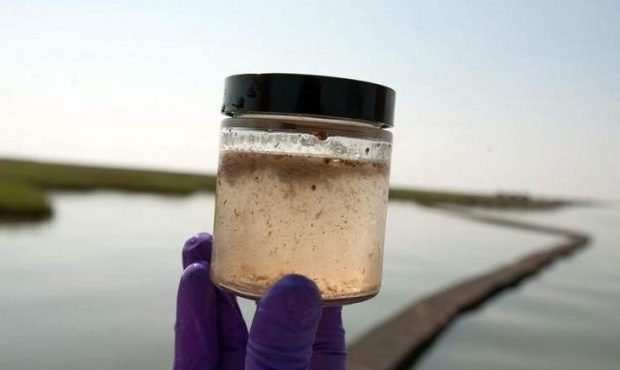
 Implementing a nature-based technique to clean up the streams. (Photo: eldiarioonline).
Science, research, and local management in alliance
The proposal integrates academic and scientific knowledge with the experience of local organizations, in a participatory and comprehensive approach.
This type of interinstitutional coordination strengthens strategic alliances between universities, research centers, museums, and local authorities, with the purpose of generating innovative and sustainable solutions for the care of natural resources in Gualeguaychú.
The phytoremediation project in the El Cura and Gaitán streams is shaping up as a key tool to restore water quality, protect biodiversity, and strengthen the relationship between science and environmental management in the region.
Water pollution: the drama already present in Argentina
Although in the mentioned cases of Gualeguaychú the pollution levels are moderate, based on the analysis and data disclosed, it is crucial to act promptly.
Failure to address issues related to the state of watercourses can lead to extreme and very dangerous situations. A recent scientific study revealed an alarming fact about heavy metal pollution in Argentina.
 The dangers of heavy metal pollution.
Up to 1400 million people live in affected areas, where there is presence of arsenic, cadmium, cobalt, chromium, copper, nickel, and lead.
This can pose a significant risk to their health and the environment in which they live. This was reported in an article published last week in the journal Science. The authors analyzed a global database of soil pollution by the mentioned minerals at 796,084 sampling points for 1493 regional studies.
Which are the most common heavy metals
Among minerals, cadmium is the most widespread heavy metal in soils worldwide. Especially in southern and eastern Asia, parts of the Middle East, and Africa.
Nickel, chromium, arsenic, and cobalt also exceed safety thresholds in various regions, largely due to a mix of natural geological sources and human activities that generate them, such as mining and industry.



