



The biosphere, that layer of the Earth where life develops, including all living mechanisms and their physical environment, could be at risk. According to a study conducted by the Potsdam Institute for Climate Impact Research (PIK), 60% of the global land surface is outside the locally defined safety zone.
However, the research carried out in collaboration with the University of Natural Resources and Life Sciences, Vienna and published in the journal One Earth, revealed an even more alarming fact: 38% of the surface is already in the high-risk zone.
The scientists’ work involved studying the functional integrity of the biosphere, a term used by experts to refer to the world’s vegetation’s ability to regulate the state of the earth system.
This ability requires that the plant world can obtain enough energy through photosynthesis to conserve the necessary flows of water, carbon, and nitrogen to sustain the ecosystems and their processes, despite human intervention.
 A study revealed that 60% of the biosphere is at risk. Photo: Unsplash.
The functional integrity of the biosphere
Being the Earth’s layer of life, the enormous need of civilization to use the biosphere to obtain food, raw materials, is not surprising, given that human demand for biomass continues to increase.
It can also be affected by human actions that disrupt the dynamic processes of nature, causing stress in nature. This can be measured through the proportion of productivity of natural biomass, as well as through the reduction of photosynthetic activity, caused by land cultivation and sealing.
In addition to stress, the study revealed another indicator of biosphere integrity: the ecosystem destabilization risk indicator, which can record high complexity structural changes in vegetation, as well as in the balances of water, carbon, and nitrogen.
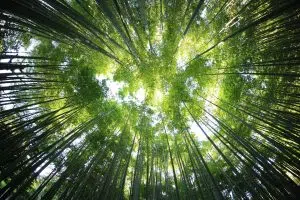 A study revealed that 60% of the biosphere is at risk. Photo: Unsplash.
An essential element of life on Earth
Earth’s biosphere is the layer of the planet where life develops. It comprises all regions of the planet that host living organisms: the land surface, oceans, lakes, rivers, and even the atmosphere to a certain altitude and the subsurface to depths where there is still biological activity.
It is a complex and interconnected system that maintains ecological balance thanks to nutrient cycles, solar energy, and interaction among different ecosystems. Within the biosphere, millions of species coexist as part of an interdependent network.
Producers, such as plants and algae, generate organic matter; consumers, like animals, rely on it for sustenance; and decomposers, such as fungi and bacteria, recycle nutrients. These processes ensure energy flow and resource renewal, allowing life continuity and ecosystem resilience against natural changes.
However, the biosphere is vulnerable to human action. Deforestation, pollution, urbanization, and climate change disrupt its natural cycles, causing biodiversity loss and ecological imbalances. Protecting the biosphere involves conserving ecosystems, promoting sustainable practices, and mitigating environmental impacts. Its care is essential, as the survival of all species, including humans, depends on its stability.



