



After the **strong wildfire season in Patagonia** left by months of high temperatures and drought, the forests suffered serious consequences.
Currently, these events represent a concern for the consequences they generate in **environmental, social, and economic-productive terms**.
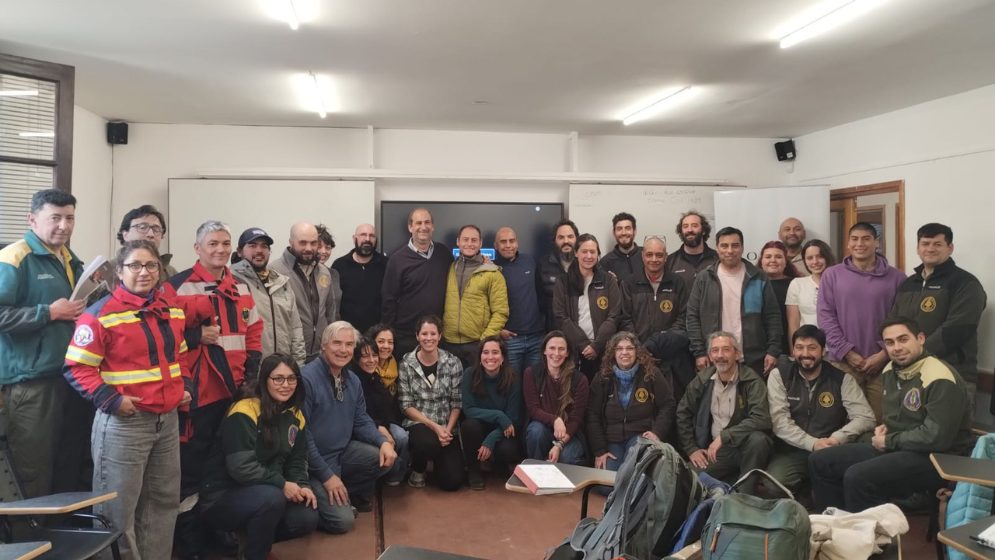
To understand their dynamics in the affected area, evaluate the impact, and plan which strategies are most effective for their management and prevention, the government of **Río Negro** called on **more than 20 specialists from CONICET**.
They will work in an **articulated and interdisciplinary manner on a diagnosis** of the latest fire that occurred in the area.
## The consequences of the fire: where scientists work
This is the **”Confluencia” forest fire**. It occurred from late January to March 2025, in the Río Azul – Lago Escondido Protected Natural Area in Mallín Ahogado and **surrounding areas located in El Bolsón** (Río Negro province).
It affected about **3800 hectares, of which 2100 belong to native forests** and the rest to forest plantations, wetlands (mallines), and farms. This included approximately 150 agricultural establishments.
Additionally, **220 houses were affected**, more than 700 tourists were evacuated, and **billions are estimated in reconstruction and productive losses**.
Following this event, the provincial **Secretariat of Environment and Climate Change** called on CONICET. The objective is to provide technical assistance for risk management, restoration, and rehabilitation of the affected area. This is within the interinstitutional framework of the **”Comprehensive Program for Risk Management and Restoration of the Confluencia fire (ANPRALE and its indirect influence zone)”**.
“The articulated work between the CONICET team and the directly and indirectly affected actors is a great challenge,” expressed **Javier Grosfeld**, from the Institutional Projects Development Area of CONICET Patagonia Norte and general coordinator of the project.
“It requires understanding and considering the different interests and expectations regarding the process of reconstruction, rehabilitation, and **restoration of the damages caused by the fires**,” he added.
## From fire to impact: understanding the severity of forest fires
“‘Severity’ measures the impact of the fire on the ecosystem, that is, the magnitude of the loss of organic matter from vegetation and soils during the fire,” states **Thomas Kitzberger**.
He is a researcher at **CONICET** in the Institute of Biodiversity and Environment Research (**INIBIOMA**, CONICET-UNCo) and coordinator of the group of scientists who will spatially quantify this factor, called **”fire severity”**.
“It must be distinguished from intensity, which describes a **dimension of fire behavior** and refers to the speed at which energy is released during combustion,” Kitzberger noted. “It varies spatially and temporally during a fire. It is quantified during the event,” he added.
In that sense, the scientist stated that it is important to **differentiate the severity of ecosystem responses** that measure the recovery or degradation of the ecosystem after the passage of fire.
Such as soil erosion, vegetation regeneration, **changes in fauna, invasion of exotic species**, among others.
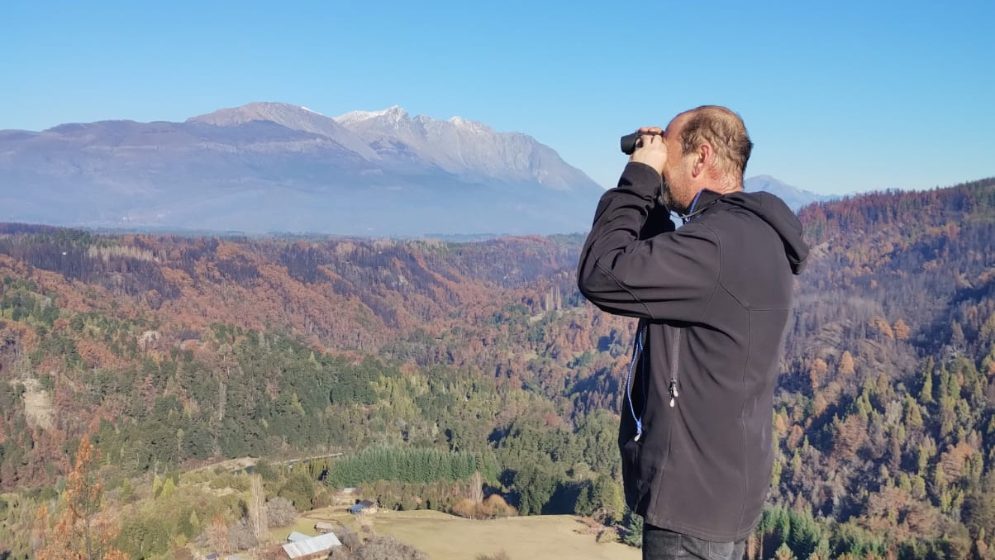
According to the researcher, this fire “was very particular for two aspects: the first is that it affected natural environments, but then spread to a rural-forested interface affecting lives, property, and production.”
He also mentioned: “the other particularity of this fire was the **great speed of spread and its dangerousness**”.
## The geo-environmental risks that remain and the scientific assessment
**Environmental hazard** is the probability of natural or human-induced phenomena that can cause damage to the environment, people, or infrastructure.
The specialist in geological risks, **Gustavo Villarosa**, a researcher at the **Andean Patagonian Institute of Biological and Geo-environmental Technologies (IPATEC, CONICET-UNCo)**, pointed out: “It is relevant to identify and monitor factors such as **soil erosion and mass removal** in areas affected by fires.”
The specific work of this research group for the project consists of **identifying geo-environmental hazard factors** in fire-affected areas. In addition, they will propose a **participation-based monitoring system**.
“This program, when implemented, will also serve as a precursor to an early warning system that will be **useful for properly managing the hazards** analyzed in the reserve area,” said the researcher.
“Recognizing and valuing their importance is key to defining prevention, mitigation, and risk management measures. As well as for an adequate **design of recovery plans**,” Villarosa added.
It is worth noting that the main geo-environmental risks that can occur after fires are evaluated in the field. They include **mudslides, landslides, rockfalls**, and the alteration of watercourses.


